Birdr

Black-faced Cotinga vs Black-headed Hemispingus

Conioptilon mcilhennyi versus Pseudospingus verticalis

Play a quiz with Black-faced Cotinga and Black-headed Hemispingus
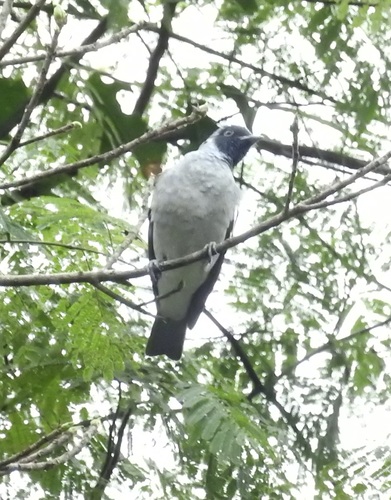
Black-faced Cotinga (Conioptilon mcilhennyi) Black-faced Cotinga
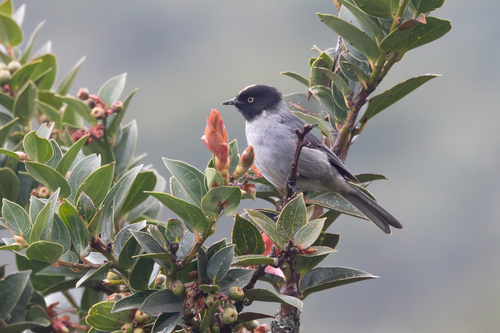
Black-headed Hemispingus (Pseudospingus verticalis) Black-headed Hemispingus

Media

Loading…

In short

The Black-faced Cotinga and Black-headed Hemispingus are distinct in both appearance and behavior. The cotinga is a striking bird with a black face and contrasting plumage, while the hemispingus is more subtly colored with a black head and a tanager-like appearance. Their habitats and behaviors also differ significantly, aiding in identification.

Identification tips

  1. Face Color: Look for the black face of the cotinga versus the black head of the hemispingus. 2. Size and Build: Note the larger, more robust build of the cotinga. 3. Habitat: Consider the habitat; cotingas are in lowland rainforests, hemispingus in montane forests. 4. Behavior: Observe behavior; cotingas are more stationary, hemispingus more active.

Size

The Black-faced Cotinga is generally larger and more robust than the Black-headed Hemispingus.

Plumage

The Black-faced Cotinga features a distinctive black face with contrasting lighter body plumage, whereas the Black-headed Hemispingus has a black head with more uniform, muted body colors typical of tanagers.

Behaviour

The Black-faced Cotinga is often seen perched quietly in the canopy, while the Black-headed Hemispingus is more active, often seen boldly perched atop foliage.

Habitat

The Black-faced Cotinga is typically found in lowland rainforest canopies, whereas the Black-headed Hemispingus prefers montane forests.

Voice

Specific vocalizations are not detailed, but these species belong to different families, suggesting distinct calls.

Submit a better description

Use the same sections as the comparison. Your text is published immediately.

The Black-faced Cotinga and Black-headed Hemispingus are distinct in both appearance and behavior. The cotinga is a striking bird with a black face and contrasting plumage, while the hemispingus is more subtly colored with a black head and a tanager-like appearance. Their habitats and behaviors also differ significantly, aiding in identification.

  1. Face Color: Look for the black face of the cotinga versus the black head of the hemispingus. 2. Size and Build: Note the larger, more robust build of the cotinga. 3. Habitat: Consider the habitat; cotingas are in lowland rainforests, hemispingus in montane forests. 4. Behavior: Observe behavior; cotingas are more stationary, hemispingus more active.

The Black-faced Cotinga is generally larger and more robust than the Black-headed Hemispingus.

The Black-faced Cotinga features a distinctive black face with contrasting lighter body plumage, whereas the Black-headed Hemispingus has a black head with more uniform, muted body colors typical of tanagers.

The Black-faced Cotinga is often seen perched quietly in the canopy, while the Black-headed Hemispingus is more active, often seen boldly perched atop foliage.

The Black-faced Cotinga is typically found in lowland rainforest canopies, whereas the Black-headed Hemispingus prefers montane forests.

Specific vocalizations are not detailed, but these species belong to different families, suggesting distinct calls.

Discard your changes?

You have unsaved edits. If you leave now, those changes will be lost.

Black-faced Cotinga · Black-headed Hemispingus · My Tricky Birds