Birdr

Black-faced Solitaire vs Varied Solitaire

Myadestes melanops versus Myadestes coloratus

Play a quiz with Black-faced Solitaire and Varied Solitaire
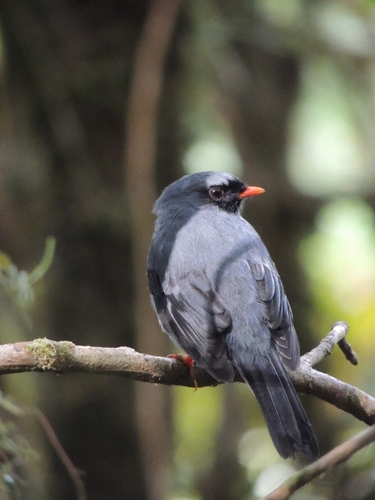
Black-faced Solitaire (Myadestes melanops) Black-faced Solitaire
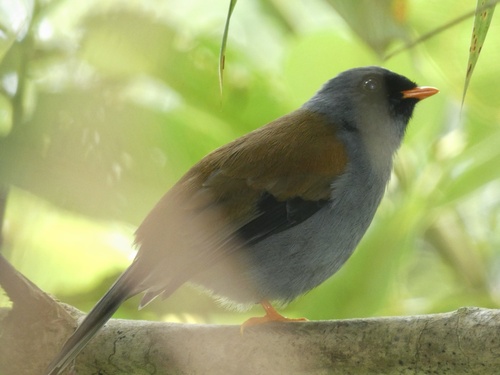
Varied Solitaire (Myadestes coloratus) Varied Solitaire

Media

Loading…

In short

The Black-faced Solitaire and Varied Solitaire are both medium-sized thrushes with subtle differences in plumage and behavior. The most reliable field mark is the distinctive black face of the Black-faced Solitaire, which contrasts with the Varied Solitaire's more uniform appearance. Both species inhabit montane forests but may be found at different elevations depending on the season.

Identification tips

  1. Look for the black face on the Black-faced Solitaire. 2. Note the more uniform plumage of the Varied Solitaire. 3. Observe flocking behavior; Black-faced Solitaires may be in groups. 4. Consider the elevation and season, as Black-faced Solitaires move to lower elevations outside the breeding season.

Size

Both species are similar in size, typical of medium-sized thrushes.

Plumage

The Black-faced Solitaire has a black face and a more contrasting plumage, while the Varied Solitaire has a more uniform, slate-gray appearance without the black facial markings.

Behaviour

Black-faced Solitaires may be seen foraging in large flocks, especially outside the breeding season, while Varied Solitaires are typically more solitary.

Habitat

Both species inhabit montane forests, but the Black-faced Solitaire migrates to lower elevations outside the breeding season, whereas the Varied Solitaire tends to remain at higher elevations.

Voice

Vocalizations are not well-documented in the provided sources, but solitaires are generally known for their melodious songs.

Submit a better description

Use the same sections as the comparison. Your text is published immediately.

The Black-faced Solitaire and Varied Solitaire are both medium-sized thrushes with subtle differences in plumage and behavior. The most reliable field mark is the distinctive black face of the Black-faced Solitaire, which contrasts with the Varied Solitaire's more uniform appearance. Both species inhabit montane forests but may be found at different elevations depending on the season.

  1. Look for the black face on the Black-faced Solitaire. 2. Note the more uniform plumage of the Varied Solitaire. 3. Observe flocking behavior; Black-faced Solitaires may be in groups. 4. Consider the elevation and season, as Black-faced Solitaires move to lower elevations outside the breeding season.

Both species are similar in size, typical of medium-sized thrushes.

The Black-faced Solitaire has a black face and a more contrasting plumage, while the Varied Solitaire has a more uniform, slate-gray appearance without the black facial markings.

Black-faced Solitaires may be seen foraging in large flocks, especially outside the breeding season, while Varied Solitaires are typically more solitary.

Both species inhabit montane forests, but the Black-faced Solitaire migrates to lower elevations outside the breeding season, whereas the Varied Solitaire tends to remain at higher elevations.

Vocalizations are not well-documented in the provided sources, but solitaires are generally known for their melodious songs.

Discard your changes?

You have unsaved edits. If you leave now, those changes will be lost.

Black-faced Solitaire · Varied Solitaire · My Tricky Birds