Birdr

Black-faced Waxbill vs Brown Firefinch

Brunhilda erythronotos versus Lagonosticta nitidula

Play a quiz with Black-faced Waxbill and Brown Firefinch
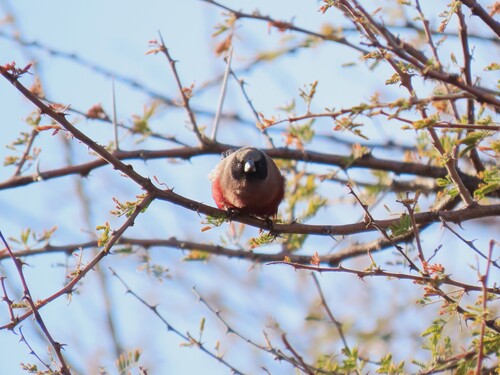
Black-faced Waxbill (Brunhilda erythronotos) Black-faced Waxbill
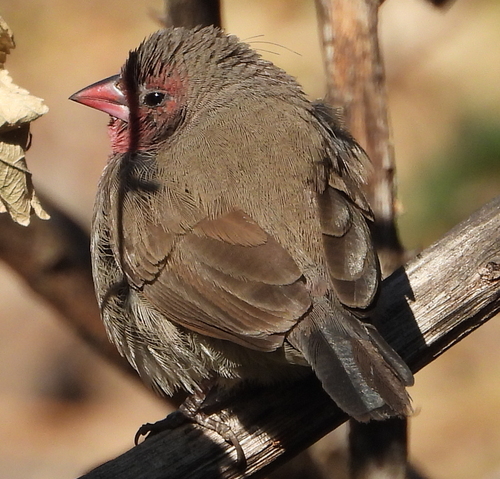
Brown Firefinch (Lagonosticta nitidula) Brown Firefinch

Media

Loading…

In short

The Black-faced Waxbill and Brown Firefinch are both small, similarly sized finches, but the Black-faced Waxbill is distinguished by its black facial mask and deep red rump. The Brown Firefinch lacks the black face and has a more uniformly brown plumage with subtle red tones.

Identification tips

  1. Look for the black facial mask of the Black-faced Waxbill, absent in the Brown Firefinch. 2. Check for the deep red rump of the Black-faced Waxbill. 3. Observe the overall plumage: Black-faced Waxbill has a grey-brown body with a pinkish wash, while the Brown Firefinch is more uniformly brown. 4. Listen for the Black-faced Waxbill's distinct calls if vocalizations are heard.

Size

Both species are similar in size, measuring around 11–12 cm and weighing 7.9–10.2 g.

Plumage

The Black-faced Waxbill has a distinctive black face and deep red rump, with grey-brown upperparts and pinkish wash. The Brown Firefinch is more uniformly brown with subtle red tones, lacking the black facial mask.

Behaviour

Both species forage on the ground and in small groups, but the Black-faced Waxbill is noted for bending grass stems to access seeds.

Habitat

Both species inhabit similar environments, often found in open areas with grass and shrubs.

Voice

The Black-faced Waxbill has a high-pitched 'tip-tip' contact call and a whistled 'tee' or 'tee-eee' song. Specific vocalizations for the Brown Firefinch are not detailed here.

Submit a better description

Use the same sections as the comparison. Your text is published immediately.

The Black-faced Waxbill and Brown Firefinch are both small, similarly sized finches, but the Black-faced Waxbill is distinguished by its black facial mask and deep red rump. The Brown Firefinch lacks the black face and has a more uniformly brown plumage with subtle red tones.

  1. Look for the black facial mask of the Black-faced Waxbill, absent in the Brown Firefinch. 2. Check for the deep red rump of the Black-faced Waxbill. 3. Observe the overall plumage: Black-faced Waxbill has a grey-brown body with a pinkish wash, while the Brown Firefinch is more uniformly brown. 4. Listen for the Black-faced Waxbill's distinct calls if vocalizations are heard.

Both species are similar in size, measuring around 11–12 cm and weighing 7.9–10.2 g.

The Black-faced Waxbill has a distinctive black face and deep red rump, with grey-brown upperparts and pinkish wash. The Brown Firefinch is more uniformly brown with subtle red tones, lacking the black facial mask.

Both species forage on the ground and in small groups, but the Black-faced Waxbill is noted for bending grass stems to access seeds.

Both species inhabit similar environments, often found in open areas with grass and shrubs.

The Black-faced Waxbill has a high-pitched 'tip-tip' contact call and a whistled 'tee' or 'tee-eee' song. Specific vocalizations for the Brown Firefinch are not detailed here.

Discard your changes?

You have unsaved edits. If you leave now, those changes will be lost.

Black-faced Waxbill · Brown Firefinch · My Tricky Birds