Birdr

Black-fronted Bushshrike vs Grey-headed Bushshrike

Chlorophoneus nigrifrons versus Malaconotus blanchoti

Play a quiz with Black-fronted Bushshrike and Grey-headed Bushshrike
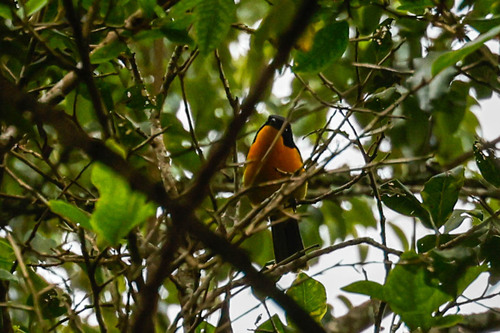
Black-fronted Bushshrike (Chlorophoneus nigrifrons) Black-fronted Bushshrike
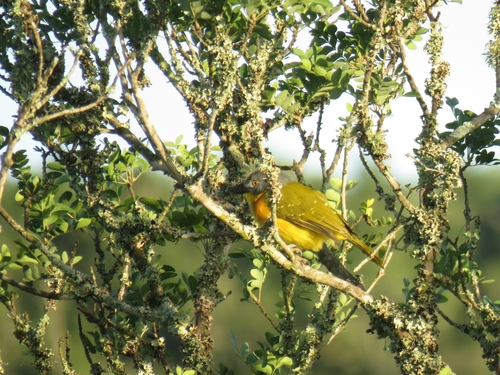
Grey-headed Bushshrike (Malaconotus blanchoti) Grey-headed Bushshrike

Media

Loading…

In short

The Black-fronted Bushshrike and Grey-headed Bushshrike can be distinguished primarily by their head coloration and overall size. The Black-fronted Bushshrike has a distinctive black forehead and face, while the Grey-headed Bushshrike features a grey head. Observing these features with binoculars should help in identification.

Identification tips

  1. Look for the black forehead and face of the Black-fronted Bushshrike. 2. Note the grey head of the Grey-headed Bushshrike. 3. Consider the size difference, with the Grey-headed being larger. 4. Listen for differences in vocalizations: melodious versus harsh calls.

Size

The Grey-headed Bushshrike is generally larger than the Black-fronted Bushshrike.

Plumage

The Black-fronted Bushshrike has a black forehead and face, contrasting with its bright green upperparts and yellow underparts. In contrast, the Grey-headed Bushshrike has a grey head, with olive-green upperparts and yellow underparts.

Behaviour

Both species are typically found in dense vegetation and may exhibit skulking behavior, making them challenging to spot.

Habitat

Both species inhabit similar environments, such as forests and dense thickets, but the Grey-headed Bushshrike may also be found in more open woodland areas.

Voice

The vocalizations of these species differ, with the Black-fronted Bushshrike having a more melodious song, while the Grey-headed Bushshrike's call is harsher and more grating.

Submit a better description

Use the same sections as the comparison. Your text is published immediately.

The Black-fronted Bushshrike and Grey-headed Bushshrike can be distinguished primarily by their head coloration and overall size. The Black-fronted Bushshrike has a distinctive black forehead and face, while the Grey-headed Bushshrike features a grey head. Observing these features with binoculars should help in identification.

  1. Look for the black forehead and face of the Black-fronted Bushshrike. 2. Note the grey head of the Grey-headed Bushshrike. 3. Consider the size difference, with the Grey-headed being larger. 4. Listen for differences in vocalizations: melodious versus harsh calls.

The Grey-headed Bushshrike is generally larger than the Black-fronted Bushshrike.

The Black-fronted Bushshrike has a black forehead and face, contrasting with its bright green upperparts and yellow underparts. In contrast, the Grey-headed Bushshrike has a grey head, with olive-green upperparts and yellow underparts.

Both species are typically found in dense vegetation and may exhibit skulking behavior, making them challenging to spot.

Both species inhabit similar environments, such as forests and dense thickets, but the Grey-headed Bushshrike may also be found in more open woodland areas.

The vocalizations of these species differ, with the Black-fronted Bushshrike having a more melodious song, while the Grey-headed Bushshrike's call is harsher and more grating.

Discard your changes?

You have unsaved edits. If you leave now, those changes will be lost.

Black-fronted Bushshrike · Grey-headed Bushshrike · My Tricky Birds