Birdr

Black Grouse vs Common Quail

Lyrurus tetrix versus Coturnix coturnix

Play a quiz with Black Grouse and Common Quail
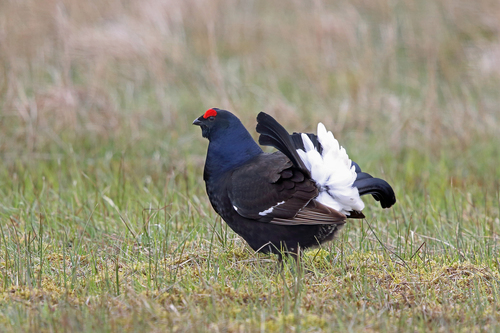
Black Grouse (Lyrurus tetrix) Black Grouse
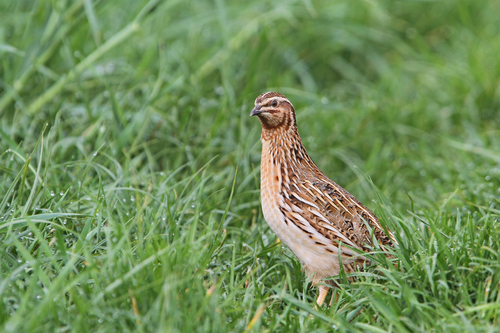
Common Quail (Coturnix coturnix) Common Quail

Media

Loading…

In short

The Black Grouse and Common Quail are both ground-dwelling birds but differ significantly in size and habitat preference. The Black Grouse is much larger and often found in moorlands and forest edges, while the Common Quail is smaller and prefers open fields and grasslands. Their vocalizations are also distinct, aiding in identification.

Identification tips

  1. Size and Shape: Look for the larger size and lyre-shaped tail of the Black Grouse compared to the smaller, more compact Common Quail. 2. Habitat: Note the habitat; Black Grouse are in moorlands, Common Quail in open fields. 3. Vocalization: Listen for the bubbling call of the Black Grouse or the 'wet-my-lips' call of the Common Quail. 4. Behavior: Observe lekking displays for Black Grouse during the breeding season.

Size

The Black Grouse is significantly larger than the Common Quail, with a robust body and longer tail.

Plumage

Black Grouse males are mostly black with a distinctive lyre-shaped tail, while females are brown and mottled. Common Quail are smaller, with a more uniform brown and buff pattern, lacking the Grouse's contrasting features.

Behaviour

Black Grouse are known for their lekking behavior during breeding season, where males display prominently. Common Quail are more secretive and often remain hidden in vegetation.

Habitat

Black Grouse are typically found in moorlands and forest edges, whereas Common Quail prefer open fields, grasslands, and agricultural areas.

Voice

Black Grouse males produce a bubbling call during displays, while Common Quail have a distinctive 'wet-my-lips' call that is often heard but not easily seen.

Submit a better description

Use the same sections as the comparison. Your text is published immediately.

The Black Grouse and Common Quail are both ground-dwelling birds but differ significantly in size and habitat preference. The Black Grouse is much larger and often found in moorlands and forest edges, while the Common Quail is smaller and prefers open fields and grasslands. Their vocalizations are also distinct, aiding in identification.

  1. Size and Shape: Look for the larger size and lyre-shaped tail of the Black Grouse compared to the smaller, more compact Common Quail. 2. Habitat: Note the habitat; Black Grouse are in moorlands, Common Quail in open fields. 3. Vocalization: Listen for the bubbling call of the Black Grouse or the 'wet-my-lips' call of the Common Quail. 4. Behavior: Observe lekking displays for Black Grouse during the breeding season.

The Black Grouse is significantly larger than the Common Quail, with a robust body and longer tail.

Black Grouse males are mostly black with a distinctive lyre-shaped tail, while females are brown and mottled. Common Quail are smaller, with a more uniform brown and buff pattern, lacking the Grouse's contrasting features.

Black Grouse are known for their lekking behavior during breeding season, where males display prominently. Common Quail are more secretive and often remain hidden in vegetation.

Black Grouse are typically found in moorlands and forest edges, whereas Common Quail prefer open fields, grasslands, and agricultural areas.

Black Grouse males produce a bubbling call during displays, while Common Quail have a distinctive 'wet-my-lips' call that is often heard but not easily seen.

Discard your changes?

You have unsaved edits. If you leave now, those changes will be lost.

Black Grouse · Common Quail · My Tricky Birds