Black Grouse vs Grey Partridge
Lyrurus tetrix versus Perdix perdix
Play a quiz with Black Grouse and Grey Partridge
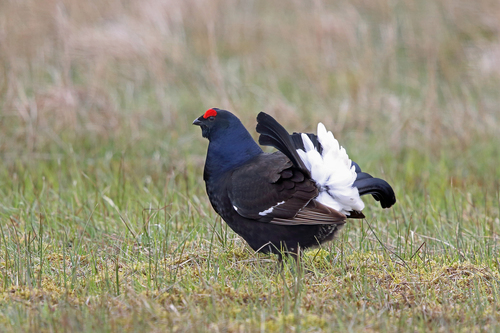
Black Grouse
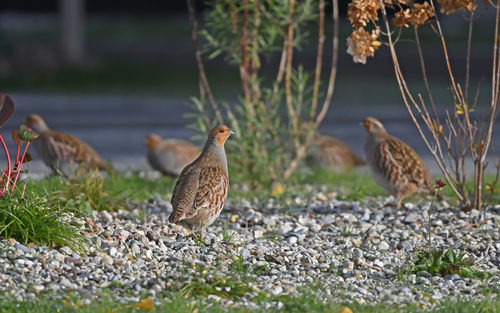
Grey Partridge
In short
The Black Grouse and Grey Partridge are both ground-dwelling birds within the Phasianidae family, but they differ significantly in size and plumage. The Black Grouse is larger and more robust, with a distinctive lyre-shaped tail in males, while the Grey Partridge is smaller, with a more rounded body and a short tail. Both species inhabit open landscapes, but their vocalizations and behaviors can help distinguish them.
Identification tips
- Size and Shape: Look for the larger size and lyre-shaped tail of the Black Grouse. 2. Plumage: Note the black and white contrast in Black Grouse males versus the grey-brown and orange face of the Grey Partridge. 3. Behavior: Observe lekking displays for Black Grouse and covey formations for Grey Partridges. 4. Habitat: Consider the habitat; moorlands for Black Grouse and farmlands for Grey Partridges. 5. Vocalizations: Listen for the bubbling calls of Black Grouse and the 'kirrick' of Grey Partridges.
Size
The Black Grouse is larger and more robust than the Grey Partridge, with a length of about 40-55 cm compared to the Grey Partridge's 28-32 cm.
Plumage
Male Black Grouse are mostly black with a striking white wing-bar and a lyre-shaped tail, whereas Grey Partridges are more uniformly grey-brown with a distinctive orange face and a horseshoe-shaped mark on the belly.
Behaviour
Black Grouse males are known for their lekking behavior, displaying in groups during the breeding season, while Grey Partridges are more likely to be seen in small coveys, especially outside the breeding season.
Habitat
Both species prefer open habitats, but Black Grouse are typically found in moorlands and forest edges, while Grey Partridges favor agricultural fields and grasslands.
Voice
Black Grouse males produce bubbling and hissing sounds during their displays, while Grey Partridges have a distinctive 'kirrick' call, often heard when flushed.