Birdr

Black Guillemot vs Razorbill

Cepphus grylle versus Alca torda

Play a quiz with Black Guillemot and Razorbill
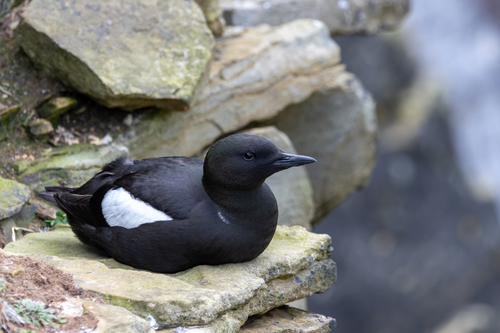
Black Guillemot (Cepphus grylle) Black Guillemot
Razorbill (Alca torda) Razorbill

Media

Loading…

In short

The Black Guillemot and Razorbill are both members of the auk family, but they can be distinguished by their bill shape and plumage. The Black Guillemot has a slender, pointed bill and distinctive white wing patches, while the Razorbill features a thicker, blunt bill and lacks these patches.

Identification tips

1. Bill Shape: Black Guillemots have a slender, pointed bill; Razorbills have a thicker, blunt bill. 2. Wing Patches: Look for white wing patches on Black Guillemots, absent in Razorbills. 3. Size and Bulk: Razorbills are larger and bulkier. 4. Leg Color: Black Guillemots have bright red legs, noticeable when perched or in flight. 5. Grouping Behavior: Razorbills are often seen in larger groups, while Black Guillemots are more solitary.

Size

The Razorbill is generally larger and bulkier than the Black Guillemot.

Plumage

Black Guillemots have white wing patches and scarlet legs, which are visible year-round. Razorbills, on the other hand, have a more uniform dark plumage with a white belly and lack the white wing patches.

Behaviour

Both species are coastal and often seen near their breeding colonies. Black Guillemots tend to stay closer to shore and are more solitary, while Razorbills are more likely to be seen in larger groups.

Habitat

Black Guillemots prefer inshore waters and are often found near ice edges in the Arctic. Razorbills are more commonly found in open ocean environments but also breed on coastal cliffs.

Voice

Vocalizations are not a primary distinguishing feature in the field, but Black Guillemots have a high-pitched whistle, while Razorbills produce a low, guttural croak.

Submit a better description

Use the same sections as the comparison. Your text is published immediately.

The Black Guillemot and Razorbill are both members of the auk family, but they can be distinguished by their bill shape and plumage. The Black Guillemot has a slender, pointed bill and distinctive white wing patches, while the Razorbill features a thicker, blunt bill and lacks these patches.

1. Bill Shape: Black Guillemots have a slender, pointed bill; Razorbills have a thicker, blunt bill. 2. Wing Patches: Look for white wing patches on Black Guillemots, absent in Razorbills. 3. Size and Bulk: Razorbills are larger and bulkier. 4. Leg Color: Black Guillemots have bright red legs, noticeable when perched or in flight. 5. Grouping Behavior: Razorbills are often seen in larger groups, while Black Guillemots are more solitary.

The Razorbill is generally larger and bulkier than the Black Guillemot.

Black Guillemots have white wing patches and scarlet legs, which are visible year-round. Razorbills, on the other hand, have a more uniform dark plumage with a white belly and lack the white wing patches.

Both species are coastal and often seen near their breeding colonies. Black Guillemots tend to stay closer to shore and are more solitary, while Razorbills are more likely to be seen in larger groups.

Black Guillemots prefer inshore waters and are often found near ice edges in the Arctic. Razorbills are more commonly found in open ocean environments but also breed on coastal cliffs.

Vocalizations are not a primary distinguishing feature in the field, but Black Guillemots have a high-pitched whistle, while Razorbills produce a low, guttural croak.

Discard your changes?

You have unsaved edits. If you leave now, those changes will be lost.

Black Guillemot · Razorbill · My Tricky Birds