Birdr

Black-headed Antthrush vs Middle American Leaftosser

Formicarius nigricapillus versus Sclerurus mexicanus

Play a quiz with Black-headed Antthrush and Middle American Leaftosser
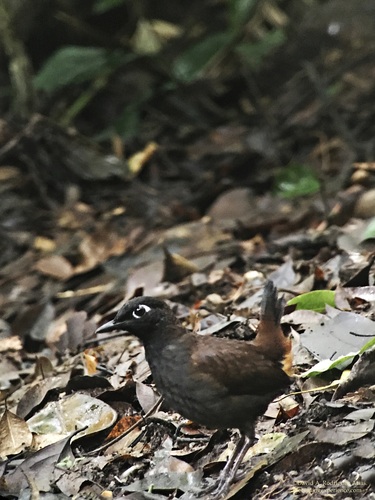
Black-headed Antthrush (Formicarius nigricapillus) Black-headed Antthrush
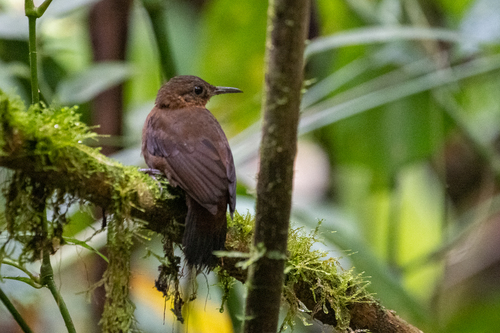
Middle American Leaftosser (Sclerurus mexicanus) Middle American Leaftosser

Media

Loading…

In short

The Black-headed Antthrush and Middle American Leaftosser can be distinguished by their head markings and habitat preferences. The Antthrush has a distinct black cap, while the Leaftosser lacks this feature and is more often found in leaf litter.

Identification tips

Look for the black cap on the Black-headed Antthrush as a key identifier. Observe behavior: the Leaftosser's leaf-flipping is distinctive. Note habitat: Antthrushes prefer denser undergrowth, while Leaftossers are often in areas with abundant leaf litter. Vocalizations can help, but are less reliable without experience.

Size

Both species are similar in size, but the Leaftosser may appear slightly more elongated due to its longer tail.

Plumage

The Black-headed Antthrush has a black cap and a more uniform brown body, while the Middle American Leaftosser lacks the black cap and has a more mottled appearance with a slightly rufous tail.

Behaviour

The Antthrush is more likely to be seen walking on the forest floor, while the Leaftosser is often observed flipping leaves with its bill.

Habitat

The Black-headed Antthrush prefers dense, shaded forest undergrowth, whereas the Middle American Leaftosser is found in similar habitats but is more specifically associated with areas rich in leaf litter.

Voice

Vocalizations of these species differ, but specific details are not well-documented. The Antthrush may have a more melodious song compared to the Leaftosser.

Submit a better description

Use the same sections as the comparison. Your text is published immediately.

The Black-headed Antthrush and Middle American Leaftosser can be distinguished by their head markings and habitat preferences. The Antthrush has a distinct black cap, while the Leaftosser lacks this feature and is more often found in leaf litter.

Look for the black cap on the Black-headed Antthrush as a key identifier. Observe behavior: the Leaftosser's leaf-flipping is distinctive. Note habitat: Antthrushes prefer denser undergrowth, while Leaftossers are often in areas with abundant leaf litter. Vocalizations can help, but are less reliable without experience.

Both species are similar in size, but the Leaftosser may appear slightly more elongated due to its longer tail.

The Black-headed Antthrush has a black cap and a more uniform brown body, while the Middle American Leaftosser lacks the black cap and has a more mottled appearance with a slightly rufous tail.

The Antthrush is more likely to be seen walking on the forest floor, while the Leaftosser is often observed flipping leaves with its bill.

The Black-headed Antthrush prefers dense, shaded forest undergrowth, whereas the Middle American Leaftosser is found in similar habitats but is more specifically associated with areas rich in leaf litter.

Vocalizations of these species differ, but specific details are not well-documented. The Antthrush may have a more melodious song compared to the Leaftosser.

Discard your changes?

You have unsaved edits. If you leave now, those changes will be lost.

Black-headed Antthrush · Middle American Leaftosser · My Tricky Birds