Birdr

Black-headed Canary vs Cape Bunting

Serinus alario versus Emberiza capensis

Play a quiz with Black-headed Canary and Cape Bunting
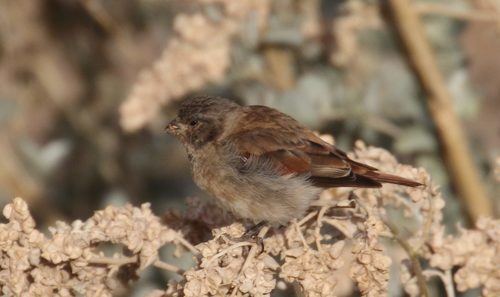
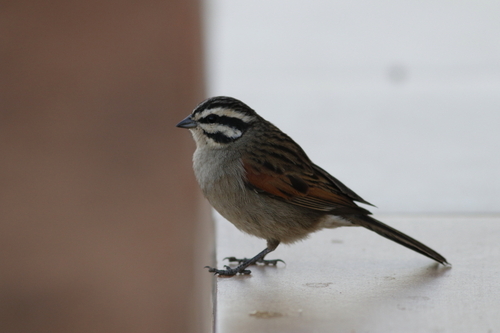
Black-headed Canary (Serinus alario) Black-headed Canary
Cape Bunting (Emberiza capensis) Cape Bunting

Media

Loading…

In short

The Black-headed Canary and Cape Bunting can be distinguished by their head markings and habitat preferences. The Black-headed Canary has a distinct black head and throat, while the Cape Bunting features a more streaked and less contrasting head pattern. They also differ in their preferred habitats, with the Canary favoring arid regions and the Bunting found in rocky, sparsely vegetated areas.

Identification tips

  1. Look for the black head and throat of the Black-headed Canary. 2. Note the streaked head pattern of the Cape Bunting. 3. Consider habitat: arid open areas for the Canary, rocky areas for the Bunting. 4. Observe behavior: Canaries often in flocks, Buntings more solitary. 5. Use vocalizations as a secondary clue if observed.

Size

Both species are similar in size, typical of small passerines, but the Black-headed Canary may appear slightly more compact.

Plumage

The Black-headed Canary has a striking black head and throat with a contrasting white belly and chestnut back. In contrast, the Cape Bunting has a streaked head with less contrast, a greyish-brown body, and a more uniform appearance.

Behaviour

Both species exhibit typical finch and bunting behaviors, such as foraging on the ground, but the Black-headed Canary is more likely to be seen in flocks.

Habitat

The Black-headed Canary is found in arid, open areas, while the Cape Bunting prefers rocky, sparsely vegetated regions with boulders.

Voice

Vocalizations are not well-documented for either species in the notes provided, but generally, canaries have more musical songs compared to buntings.

Submit a better description

Use the same sections as the comparison. Your text is published immediately.

The Black-headed Canary and Cape Bunting can be distinguished by their head markings and habitat preferences. The Black-headed Canary has a distinct black head and throat, while the Cape Bunting features a more streaked and less contrasting head pattern. They also differ in their preferred habitats, with the Canary favoring arid regions and the Bunting found in rocky, sparsely vegetated areas.

  1. Look for the black head and throat of the Black-headed Canary. 2. Note the streaked head pattern of the Cape Bunting. 3. Consider habitat: arid open areas for the Canary, rocky areas for the Bunting. 4. Observe behavior: Canaries often in flocks, Buntings more solitary. 5. Use vocalizations as a secondary clue if observed.

Both species are similar in size, typical of small passerines, but the Black-headed Canary may appear slightly more compact.

The Black-headed Canary has a striking black head and throat with a contrasting white belly and chestnut back. In contrast, the Cape Bunting has a streaked head with less contrast, a greyish-brown body, and a more uniform appearance.

Both species exhibit typical finch and bunting behaviors, such as foraging on the ground, but the Black-headed Canary is more likely to be seen in flocks.

The Black-headed Canary is found in arid, open areas, while the Cape Bunting prefers rocky, sparsely vegetated regions with boulders.

Vocalizations are not well-documented for either species in the notes provided, but generally, canaries have more musical songs compared to buntings.

Discard your changes?

You have unsaved edits. If you leave now, those changes will be lost.

Black-headed Canary · Cape Bunting · My Tricky Birds