Birdr

Black Kite vs Forest Buzzard

Milvus migrans versus Buteo trizonatus

Play a quiz with Black Kite and Forest Buzzard
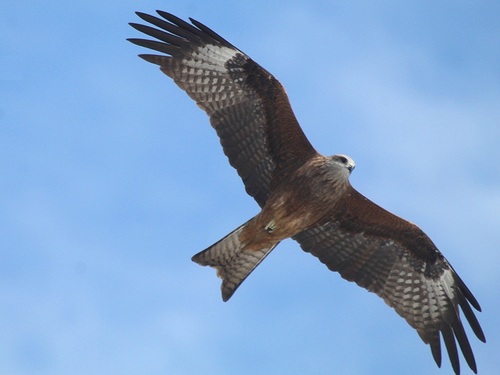
Black Kite (Milvus migrans) Black Kite
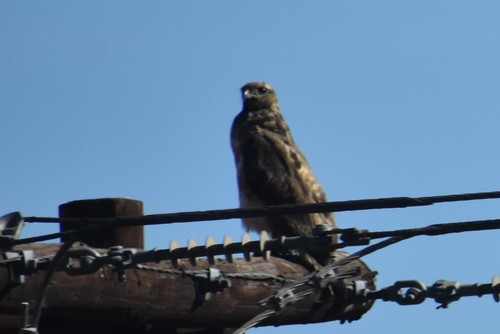
Forest Buzzard (Buteo trizonatus) Forest Buzzard

Media

Loading…

In short

The Black Kite and Forest Buzzard can be differentiated by their flight silhouette and tail shape. Black Kites have a more forked tail and longer wings, while Forest Buzzards have a rounder tail and shorter, broader wings. These structural differences are more reliable than plumage for identification.

Identification tips

  1. Tail Shape: Look for the forked tail of the Black Kite versus the rounder tail of the Forest Buzzard. 2. Wing Shape: Black Kites have longer, narrower wings compared to the shorter, broader wings of the Forest Buzzard. 3. Habitat: Consider the habitat; Black Kites are more likely in open areas, while Forest Buzzards favor forests. 4. Behavior: Note soaring behavior for Black Kites and perching for Forest Buzzards. 5. Vocalization: Listen for the whistling call of the Black Kite and the mewing call of the Forest Buzzard.

Size

Black Kites are generally larger with a wingspan that is noticeably longer than that of the Forest Buzzard.

Plumage

Black Kites often show darker plumage with less variation, whereas Forest Buzzards can display more variable plumage with a mix of browns and whites, but plumage can be unreliable due to individual variation.

Behaviour

Black Kites are more likely to be seen soaring or gliding on thermals, while Forest Buzzards may be observed perching more often in wooded areas.

Habitat

Black Kites are typically found in open areas, often near water, while Forest Buzzards prefer forested habitats and are more localized in their distribution.

Voice

Black Kites have a distinctive whistling call, whereas Forest Buzzards produce a more typical buzzard-like mewing call.

Submit a better description

Use the same sections as the comparison. Your text is published immediately.

The Black Kite and Forest Buzzard can be differentiated by their flight silhouette and tail shape. Black Kites have a more forked tail and longer wings, while Forest Buzzards have a rounder tail and shorter, broader wings. These structural differences are more reliable than plumage for identification.

  1. Tail Shape: Look for the forked tail of the Black Kite versus the rounder tail of the Forest Buzzard. 2. Wing Shape: Black Kites have longer, narrower wings compared to the shorter, broader wings of the Forest Buzzard. 3. Habitat: Consider the habitat; Black Kites are more likely in open areas, while Forest Buzzards favor forests. 4. Behavior: Note soaring behavior for Black Kites and perching for Forest Buzzards. 5. Vocalization: Listen for the whistling call of the Black Kite and the mewing call of the Forest Buzzard.

Black Kites are generally larger with a wingspan that is noticeably longer than that of the Forest Buzzard.

Black Kites often show darker plumage with less variation, whereas Forest Buzzards can display more variable plumage with a mix of browns and whites, but plumage can be unreliable due to individual variation.

Black Kites are more likely to be seen soaring or gliding on thermals, while Forest Buzzards may be observed perching more often in wooded areas.

Black Kites are typically found in open areas, often near water, while Forest Buzzards prefer forested habitats and are more localized in their distribution.

Black Kites have a distinctive whistling call, whereas Forest Buzzards produce a more typical buzzard-like mewing call.

Discard your changes?

You have unsaved edits. If you leave now, those changes will be lost.

Black Kite · Forest Buzzard · My Tricky Birds