Birdr

Black-legged Kittiwake vs Black-headed Gull

Rissa tridactyla versus Chroicocephalus ridibundus

Play a quiz with Black-legged Kittiwake and Black-headed Gull
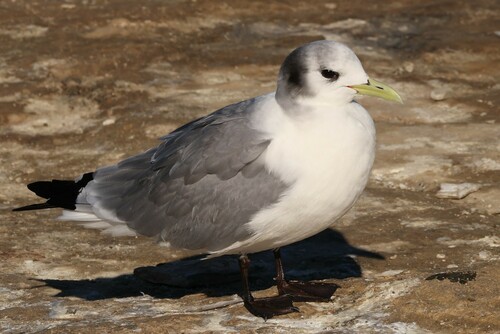
Black-legged Kittiwake (Rissa tridactyla) Black-legged Kittiwake
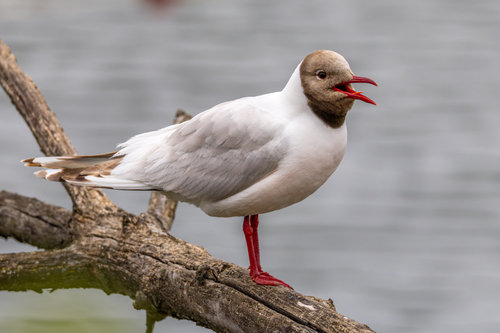
Black-headed Gull (Chroicocephalus ridibundus) Black-headed Gull

Media

Loading…

In short

The Black-legged Kittiwake and the Black-headed Gull are both medium-sized gulls, but they can be distinguished by leg color and head markings. The Kittiwake has black legs and a clean white head outside of the breeding season, while the Black-headed Gull has red legs and a dark head cap during breeding.

Identification tips

Size

Both species are similar in size, but the Black-legged Kittiwake is slightly larger and more robust than the Black-headed Gull.

Plumage

In winter, the Black-legged Kittiwake has a clean white head, whereas the Black-headed Gull has a smudgy ear spot. During the breeding season, the Black-headed Gull develops a dark chocolate-brown head, while the Kittiwake maintains a white head. The Kittiwake's wings have a distinctive black tip without white spots, unlike the Black-headed Gull's wings which have white primary tips.

Behaviour

Both species are often seen in flocks, but the Black-legged Kittiwake is more pelagic, often found at sea, while the Black-headed Gull is more commonly seen inland.

Habitat

The Black-legged Kittiwake is primarily a coastal and pelagic species, often nesting on cliffs, whereas the Black-headed Gull is more adaptable, found in a variety of habitats including inland lakes and rivers.

Voice

The Black-legged Kittiwake has a distinctive 'kitti-waake' call, while the Black-headed Gull has a more varied repertoire including a harsh 'kree-ar'.

Submit a better description

Use the same sections as the comparison. Your text is published immediately.

The Black-legged Kittiwake and the Black-headed Gull are both medium-sized gulls, but they can be distinguished by leg color and head markings. The Kittiwake has black legs and a clean white head outside of the breeding season, while the Black-headed Gull has red legs and a dark head cap during breeding.

  • Leg color: Black-legged Kittiwake has black legs; Black-headed Gull has red legs.
  • Head markings: In breeding season, Black-headed Gull has a dark head; Kittiwake's head remains white.
  • Wing tips: Kittiwake has black wing tips without white spots; Black-headed Gull has white primary tips.
  • Habitat preference: Kittiwake is more often seen at sea; Black-headed Gull is more common inland.

Both species are similar in size, but the Black-legged Kittiwake is slightly larger and more robust than the Black-headed Gull.

In winter, the Black-legged Kittiwake has a clean white head, whereas the Black-headed Gull has a smudgy ear spot. During the breeding season, the Black-headed Gull develops a dark chocolate-brown head, while the Kittiwake maintains a white head. The Kittiwake's wings have a distinctive black tip without white spots, unlike the Black-headed Gull's wings which have white primary tips.

Both species are often seen in flocks, but the Black-legged Kittiwake is more pelagic, often found at sea, while the Black-headed Gull is more commonly seen inland.

The Black-legged Kittiwake is primarily a coastal and pelagic species, often nesting on cliffs, whereas the Black-headed Gull is more adaptable, found in a variety of habitats including inland lakes and rivers.

The Black-legged Kittiwake has a distinctive 'kitti-waake' call, while the Black-headed Gull has a more varied repertoire including a harsh 'kree-ar'.

Discard your changes?

You have unsaved edits. If you leave now, those changes will be lost.

Black-legged Kittiwake · Black-headed Gull · My Tricky Birds