Birdr

Black Magpie vs Black-and-white Bulbul

Platysmurus leucopterus versus Microtarsus melanoleucos

Play a quiz with Black Magpie and Black-and-white Bulbul
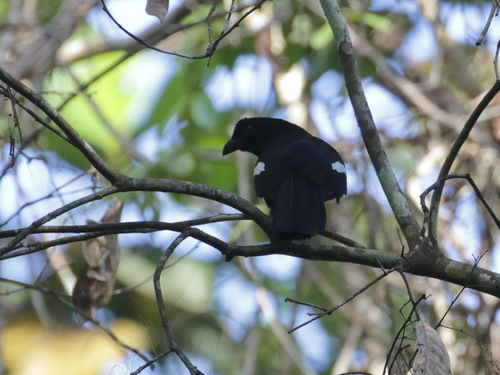
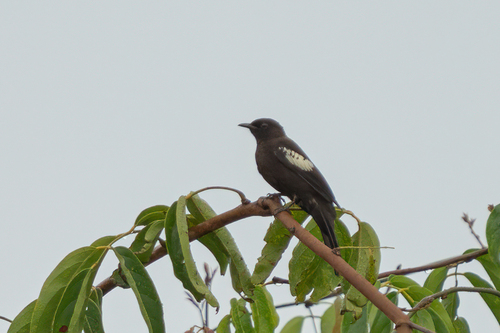
Black Magpie (Platysmurus leucopterus) Black Magpie
Black-and-white Bulbul (Microtarsus melanoleucos) Black-and-white Bulbul

Media

Loading…

In short

The Black Magpie and Black-and-white Bulbul can be distinguished by their size and plumage patterns. The Black Magpie is larger with a predominantly black body and distinctive white wing patches, while the Black-and-white Bulbul is smaller with a more contrasting black and white plumage. Observing their behavior and habitat can also aid in identification.

Identification tips

  1. Size: Look for the larger size of the Black Magpie. 2. Plumage: Check for the white wing patches on the Black Magpie versus the overall black and white contrast of the Black-and-white Bulbul. 3. Behavior: Observe the foraging height and group size; Black Magpies are often higher in the canopy. 4. Habitat: Consider the habitat; Black-and-white Bulbuls may be in more open areas. 5. Vocalization: Listen for the type of calls; Black Magpies have a more varied and harsher call.

Size

The Black Magpie is significantly larger than the Black-and-white Bulbul, with a more robust build typical of the Corvidae family.

Plumage

The Black Magpie has a mostly black plumage with notable white patches on the wings, whereas the Black-and-white Bulbul displays a more striking contrast of black and white throughout its body.

Behaviour

Black Magpies are often seen in pairs or small groups, foraging in the canopy, while Black-and-white Bulbuls are more likely to be found in pairs or small flocks, often in mid-levels of the forest.

Habitat

Both species inhabit forested areas, but the Black Magpie is more commonly found in primary and secondary forests, whereas the Black-and-white Bulbul can also be found in forest edges and gardens.

Voice

The Black Magpie has a varied repertoire of calls, including harsh and melodious notes, while the Black-and-white Bulbul's calls are typically more musical and less harsh.

Submit a better description

Use the same sections as the comparison. Your text is published immediately.

The Black Magpie and Black-and-white Bulbul can be distinguished by their size and plumage patterns. The Black Magpie is larger with a predominantly black body and distinctive white wing patches, while the Black-and-white Bulbul is smaller with a more contrasting black and white plumage. Observing their behavior and habitat can also aid in identification.

  1. Size: Look for the larger size of the Black Magpie. 2. Plumage: Check for the white wing patches on the Black Magpie versus the overall black and white contrast of the Black-and-white Bulbul. 3. Behavior: Observe the foraging height and group size; Black Magpies are often higher in the canopy. 4. Habitat: Consider the habitat; Black-and-white Bulbuls may be in more open areas. 5. Vocalization: Listen for the type of calls; Black Magpies have a more varied and harsher call.

The Black Magpie is significantly larger than the Black-and-white Bulbul, with a more robust build typical of the Corvidae family.

The Black Magpie has a mostly black plumage with notable white patches on the wings, whereas the Black-and-white Bulbul displays a more striking contrast of black and white throughout its body.

Black Magpies are often seen in pairs or small groups, foraging in the canopy, while Black-and-white Bulbuls are more likely to be found in pairs or small flocks, often in mid-levels of the forest.

Both species inhabit forested areas, but the Black Magpie is more commonly found in primary and secondary forests, whereas the Black-and-white Bulbul can also be found in forest edges and gardens.

The Black Magpie has a varied repertoire of calls, including harsh and melodious notes, while the Black-and-white Bulbul's calls are typically more musical and less harsh.

Discard your changes?

You have unsaved edits. If you leave now, those changes will be lost.

Black Magpie · Black-and-white Bulbul · My Tricky Birds