Birdr

Black-necked Stilt vs Grey Plover

Himantopus mexicanus versus Pluvialis squatarola

Play a quiz with Black-necked Stilt and Grey Plover
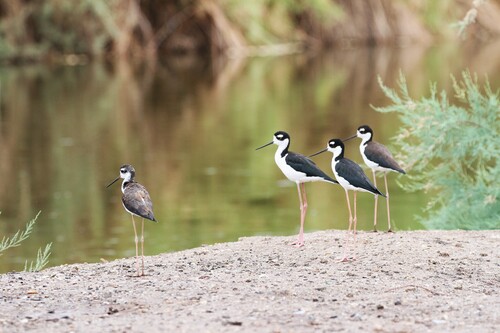
Black-necked Stilt (Himantopus mexicanus) Black-necked Stilt
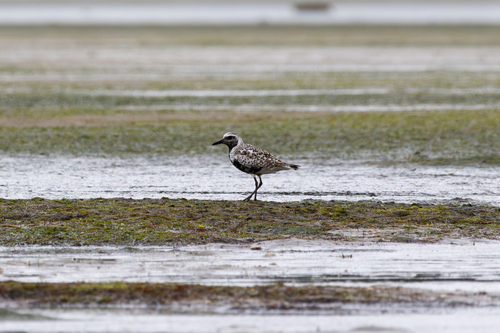
Grey Plover (Pluvialis squatarola) Grey Plover

Media

Loading…

In short

The Black-necked Stilt and Grey Plover are both shorebirds but differ significantly in appearance and behavior. The stilt is slender with long, pink legs and a striking black and white plumage, while the plover is stockier with a more cryptic coloration. Both species can be found in coastal habitats, but their behaviors and vocalizations are distinct.

Identification tips

Look for the long pink legs and black-and-white plumage of the Black-necked Stilt. The Grey Plover is more compact with a mottled grey appearance. Note the habitat: stilts in wetlands, plovers on mudflats. Listen for the stilt's sharp calls versus the plover's whistles.

Size

The Black-necked Stilt is taller and more slender, with long legs, while the Grey Plover is more compact and robust.

Plumage

The Black-necked Stilt has a distinctive black and white pattern with a black back and neck, and white underparts. The Grey Plover, especially in non-breeding plumage, is more mottled grey and white, with a less contrasting appearance.

Behaviour

Black-necked Stilts are often seen wading in shallow waters, using their long legs to forage. Grey Plovers are more likely to be seen on mudflats or sandy beaches, often standing still or running in short bursts.

Habitat

Both species can be found in coastal areas, but Black-necked Stilts prefer shallow wetlands and marshes, while Grey Plovers are more common on open mudflats and sandy shores.

Voice

The vocalizations of the two species differ, with the Black-necked Stilt having a loud, sharp call, while the Grey Plover's call is more of a plaintive whistle.

Submit a better description

Use the same sections as the comparison. Your text is published immediately.

The Black-necked Stilt and Grey Plover are both shorebirds but differ significantly in appearance and behavior. The stilt is slender with long, pink legs and a striking black and white plumage, while the plover is stockier with a more cryptic coloration. Both species can be found in coastal habitats, but their behaviors and vocalizations are distinct.

Look for the long pink legs and black-and-white plumage of the Black-necked Stilt. The Grey Plover is more compact with a mottled grey appearance. Note the habitat: stilts in wetlands, plovers on mudflats. Listen for the stilt's sharp calls versus the plover's whistles.

The Black-necked Stilt is taller and more slender, with long legs, while the Grey Plover is more compact and robust.

The Black-necked Stilt has a distinctive black and white pattern with a black back and neck, and white underparts. The Grey Plover, especially in non-breeding plumage, is more mottled grey and white, with a less contrasting appearance.

Black-necked Stilts are often seen wading in shallow waters, using their long legs to forage. Grey Plovers are more likely to be seen on mudflats or sandy beaches, often standing still or running in short bursts.

Both species can be found in coastal areas, but Black-necked Stilts prefer shallow wetlands and marshes, while Grey Plovers are more common on open mudflats and sandy shores.

The vocalizations of the two species differ, with the Black-necked Stilt having a loud, sharp call, while the Grey Plover's call is more of a plaintive whistle.

Discard your changes?

You have unsaved edits. If you leave now, those changes will be lost.

Black-necked Stilt · Grey Plover · My Tricky Birds