Birdr

Black-necked Swan vs Bewick's Swan

Cygnus melancoryphus versus Cygnus columbianus

Play a quiz with Black-necked Swan and Bewick's Swan
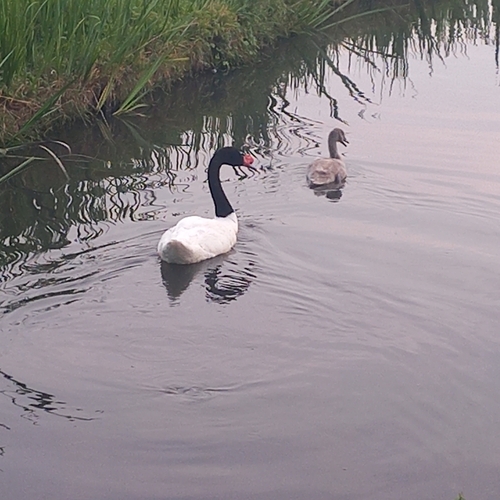
Black-necked Swan (Cygnus melancoryphus) Black-necked Swan
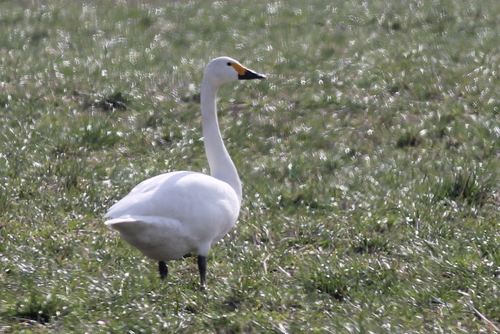
Bewick's Swan (Cygnus columbianus) Bewick's Swan

Media

Loading…

In short

The Black-necked Swan is easily distinguished by its striking black neck and head, contrasting with its white body, and a prominent red knob at the base of the bill. In contrast, the Bewick's Swan has a mostly white plumage with a black and yellow bill pattern. These differences are most apparent when viewed up close or with binoculars.

Identification tips

1. Look for the black neck and red bill knob of the Black-necked Swan. 2. Note the habitat: Black-necked Swans are in southern South America, while Bewick's Swans are migratory between the Arctic and temperate zones. 3. Observe the bill: Black-necked has a red knob, Bewick's has a yellow and black pattern. 4. Juvenile Black-necked Swans are grayish, contrasting with Bewick's white juveniles.

Size

Both species are similar in size, though the Black-necked Swan may appear slightly larger due to its longer neck.

Plumage

The Black-necked Swan has a distinctive black neck and head, while the Bewick's Swan is entirely white with a black and yellow bill. Juvenile Black-necked Swans are grayish, unlike the more uniformly white juveniles of the Bewick's Swan.

Behaviour

Black-necked Swans are often seen in small flocks or large aggregations, while Bewick's Swans are typically found in smaller family groups during migration.

Habitat

Black-necked Swans are found in freshwater and brackish lakes, bays, and fjords, primarily in southern South America. Bewick's Swans breed in Arctic tundra and migrate to temperate regions during winter.

Voice

Vocalizations are not a primary distinguishing feature, but Bewick's Swans are known for their soft, musical calls, while Black-necked Swans are generally quieter.

Submit a better description

Use the same sections as the comparison. Your text is published immediately.

The Black-necked Swan is easily distinguished by its striking black neck and head, contrasting with its white body, and a prominent red knob at the base of the bill. In contrast, the Bewick's Swan has a mostly white plumage with a black and yellow bill pattern. These differences are most apparent when viewed up close or with binoculars.

1. Look for the black neck and red bill knob of the Black-necked Swan. 2. Note the habitat: Black-necked Swans are in southern South America, while Bewick's Swans are migratory between the Arctic and temperate zones. 3. Observe the bill: Black-necked has a red knob, Bewick's has a yellow and black pattern. 4. Juvenile Black-necked Swans are grayish, contrasting with Bewick's white juveniles.

Both species are similar in size, though the Black-necked Swan may appear slightly larger due to its longer neck.

The Black-necked Swan has a distinctive black neck and head, while the Bewick's Swan is entirely white with a black and yellow bill. Juvenile Black-necked Swans are grayish, unlike the more uniformly white juveniles of the Bewick's Swan.

Black-necked Swans are often seen in small flocks or large aggregations, while Bewick's Swans are typically found in smaller family groups during migration.

Black-necked Swans are found in freshwater and brackish lakes, bays, and fjords, primarily in southern South America. Bewick's Swans breed in Arctic tundra and migrate to temperate regions during winter.

Vocalizations are not a primary distinguishing feature, but Bewick's Swans are known for their soft, musical calls, while Black-necked Swans are generally quieter.

Discard your changes?

You have unsaved edits. If you leave now, those changes will be lost.

Black-necked Swan · Bewick's Swan · My Tricky Birds