
Birdr

Black Paradise-Flycatcher vs Amur Paradise-Flycatcher

Terpsiphone atrocaudata versus Terpsiphone incei

Play a quiz with Black Paradise-Flycatcher and Amur Paradise-Flycatcher
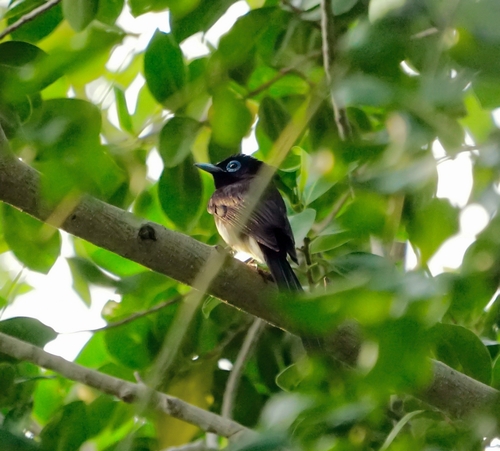
Black Paradise-Flycatcher (Terpsiphone atrocaudata) Black Paradise-Flycatcher
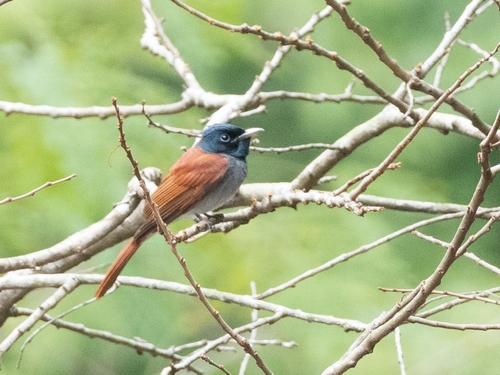
Amur Paradise-Flycatcher (Terpsiphone incei) Amur Paradise-Flycatcher

Media

Loading…

In short

The Black Paradise-Flycatcher and Amur Paradise-Flycatcher are closely related and similar in appearance, making them challenging to distinguish. The most reliable field mark is the tail length and shape, which tends to be longer and more pronounced in the Black Paradise-Flycatcher. Both species share similar habitats and behaviors, but their vocalizations can differ slightly.

Identification tips

  1. Tail length and shape: Black Paradise-Flycatcher has a longer and more pronounced tail. 2. Plumage sheen: Look for a more iridescent sheen in the Black Paradise-Flycatcher. 3. Vocalizations: Listen for subtle differences in pitch or pattern. 4. Habitat: Both species are found in similar forested environments, so focus on structural and vocal differences.

Size

Both species are similar in size, typical of paradise-flycatchers, with no significant differences noted.

Plumage

Both species exhibit similar plumage with dark, glossy feathers. However, the Black Paradise-Flycatcher often has a slightly more iridescent sheen, especially in males. Tail length and shape are more pronounced in the Black Paradise-Flycatcher.

Behaviour

Both species exhibit similar behaviors, such as sallying for insects and displaying agile flight patterns.

Habitat

Both species inhabit similar forested environments, often preferring dense, wooded areas.

Voice

Vocalizations are similar but can vary slightly between the two species. Observers should note any differences in pitch or pattern, though this can be subtle.

Submit a better description

Use the same sections as the comparison. Your text is published immediately.

The Black Paradise-Flycatcher and Amur Paradise-Flycatcher are closely related and similar in appearance, making them challenging to distinguish. The most reliable field mark is the tail length and shape, which tends to be longer and more pronounced in the Black Paradise-Flycatcher. Both species share similar habitats and behaviors, but their vocalizations can differ slightly.

  1. Tail length and shape: Black Paradise-Flycatcher has a longer and more pronounced tail. 2. Plumage sheen: Look for a more iridescent sheen in the Black Paradise-Flycatcher. 3. Vocalizations: Listen for subtle differences in pitch or pattern. 4. Habitat: Both species are found in similar forested environments, so focus on structural and vocal differences.

Both species are similar in size, typical of paradise-flycatchers, with no significant differences noted.

Both species exhibit similar plumage with dark, glossy feathers. However, the Black Paradise-Flycatcher often has a slightly more iridescent sheen, especially in males. Tail length and shape are more pronounced in the Black Paradise-Flycatcher.

Both species exhibit similar behaviors, such as sallying for insects and displaying agile flight patterns.

Both species inhabit similar forested environments, often preferring dense, wooded areas.

Vocalizations are similar but can vary slightly between the two species. Observers should note any differences in pitch or pattern, though this can be subtle.

Discard your changes?

You have unsaved edits. If you leave now, those changes will be lost.

Black Paradise-Flycatcher · Amur Paradise-Flycatcher · My Tricky Birds