Birdr

Black Scimitarbill vs African Grey Hornbill

Rhinopomastus aterrimus versus Lophoceros nasutus

Play a quiz with Black Scimitarbill and African Grey Hornbill
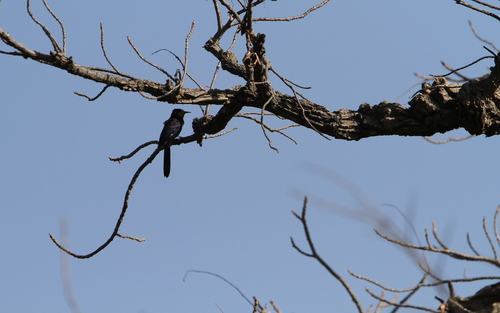
Black Scimitarbill (Rhinopomastus aterrimus) Black Scimitarbill
African Grey Hornbill (Lophoceros nasutus) African Grey Hornbill

Media

Loading…

In short

The bill shape is the most reliable field mark: the Black Scimitarbill has a long, decurved bill, while the African Grey Hornbill sports a prominent, slightly curved hornbill. Both species are found in similar habitats, but their vocalizations and behaviors can help distinguish them.

Identification tips

  1. Bill shape: Look for the long, decurved bill of the Black Scimitarbill versus the hornbill of the African Grey Hornbill. 2. Plumage: Note the glossy black of the Scimitarbill compared to the grey and white pattern of the Hornbill. 3. Behavior: Observe social behavior; Scimitarbills are less social. 4. Vocalization: Listen for the high-pitched calls of the Scimitarbill versus the nasal honks of the Hornbill.

Size

The African Grey Hornbill is generally larger and more robust than the Black Scimitarbill.

Plumage

The Black Scimitarbill is predominantly black with a glossy sheen, whereas the African Grey Hornbill has a grey body with a white belly and a distinctive black and white pattern on the wings and tail.

Behaviour

Black Scimitarbills are often seen alone or in pairs, foraging actively in trees. African Grey Hornbills are more social, often seen in small groups and are known for their gliding flight.

Habitat

Both species inhabit open woodlands and savannas, but the African Grey Hornbill is more adaptable to a variety of wooded habitats.

Voice

The Black Scimitarbill has a series of high-pitched, rapid calls, while the African Grey Hornbill produces a series of loud, nasal honks.

Submit a better description

Use the same sections as the comparison. Your text is published immediately.

The bill shape is the most reliable field mark: the Black Scimitarbill has a long, decurved bill, while the African Grey Hornbill sports a prominent, slightly curved hornbill. Both species are found in similar habitats, but their vocalizations and behaviors can help distinguish them.

  1. Bill shape: Look for the long, decurved bill of the Black Scimitarbill versus the hornbill of the African Grey Hornbill. 2. Plumage: Note the glossy black of the Scimitarbill compared to the grey and white pattern of the Hornbill. 3. Behavior: Observe social behavior; Scimitarbills are less social. 4. Vocalization: Listen for the high-pitched calls of the Scimitarbill versus the nasal honks of the Hornbill.

The African Grey Hornbill is generally larger and more robust than the Black Scimitarbill.

The Black Scimitarbill is predominantly black with a glossy sheen, whereas the African Grey Hornbill has a grey body with a white belly and a distinctive black and white pattern on the wings and tail.

Black Scimitarbills are often seen alone or in pairs, foraging actively in trees. African Grey Hornbills are more social, often seen in small groups and are known for their gliding flight.

Both species inhabit open woodlands and savannas, but the African Grey Hornbill is more adaptable to a variety of wooded habitats.

The Black Scimitarbill has a series of high-pitched, rapid calls, while the African Grey Hornbill produces a series of loud, nasal honks.

Discard your changes?

You have unsaved edits. If you leave now, those changes will be lost.

Black Scimitarbill · African Grey Hornbill · My Tricky Birds