Birdr

Black Stork vs White Stork

Ciconia nigra versus Ciconia ciconia

Play a quiz with Black Stork and White Stork
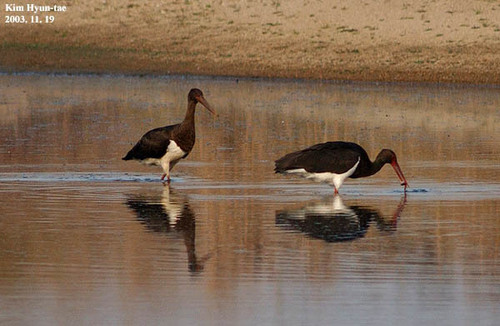
Black Stork (Ciconia nigra) Black Stork
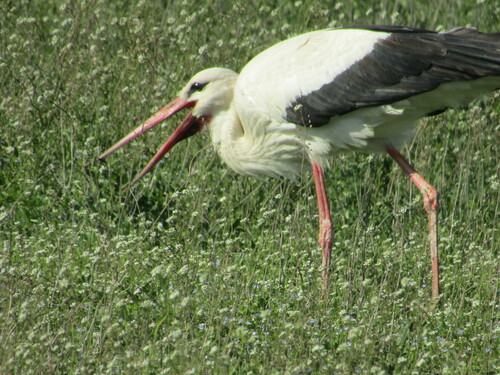
White Stork (Ciconia ciconia) White Stork

Media

Loading…

In short

The Black Stork (Ciconia nigra) and White Stork (Ciconia ciconia) are both large wading birds, but they can be distinguished by their plumage: the Black Stork has a mostly black body with a white belly, while the White Stork is predominantly white with black flight feathers. Observing their preferred habitats can also help; Black Storks are more often found in forested areas, whereas White Storks are typically seen in open fields and wetlands.

Identification tips

  1. Look for the black body with a white belly in Black Storks versus the white body with black wings in White Storks. 2. Consider habitat: Black Storks are more likely in forested areas, White Storks in open fields. 3. Note behavior: White Storks are more social and often seen in groups. 4. Listen for bill-clattering in White Storks during courtship.

Size

Both species are similar in size, but the White Stork may appear slightly larger due to its bulkier build.

Plumage

The Black Stork has a striking black body with a white belly, while the White Stork is mostly white with black on the wings. The Black Stork's black feathers have a greenish sheen, which can be a useful field mark in good light.

Behaviour

Both species are often seen wading in water, but the Black Stork is more solitary and shy, while the White Stork is more social and often seen in pairs or groups.

Habitat

Black Storks prefer forested wetlands and are more secretive, whereas White Storks are commonly found in open fields, wetlands, and near human settlements.

Voice

Both species are generally silent, but the White Stork is known for its bill-clattering during courtship, a behavior less commonly observed in Black Storks.

Submit a better description

Use the same sections as the comparison. Your text is published immediately.

The Black Stork (Ciconia nigra) and White Stork (Ciconia ciconia) are both large wading birds, but they can be distinguished by their plumage: the Black Stork has a mostly black body with a white belly, while the White Stork is predominantly white with black flight feathers. Observing their preferred habitats can also help; Black Storks are more often found in forested areas, whereas White Storks are typically seen in open fields and wetlands.

  1. Look for the black body with a white belly in Black Storks versus the white body with black wings in White Storks. 2. Consider habitat: Black Storks are more likely in forested areas, White Storks in open fields. 3. Note behavior: White Storks are more social and often seen in groups. 4. Listen for bill-clattering in White Storks during courtship.

Both species are similar in size, but the White Stork may appear slightly larger due to its bulkier build.

The Black Stork has a striking black body with a white belly, while the White Stork is mostly white with black on the wings. The Black Stork's black feathers have a greenish sheen, which can be a useful field mark in good light.

Both species are often seen wading in water, but the Black Stork is more solitary and shy, while the White Stork is more social and often seen in pairs or groups.

Black Storks prefer forested wetlands and are more secretive, whereas White Storks are commonly found in open fields, wetlands, and near human settlements.

Both species are generally silent, but the White Stork is known for its bill-clattering during courtship, a behavior less commonly observed in Black Storks.

Discard your changes?

You have unsaved edits. If you leave now, those changes will be lost.

Black Stork · White Stork · My Tricky Birds