Birdr

Black-tailed Godwit vs Yellow Bittern

Limosa limosa versus Botaurus sinensis

Play a quiz with Black-tailed Godwit and Yellow Bittern
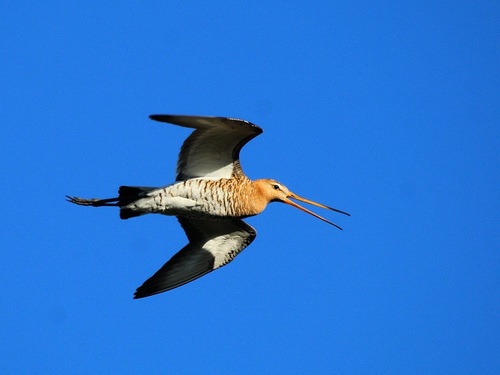
Black-tailed Godwit (Limosa limosa) Black-tailed Godwit
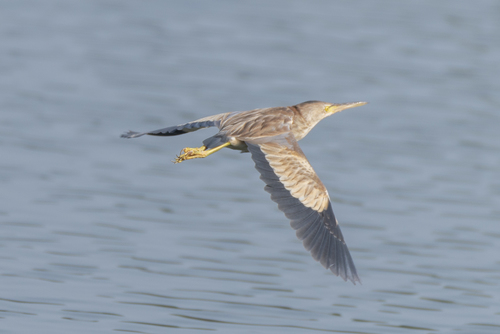
Yellow Bittern (Botaurus sinensis) Yellow Bittern

Media

Loading…

In short

The Black-tailed Godwit and Yellow Bittern are easily distinguished by size and habitat preferences. The Godwit is a large wader with long legs and a straight bill, while the Bittern is a small, secretive heron with a compact body and shorter neck. They rarely overlap in habitat, with Godwits favoring open wetlands and Bitterns preferring dense reed beds.

Identification tips

1. Size and Structure: Use size as a primary differentiator; Godwits are much larger with long legs and neck. 2. Habitat: Note the habitat; Godwits in open wetlands, Bitterns in dense reeds. 3. Plumage: Look for the Godwit's black tail and uniform plumage versus the Bittern's cryptic, buffy-yellow pattern. 4. Behavior: Godwits are more likely to be seen in the open, while Bitterns are secretive. 5. Vocalization: Listen for the Godwit's loud calls, as Bitterns are generally quiet.

Size

The Black-tailed Godwit is significantly larger, with a long neck and legs, compared to the much smaller and more compact Yellow Bittern.

Plumage

Black-tailed Godwits have a distinctive black tail and long, straight bill, while Yellow Bitterns are characterized by their buffy-yellow plumage and shorter bill. The Godwit has a more uniform grayish-brown appearance in non-breeding plumage, contrasting with the Bittern's more patterned and cryptic coloration.

Behaviour

Black-tailed Godwits are often seen in open areas, probing mudflats or shallow water, while Yellow Bitterns are more secretive, often skulking in dense vegetation and rarely venturing into open spaces.

Habitat

Black-tailed Godwits are typically found in open wetlands, mudflats, and estuaries. In contrast, Yellow Bitterns prefer dense reed beds and marshes, often near freshwater.

Voice

Black-tailed Godwits have a distinctive, loud 'wickering' call, especially during breeding, while Yellow Bitterns are generally silent but may emit a low, booming call during the breeding season.

Submit a better description

Use the same sections as the comparison. Your text is published immediately.

The Black-tailed Godwit and Yellow Bittern are easily distinguished by size and habitat preferences. The Godwit is a large wader with long legs and a straight bill, while the Bittern is a small, secretive heron with a compact body and shorter neck. They rarely overlap in habitat, with Godwits favoring open wetlands and Bitterns preferring dense reed beds.

1. Size and Structure: Use size as a primary differentiator; Godwits are much larger with long legs and neck. 2. Habitat: Note the habitat; Godwits in open wetlands, Bitterns in dense reeds. 3. Plumage: Look for the Godwit's black tail and uniform plumage versus the Bittern's cryptic, buffy-yellow pattern. 4. Behavior: Godwits are more likely to be seen in the open, while Bitterns are secretive. 5. Vocalization: Listen for the Godwit's loud calls, as Bitterns are generally quiet.

The Black-tailed Godwit is significantly larger, with a long neck and legs, compared to the much smaller and more compact Yellow Bittern.

Black-tailed Godwits have a distinctive black tail and long, straight bill, while Yellow Bitterns are characterized by their buffy-yellow plumage and shorter bill. The Godwit has a more uniform grayish-brown appearance in non-breeding plumage, contrasting with the Bittern's more patterned and cryptic coloration.

Black-tailed Godwits are often seen in open areas, probing mudflats or shallow water, while Yellow Bitterns are more secretive, often skulking in dense vegetation and rarely venturing into open spaces.

Black-tailed Godwits are typically found in open wetlands, mudflats, and estuaries. In contrast, Yellow Bitterns prefer dense reed beds and marshes, often near freshwater.

Black-tailed Godwits have a distinctive, loud 'wickering' call, especially during breeding, while Yellow Bitterns are generally silent but may emit a low, booming call during the breeding season.

Discard your changes?

You have unsaved edits. If you leave now, those changes will be lost.

Black-tailed Godwit · Yellow Bittern · My Tricky Birds