Birdr

Black-throated Babbler vs Streaked Wren-Babbler

Stachyris nigricollis versus Gypsophila brevicaudata

Play a quiz with Black-throated Babbler and Streaked Wren-Babbler
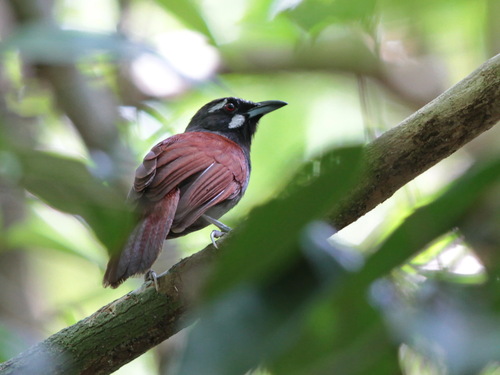
Black-throated Babbler (Stachyris nigricollis) Black-throated Babbler
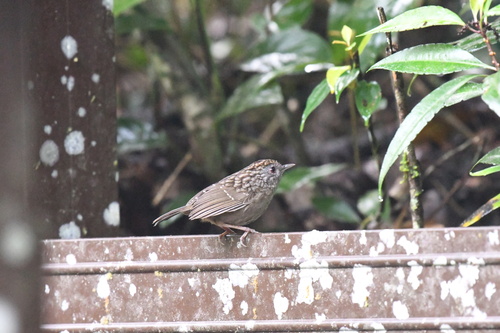
Streaked Wren-Babbler (Gypsophila brevicaudata) Streaked Wren-Babbler

Media

Loading…

In short

The Black-throated Babbler and Streaked Wren-Babbler can be distinguished by their throat markings and overall plumage pattern. The Black-throated Babbler has a distinctive black throat patch, while the Streaked Wren-Babbler features streaked underparts. Both species inhabit dense forest undergrowth, but their vocalizations and subtle behavioral differences can also aid in identification.

Identification tips

Size

Both species are small, but the Black-throated Babbler is slightly larger and more robust than the Streaked Wren-Babbler.

Plumage

The Black-throated Babbler has a black throat patch and a more uniform brown body, whereas the Streaked Wren-Babbler has streaked underparts and a more mottled appearance. The Streaked Wren-Babbler also tends to have a shorter tail.

Behaviour

Both species are skulking and often found in dense undergrowth, but the Black-throated Babbler may be more likely to be seen in mixed-species flocks.

Habitat

Both species prefer dense, humid forest undergrowth, but the Black-throated Babbler is more often associated with lowland forests, while the Streaked Wren-Babbler can be found in both lowland and montane forests.

Voice

The vocalizations of these species differ, with the Black-throated Babbler having a more melodious song, while the Streaked Wren-Babbler's call is more repetitive and less musical.

Submit a better description

Use the same sections as the comparison. Your text is published immediately.

The Black-throated Babbler and Streaked Wren-Babbler can be distinguished by their throat markings and overall plumage pattern. The Black-throated Babbler has a distinctive black throat patch, while the Streaked Wren-Babbler features streaked underparts. Both species inhabit dense forest undergrowth, but their vocalizations and subtle behavioral differences can also aid in identification.

  • Look for the black throat patch on the Black-throated Babbler.
  • Note the streaked underparts of the Streaked Wren-Babbler.
  • Listen for the more melodious song of the Black-throated Babbler compared to the repetitive call of the Streaked Wren-Babbler.
  • Observe the habitat: Black-throated Babblers are more common in lowland forests.

Both species are small, but the Black-throated Babbler is slightly larger and more robust than the Streaked Wren-Babbler.

The Black-throated Babbler has a black throat patch and a more uniform brown body, whereas the Streaked Wren-Babbler has streaked underparts and a more mottled appearance. The Streaked Wren-Babbler also tends to have a shorter tail.

Both species are skulking and often found in dense undergrowth, but the Black-throated Babbler may be more likely to be seen in mixed-species flocks.

Both species prefer dense, humid forest undergrowth, but the Black-throated Babbler is more often associated with lowland forests, while the Streaked Wren-Babbler can be found in both lowland and montane forests.

The vocalizations of these species differ, with the Black-throated Babbler having a more melodious song, while the Streaked Wren-Babbler's call is more repetitive and less musical.

Discard your changes?

You have unsaved edits. If you leave now, those changes will be lost.

Black-throated Babbler · Streaked Wren-Babbler · My Tricky Birds