Birdr

Black-throated Sunbird vs Green-tailed Sunbird

Aethopyga saturata versus Aethopyga nipalensis

Play a quiz with Black-throated Sunbird and Green-tailed Sunbird
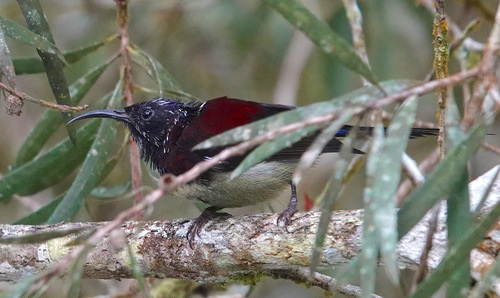
Black-throated Sunbird (Aethopyga saturata) Black-throated Sunbird
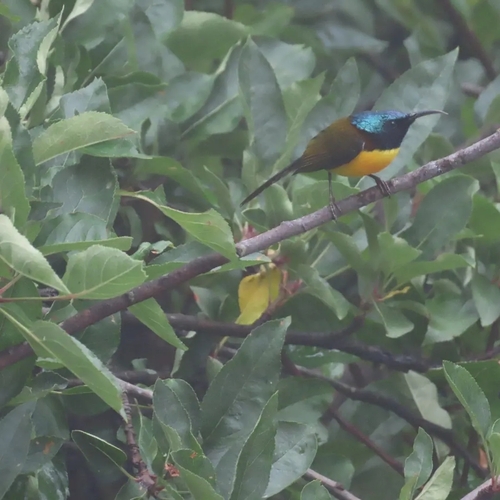
Green-tailed Sunbird (Aethopyga nipalensis) Green-tailed Sunbird

Media

Loading…

In short

The most reliable way to separate Black-throated Sunbird from Green-tailed Sunbird in the field is by focusing on their distinctive plumage features, especially the presence or absence of a green tail and the color of the back. Black-throated Sunbird lacks the bright green tail and yellow back of Green-tailed Sunbird, instead showing darker, less contrasting plumage. Both species can overlap in montane forests of the Himalayas and Southeast Asia, so context alone is not always sufficient. Structural differences are subtle, and size is very similar, so careful attention to color pattern is essential, especially in mixed-species flocks.

Identification tips

  1. Green tail (all ages): Only Green-tailed Sunbird shows a distinctly green tail; Black-throated Sunbird's tail is dark and lacks green tones. This is the single most useful field mark in all plumages.
  2. Yellow back (adult male): Adult male Green-tailed Sunbird has a bright yellow back, contrasting with the rest of the plumage. Black-throated Sunbird lacks this and appears darker above.
  3. Black throat (adult male): Black-throated Sunbird males have a solid black throat, while Green-tailed Sunbird males do not show this feature.
  4. Overall darkness: Black-throated Sunbird is generally darker and less contrasting than Green-tailed Sunbird, especially on the upperparts.
  5. Female/immature confusion: Females and immatures of both species can be tricky, but look for any green or yellow tones on the back and tail for Green-tailed Sunbird; Black-throated remains plainer and darker.
  6. Habitat context: At very high elevations (above 3000 m), Green-tailed Sunbird is more likely, but both can occur together in montane forests below this.
  7. Foraging behavior: Both species forage similarly, so do not rely on behavior for separation.
  8. Size: Both are equally small and delicate; do not use size as a separator.
  9. Mixed flocks: In mixed-species flocks, scan carefully for the green tail and yellow back to pick out Green-tailed Sunbird.
  10. Lighting pitfalls: In poor light, the green tail and yellow back of Green-tailed Sunbird may be hard to see; try to get multiple angles and views.
  11. No distinctive wing pattern: Neither species shows a unique wing or flight pattern for separation, so focus on body and tail coloration.
  12. Voice: No vocal differences are described in these notes; do not rely on calls or song for separation.
  13. Geographic overlap: Both species can occur together in Nepal and the eastern Himalayas, so do not assume species based on location alone.
  14. Seasonal movement: No seasonal plumage or movement differences are noted that would aid separation.
  15. Sex differences: Males are easier to separate by color; females and immatures require careful scrutiny of tail and back color.

Size

Black-throated Sunbird has a recorded body mass of 5.3 g [wikidata], which is typical for small sunbirds. There is no direct mass data for Green-tailed Sunbird in these notes, but both species are similar in size and would not be reliably separated by bulk or length in the field. Both have the slender, delicate build typical of Aethopyga sunbirds.

Plumage

No age-specific wing or flight marks are described for either species in the available notes, so separation relies on body and tail coloration. Adult male Green-tailed Sunbird is distinctive with a bright green tail and a yellow back, making it stand out in good light. Black-throated Sunbird lacks both the green tail and yellow back, instead showing darker, more uniform upperparts and a black throat. Females and immatures of both species are less striking, but Green-tailed Sunbird still tends to show some yellow or greenish tones on the back and tail, while Black-throated remains plainer and darker overall. In all plumages, the presence of a green tail is a strong indicator of Green-tailed Sunbird.

Behaviour

Both species behave similarly, foraging actively among flowers and foliage, often in the mid to upper canopy. They are agile, hover frequently, and may join mixed-species flocks. There are no clear behavioral differences noted that would reliably separate them in the field.

Habitat

Both species occur in subtropical or tropical moist montane forests, often overlapping in the Himalayas and parts of Southeast Asia. However, Green-tailed Sunbird is more associated with higher elevations (noted up to 3350 meters in Yunnan), and can be found in open mountain woods with mossy trees, while Black-throated Sunbird ranges more broadly, including lower elevation forests. In areas of overlap, habitat alone is not a reliable separator, but at the highest elevations, Green-tailed Sunbird is more likely.

Submit a better description

Use the same sections as the comparison. Your text is published immediately.

The most reliable way to separate Black-throated Sunbird from Green-tailed Sunbird in the field is by focusing on their distinctive plumage features, especially the presence or absence of a green tail and the color of the back. Black-throated Sunbird lacks the bright green tail and yellow back of Green-tailed Sunbird, instead showing darker, less contrasting plumage. Both species can overlap in montane forests of the Himalayas and Southeast Asia, so context alone is not always sufficient. Structural differences are subtle, and size is very similar, so careful attention to color pattern is essential, especially in mixed-species flocks.

  1. Green tail (all ages): Only Green-tailed Sunbird shows a distinctly green tail; Black-throated Sunbird's tail is dark and lacks green tones. This is the single most useful field mark in all plumages.
  2. Yellow back (adult male): Adult male Green-tailed Sunbird has a bright yellow back, contrasting with the rest of the plumage. Black-throated Sunbird lacks this and appears darker above.
  3. Black throat (adult male): Black-throated Sunbird males have a solid black throat, while Green-tailed Sunbird males do not show this feature.
  4. Overall darkness: Black-throated Sunbird is generally darker and less contrasting than Green-tailed Sunbird, especially on the upperparts.
  5. Female/immature confusion: Females and immatures of both species can be tricky, but look for any green or yellow tones on the back and tail for Green-tailed Sunbird; Black-throated remains plainer and darker.
  6. Habitat context: At very high elevations (above 3000 m), Green-tailed Sunbird is more likely, but both can occur together in montane forests below this.
  7. Foraging behavior: Both species forage similarly, so do not rely on behavior for separation.
  8. Size: Both are equally small and delicate; do not use size as a separator.
  9. Mixed flocks: In mixed-species flocks, scan carefully for the green tail and yellow back to pick out Green-tailed Sunbird.
  10. Lighting pitfalls: In poor light, the green tail and yellow back of Green-tailed Sunbird may be hard to see; try to get multiple angles and views.
  11. No distinctive wing pattern: Neither species shows a unique wing or flight pattern for separation, so focus on body and tail coloration.
  12. Voice: No vocal differences are described in these notes; do not rely on calls or song for separation.
  13. Geographic overlap: Both species can occur together in Nepal and the eastern Himalayas, so do not assume species based on location alone.
  14. Seasonal movement: No seasonal plumage or movement differences are noted that would aid separation.
  15. Sex differences: Males are easier to separate by color; females and immatures require careful scrutiny of tail and back color.

Black-throated Sunbird has a recorded body mass of 5.3 g [wikidata], which is typical for small sunbirds. There is no direct mass data for Green-tailed Sunbird in these notes, but both species are similar in size and would not be reliably separated by bulk or length in the field. Both have the slender, delicate build typical of Aethopyga sunbirds.

No age-specific wing or flight marks are described for either species in the available notes, so separation relies on body and tail coloration. Adult male Green-tailed Sunbird is distinctive with a bright green tail and a yellow back, making it stand out in good light. Black-throated Sunbird lacks both the green tail and yellow back, instead showing darker, more uniform upperparts and a black throat. Females and immatures of both species are less striking, but Green-tailed Sunbird still tends to show some yellow or greenish tones on the back and tail, while Black-throated remains plainer and darker overall. In all plumages, the presence of a green tail is a strong indicator of Green-tailed Sunbird.

Both species behave similarly, foraging actively among flowers and foliage, often in the mid to upper canopy. They are agile, hover frequently, and may join mixed-species flocks. There are no clear behavioral differences noted that would reliably separate them in the field.

Both species occur in subtropical or tropical moist montane forests, often overlapping in the Himalayas and parts of Southeast Asia. However, Green-tailed Sunbird is more associated with higher elevations (noted up to 3350 meters in Yunnan), and can be found in open mountain woods with mossy trees, while Black-throated Sunbird ranges more broadly, including lower elevation forests. In areas of overlap, habitat alone is not a reliable separator, but at the highest elevations, Green-tailed Sunbird is more likely.

Discard your changes?

You have unsaved edits. If you leave now, those changes will be lost.

Black-throated Sunbird · Green-tailed Sunbird · My Tricky Birds