Birdr

Black-throated Wren vs Rufous-and-white Wren

Pheugopedius atrogularis versus Thryophilus rufalbus

Play a quiz with Black-throated Wren and Rufous-and-white Wren
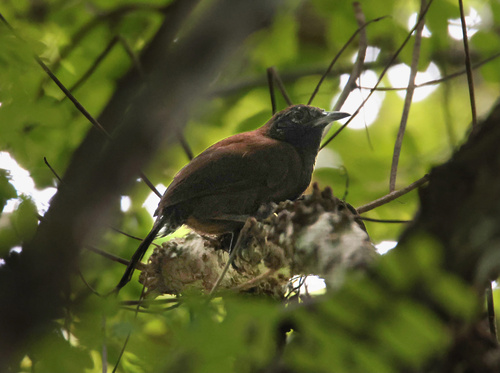
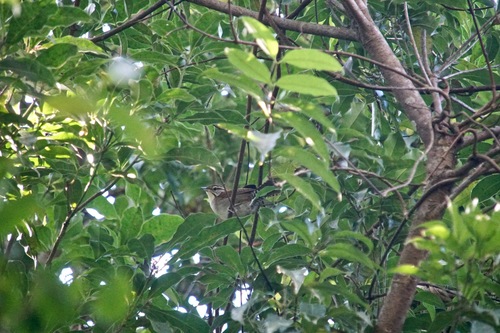
Black-throated Wren (Pheugopedius atrogularis) Black-throated Wren
Rufous-and-white Wren (Thryophilus rufalbus) Rufous-and-white Wren

Media

Loading…

In short

The Black-throated Wren is distinguished by its deep reddish-brown upperparts and striking black throat and upper breast, while the Rufous-and-white Wren features a more uniform rufous and white coloration with no black throat. Both species share similar sizes and habitats, making plumage the most reliable differentiator.

Identification tips

  1. Look for the black throat and upper breast on the Black-throated Wren. 2. Note the uniform rufous and white coloration of the Rufous-and-white Wren. 3. Observe behavior and habitat, but rely on plumage for identification. 4. If possible, listen for vocal differences, though specifics are not provided.

Size

Both species are similar in size, typical of wrens, with no significant differences in structure.

Plumage

The Black-throated Wren has deep reddish-brown upperparts with a black throat and upper breast, transitioning to reddish chestnut and dull black barred white on the ventral region. The Rufous-and-white Wren lacks the black throat and instead has a more uniform rufous and white plumage.

Behaviour

Both species exhibit typical wren behavior, being furtive and often staying low in dense vegetation.

Habitat

Both species inhabit similar environments, often found in dense undergrowth and forested areas.

Voice

Vocalizations are not detailed in the sources, but wrens typically have distinctive songs. Differences may exist but are not specified here.

Submit a better description

Use the same sections as the comparison. Your text is published immediately.

The Black-throated Wren is distinguished by its deep reddish-brown upperparts and striking black throat and upper breast, while the Rufous-and-white Wren features a more uniform rufous and white coloration with no black throat. Both species share similar sizes and habitats, making plumage the most reliable differentiator.

  1. Look for the black throat and upper breast on the Black-throated Wren. 2. Note the uniform rufous and white coloration of the Rufous-and-white Wren. 3. Observe behavior and habitat, but rely on plumage for identification. 4. If possible, listen for vocal differences, though specifics are not provided.

Both species are similar in size, typical of wrens, with no significant differences in structure.

The Black-throated Wren has deep reddish-brown upperparts with a black throat and upper breast, transitioning to reddish chestnut and dull black barred white on the ventral region. The Rufous-and-white Wren lacks the black throat and instead has a more uniform rufous and white plumage.

Both species exhibit typical wren behavior, being furtive and often staying low in dense vegetation.

Both species inhabit similar environments, often found in dense undergrowth and forested areas.

Vocalizations are not detailed in the sources, but wrens typically have distinctive songs. Differences may exist but are not specified here.

Discard your changes?

You have unsaved edits. If you leave now, those changes will be lost.

Black-throated Wren · Rufous-and-white Wren · My Tricky Birds