Birdr

Blackish-blue Seedeater vs Amazonian Grosbeak

Amaurospiza moesta versus Cyanoloxia rothschildii

Play a quiz with Blackish-blue Seedeater and Amazonian Grosbeak
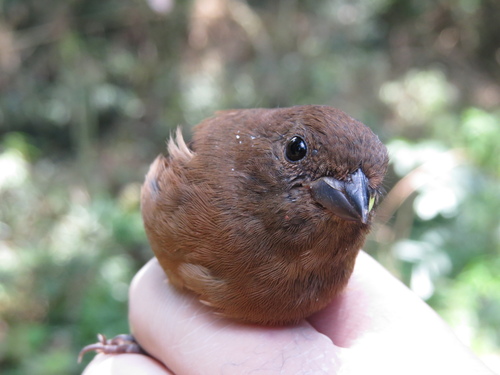
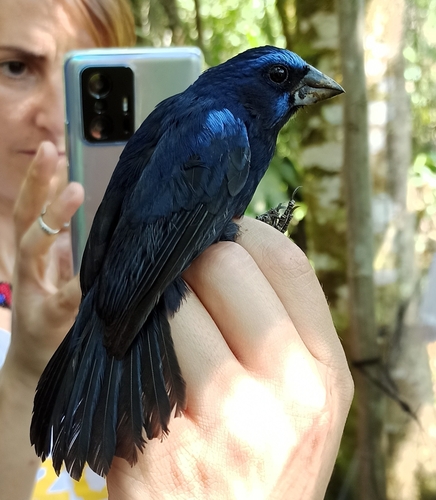
Blackish-blue Seedeater (Amaurospiza moesta) Blackish-blue Seedeater
Amazonian Grosbeak (Cyanoloxia rothschildii) Amazonian Grosbeak

Media

Loading…

In short

The Blackish-blue Seedeater and Amazonian Grosbeak are both small, dark seedeaters found in South America, but they differ in plumage and habitat preferences. The Blackish-blue Seedeater is slaty blue with a blackish face and breast, while the Amazonian Grosbeak is more uniformly blue-black. Habitat and behavior can also help distinguish them.

Identification tips

Size

Both species are similar in size, typical of small seedeaters.

Plumage

Male Blackish-blue Seedeaters are slaty blue with a blackish face and breast, whereas male Amazonian Grosbeaks are more uniformly blue-black. Female Blackish-blue Seedeaters are tawny-brown with paler underparts, while female Amazonian Grosbeaks are not as distinctly described but generally follow the darker blue-black theme.

Behaviour

Blackish-blue Seedeaters are often seen in pairs during bamboo seeding events, staying low to the ground. Amazonian Grosbeaks do not have such specific behavioral notes.

Habitat

Blackish-blue Seedeaters are generally found in southeast Brazil, northeast Argentina, and eastern Paraguay, often during bamboo seeding events. Amazonian Grosbeaks are more widely distributed in the Amazon basin.

Submit a better description

Use the same sections as the comparison. Your text is published immediately.

The Blackish-blue Seedeater and Amazonian Grosbeak are both small, dark seedeaters found in South America, but they differ in plumage and habitat preferences. The Blackish-blue Seedeater is slaty blue with a blackish face and breast, while the Amazonian Grosbeak is more uniformly blue-black. Habitat and behavior can also help distinguish them.

  • Check plumage: Look for the slaty blue with blackish face of the Blackish-blue Seedeater versus the more uniform blue-black of the Amazonian Grosbeak.
  • Observe habitat: Blackish-blue Seedeaters are often associated with bamboo seeding events in specific South American regions.
  • Consider behavior: Blackish-blue Seedeaters are usually seen in pairs low to the ground during specific seeding events.

Both species are similar in size, typical of small seedeaters.

Male Blackish-blue Seedeaters are slaty blue with a blackish face and breast, whereas male Amazonian Grosbeaks are more uniformly blue-black. Female Blackish-blue Seedeaters are tawny-brown with paler underparts, while female Amazonian Grosbeaks are not as distinctly described but generally follow the darker blue-black theme.

Blackish-blue Seedeaters are often seen in pairs during bamboo seeding events, staying low to the ground. Amazonian Grosbeaks do not have such specific behavioral notes.

Blackish-blue Seedeaters are generally found in southeast Brazil, northeast Argentina, and eastern Paraguay, often during bamboo seeding events. Amazonian Grosbeaks are more widely distributed in the Amazon basin.

Discard your changes?

You have unsaved edits. If you leave now, those changes will be lost.

Blackish-blue Seedeater · Amazonian Grosbeak · My Tricky Birds