Birdr

Blackpoll Warbler vs Yellow-rumped Warbler

Setophaga striata versus Setophaga coronata

Play a quiz with Blackpoll Warbler and Yellow-rumped Warbler
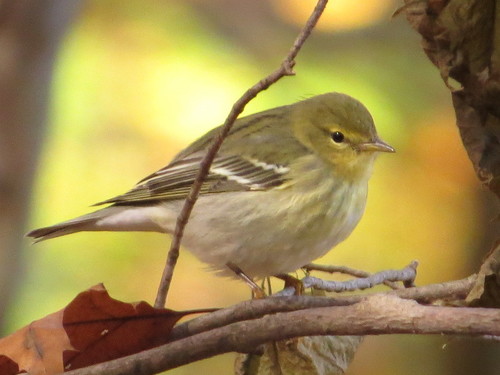
Blackpoll Warbler (Setophaga striata) Blackpoll Warbler
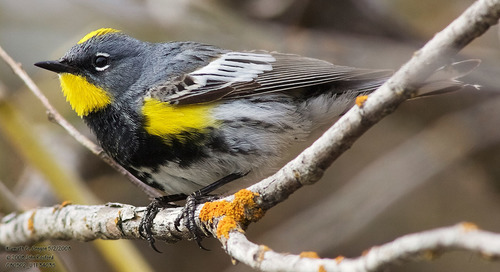
Yellow-rumped Warbler (Setophaga coronata) Yellow-rumped Warbler

Media

Loading…

In short

The most reliable field mark to separate Blackpoll Warbler from Yellow-rumped Warbler is the presence of a bright yellow rump patch on all Yellow-rumped Warblers (regardless of age or season), which Blackpoll Warbler never shows. In spring, adult male Blackpolls are crisply black-and-white with a black cap and white cheeks, while Yellow-rumped Warblers (especially the 'Myrtle' form) show gray backs, yellow crown and flank patches, and a yellow rump. In fall and on immatures, both species can appear greenish and streaked, but the yellow rump remains diagnostic for Yellow-rumped. Structure and behavior are similar, but subtle differences in head pattern, leg color, and throat patch can help. Both species overlap in migration, but Yellow-rumped is far more widespread and abundant outside the far north.

Identification tips

  1. Yellow rump patch: All Yellow-rumped Warblers, regardless of age or subspecies, show a bright yellow rump visible in flight and often when perched. Blackpoll Warbler never shows yellow on the rump.
  2. Spring adult male Blackpoll: Look for a black cap, white cheeks, and sharply black-and-white plumage. No yellow anywhere. Yellow-rumped males have gray backs, yellow crown/flank/rump, and (in Myrtle) a white throat with black cheek patch.
  3. Fall/immature birds: Both can look greenish and streaked, but only Yellow-rumped has the yellow rump. Blackpolls have greenish heads and upperparts, yellowish (not bright yellow) underparts, and orangish-pink legs.
  4. Wing bars: Both species have two white wing bars, so this is not a separator.
  5. Leg color: Blackpoll Warbler often shows bright orangish-pink legs, especially in fall; Yellow-rumped legs are dark.
  6. Throat color: Myrtle Yellow-rumped has a white throat and black cheek patch; Audubon's has a yellow throat. Blackpolls never have a yellow throat.
  7. Cheek patch: Myrtle Yellow-rumped males have a black cheek patch; Blackpoll males have white cheeks with a black cap. Females of both are duller but the cheek pattern persists.
  8. Flank/yellow crown patches: Yellow-rumped has yellow on the flanks and sometimes crown; Blackpoll never does.
  9. Bill and structure: Both are typical Setophaga warblers, but Blackpoll may appear slightly heavier-billed and longer-winged, though this is subtle and not reliable in the field.
  10. Habitat and season: Outside of migration, a 'baypoll'-type warbler is almost always a Yellow-rumped. Blackpoll is rare in winter and south of the mid-Atlantic in fall.
  11. Behavior: Yellow-rumped is more likely to forage in open areas, beaches, or unusual substrates; Blackpoll sticks to trees.
  12. Song and calls: If you hear a sharp 'check' call, it's likely Yellow-rumped. Song differences are subtle and not always useful for quick field ID.
  13. Sex differences: Female and immature Yellow-rumped are browner but always have the yellow rump; female Blackpolls are duller than males but never show yellow.
  14. Migration timing: Blackpolls are late spring migrants and take a transoceanic route in fall; Yellow-rumped migrate earlier and are present much longer in most areas.
  15. Plumage confusion: In fall, both can look similar ('baypolls'), but the yellow rump is always present on Yellow-rumped and never on Blackpoll.

Size

Both species are similar in size and can overlap in measurements, but Blackpoll Warbler averages slightly heavier (body mass ~12.3g) and is among the larger Setophaga warblers, though Yellow-rumped Warbler is also mid-to-large for the genus. Blackpoll: length 12.5–15 cm, wingspan 20–25 cm. Yellow-rumped: length 12–15 cm, wingspan 19–24 cm. In the field, size is not a reliable separator, as both appear as typical small warblers.

Plumage

Juvenile and first-fall birds of both species can be confusingly similar, with greenish upperparts and streaked underparts. However, Yellow-rumped Warbler of all ages and forms always shows a conspicuous yellow rump patch, visible in flight and often when perched. Blackpoll Warbler never shows yellow on the rump. In spring, adult male Blackpolls are sharply black-and-white with a black cap, white cheeks, and white wing bars; females are duller but still lack any yellow. Yellow-rumped Warbler (Myrtle form) males in spring have gray backs with black streaks, a white throat, black cheek patch, and yellow crown, flank, and rump patches; females are browner but retain the yellow rump. Audubon's form has a yellow throat and similar yellow patches. In fall, both species become duller and more olive, but the yellow rump remains a constant in Yellow-rumped. Blackpolls in fall have greenish heads, streaked upperparts, and yellowish (not bright yellow) underparts, with orangish-pink legs as a subtle but useful mark. Both species have two white wing bars, but only Yellow-rumped has the yellow rump.

Behaviour

Both species are active, often foraging in the mid to upper canopy, and can sally for insects. Yellow-rumped Warbler is notably versatile, sometimes foraging on beaches, in seaweed, or even in manure piles, while Blackpoll is more typically arboreal. Flight style and posture are not reliably different in the field.

Habitat

Yellow-rumped Warbler is extremely widespread and common across North America, found in a wide range of habitats from forests to parks and even coastal areas, especially outside the breeding season. Blackpoll Warbler breeds in northern boreal forests and is mostly seen in migration in the eastern U.S., especially in the Northeast. In fall, Blackpolls are rare south of Cape Hatteras, while Yellow-rumped can be abundant almost anywhere. If you see a 'baypoll'-type warbler in winter or outside migration, it's almost certainly a Yellow-rumped.

Voice

Yellow-rumped Warbler has a distinctive trill-like song (tyew-tyew-tyew-tyew, tew-tew-tew) and a sharp 'check' or 'chip' call. Blackpoll's song is not described here, but is typically a high, thin series of 'tsi' notes (not diagnostic with these notes). Calls are not the most reliable separator unless the Yellow-rumped's check note is heard.

Submit a better description

Use the same sections as the comparison. Your text is published immediately.

The most reliable field mark to separate Blackpoll Warbler from Yellow-rumped Warbler is the presence of a bright yellow rump patch on all Yellow-rumped Warblers (regardless of age or season), which Blackpoll Warbler never shows. In spring, adult male Blackpolls are crisply black-and-white with a black cap and white cheeks, while Yellow-rumped Warblers (especially the 'Myrtle' form) show gray backs, yellow crown and flank patches, and a yellow rump. In fall and on immatures, both species can appear greenish and streaked, but the yellow rump remains diagnostic for Yellow-rumped. Structure and behavior are similar, but subtle differences in head pattern, leg color, and throat patch can help. Both species overlap in migration, but Yellow-rumped is far more widespread and abundant outside the far north.

  1. Yellow rump patch: All Yellow-rumped Warblers, regardless of age or subspecies, show a bright yellow rump visible in flight and often when perched. Blackpoll Warbler never shows yellow on the rump.
  2. Spring adult male Blackpoll: Look for a black cap, white cheeks, and sharply black-and-white plumage. No yellow anywhere. Yellow-rumped males have gray backs, yellow crown/flank/rump, and (in Myrtle) a white throat with black cheek patch.
  3. Fall/immature birds: Both can look greenish and streaked, but only Yellow-rumped has the yellow rump. Blackpolls have greenish heads and upperparts, yellowish (not bright yellow) underparts, and orangish-pink legs.
  4. Wing bars: Both species have two white wing bars, so this is not a separator.
  5. Leg color: Blackpoll Warbler often shows bright orangish-pink legs, especially in fall; Yellow-rumped legs are dark.
  6. Throat color: Myrtle Yellow-rumped has a white throat and black cheek patch; Audubon's has a yellow throat. Blackpolls never have a yellow throat.
  7. Cheek patch: Myrtle Yellow-rumped males have a black cheek patch; Blackpoll males have white cheeks with a black cap. Females of both are duller but the cheek pattern persists.
  8. Flank/yellow crown patches: Yellow-rumped has yellow on the flanks and sometimes crown; Blackpoll never does.
  9. Bill and structure: Both are typical Setophaga warblers, but Blackpoll may appear slightly heavier-billed and longer-winged, though this is subtle and not reliable in the field.
  10. Habitat and season: Outside of migration, a 'baypoll'-type warbler is almost always a Yellow-rumped. Blackpoll is rare in winter and south of the mid-Atlantic in fall.
  11. Behavior: Yellow-rumped is more likely to forage in open areas, beaches, or unusual substrates; Blackpoll sticks to trees.
  12. Song and calls: If you hear a sharp 'check' call, it's likely Yellow-rumped. Song differences are subtle and not always useful for quick field ID.
  13. Sex differences: Female and immature Yellow-rumped are browner but always have the yellow rump; female Blackpolls are duller than males but never show yellow.
  14. Migration timing: Blackpolls are late spring migrants and take a transoceanic route in fall; Yellow-rumped migrate earlier and are present much longer in most areas.
  15. Plumage confusion: In fall, both can look similar ('baypolls'), but the yellow rump is always present on Yellow-rumped and never on Blackpoll.

Both species are similar in size and can overlap in measurements, but Blackpoll Warbler averages slightly heavier (body mass ~12.3g) and is among the larger Setophaga warblers, though Yellow-rumped Warbler is also mid-to-large for the genus. Blackpoll: length 12.5–15 cm, wingspan 20–25 cm. Yellow-rumped: length 12–15 cm, wingspan 19–24 cm. In the field, size is not a reliable separator, as both appear as typical small warblers.

Juvenile and first-fall birds of both species can be confusingly similar, with greenish upperparts and streaked underparts. However, Yellow-rumped Warbler of all ages and forms always shows a conspicuous yellow rump patch, visible in flight and often when perched. Blackpoll Warbler never shows yellow on the rump. In spring, adult male Blackpolls are sharply black-and-white with a black cap, white cheeks, and white wing bars; females are duller but still lack any yellow. Yellow-rumped Warbler (Myrtle form) males in spring have gray backs with black streaks, a white throat, black cheek patch, and yellow crown, flank, and rump patches; females are browner but retain the yellow rump. Audubon's form has a yellow throat and similar yellow patches. In fall, both species become duller and more olive, but the yellow rump remains a constant in Yellow-rumped. Blackpolls in fall have greenish heads, streaked upperparts, and yellowish (not bright yellow) underparts, with orangish-pink legs as a subtle but useful mark. Both species have two white wing bars, but only Yellow-rumped has the yellow rump.

Both species are active, often foraging in the mid to upper canopy, and can sally for insects. Yellow-rumped Warbler is notably versatile, sometimes foraging on beaches, in seaweed, or even in manure piles, while Blackpoll is more typically arboreal. Flight style and posture are not reliably different in the field.

Yellow-rumped Warbler is extremely widespread and common across North America, found in a wide range of habitats from forests to parks and even coastal areas, especially outside the breeding season. Blackpoll Warbler breeds in northern boreal forests and is mostly seen in migration in the eastern U.S., especially in the Northeast. In fall, Blackpolls are rare south of Cape Hatteras, while Yellow-rumped can be abundant almost anywhere. If you see a 'baypoll'-type warbler in winter or outside migration, it's almost certainly a Yellow-rumped.

Yellow-rumped Warbler has a distinctive trill-like song (tyew-tyew-tyew-tyew, tew-tew-tew) and a sharp 'check' or 'chip' call. Blackpoll's song is not described here, but is typically a high, thin series of 'tsi' notes (not diagnostic with these notes). Calls are not the most reliable separator unless the Yellow-rumped's check note is heard.

Discard your changes?

You have unsaved edits. If you leave now, those changes will be lost.

Blackpoll Warbler · Yellow-rumped Warbler · My Tricky Birds