Birdr

Blue-and-gold Tanager vs Palm Tanager

Bangsia arcaei versus Thraupis palmarum

Play a quiz with Blue-and-gold Tanager and Palm Tanager
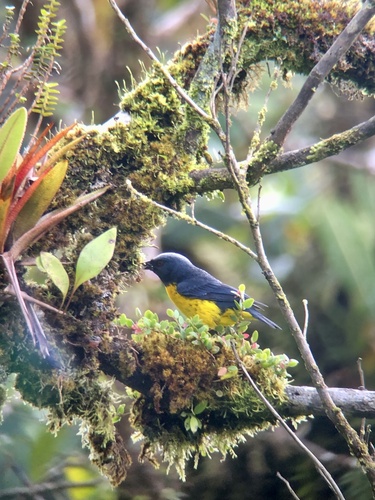
Blue-and-gold Tanager (Bangsia arcaei) Blue-and-gold Tanager
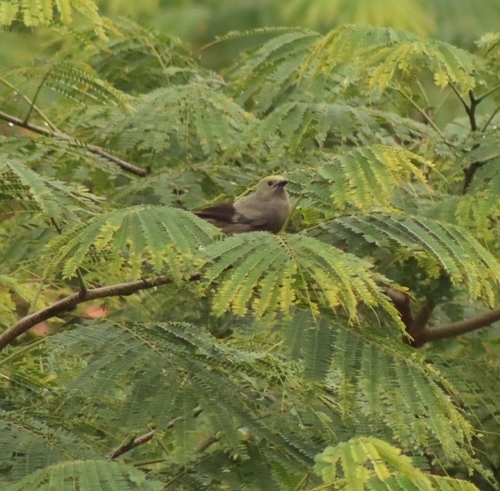
Palm Tanager (Thraupis palmarum) Palm Tanager

Media

Loading…

In short

The Blue-and-gold Tanager and the Palm Tanager can be distinguished by their plumage and behavior. The Blue-and-gold Tanager has a striking blue and gold coloration, while the Palm Tanager is more uniformly olive-green. Behaviorally, Palm Tanagers are often seen in pairs or small groups, frequently foraging in palm trees.

Identification tips

1. Look for the bright blue and gold coloration of the Blue-and-gold Tanager. 2. Note the more uniform olive-green plumage of the Palm Tanager. 3. Observe behavior: Palm Tanagers often forage in pairs or small groups in palm trees. 4. Consider habitat: Palm Tanagers are more likely to be found in disturbed areas compared to Blue-and-gold Tanagers.

Size

Both species are similar in size, typical of small to medium-sized tanagers.

Plumage

The Blue-and-gold Tanager has a vivid blue back and golden underparts, making it quite distinctive. In contrast, the Palm Tanager is more subdued, with an overall olive-green plumage and slightly paler wings.

Behaviour

Palm Tanagers are often observed in pairs or small groups and are known to cling to the undersides of leaves, especially in palm trees. Blue-and-gold Tanagers are less likely to be seen in such specific foraging behaviors.

Habitat

Both species inhabit forested areas, but the Palm Tanager is more adaptable to disturbed habitats and can often be found in gardens and plantations, whereas the Blue-and-gold Tanager is more restricted to humid forest environments.

Voice

Vocalizations are not a primary distinguishing feature between these two species, and specific differences in calls are not well-documented.

Submit a better description

Use the same sections as the comparison. Your text is published immediately.

The Blue-and-gold Tanager and the Palm Tanager can be distinguished by their plumage and behavior. The Blue-and-gold Tanager has a striking blue and gold coloration, while the Palm Tanager is more uniformly olive-green. Behaviorally, Palm Tanagers are often seen in pairs or small groups, frequently foraging in palm trees.

1. Look for the bright blue and gold coloration of the Blue-and-gold Tanager. 2. Note the more uniform olive-green plumage of the Palm Tanager. 3. Observe behavior: Palm Tanagers often forage in pairs or small groups in palm trees. 4. Consider habitat: Palm Tanagers are more likely to be found in disturbed areas compared to Blue-and-gold Tanagers.

Both species are similar in size, typical of small to medium-sized tanagers.

The Blue-and-gold Tanager has a vivid blue back and golden underparts, making it quite distinctive. In contrast, the Palm Tanager is more subdued, with an overall olive-green plumage and slightly paler wings.

Palm Tanagers are often observed in pairs or small groups and are known to cling to the undersides of leaves, especially in palm trees. Blue-and-gold Tanagers are less likely to be seen in such specific foraging behaviors.

Both species inhabit forested areas, but the Palm Tanager is more adaptable to disturbed habitats and can often be found in gardens and plantations, whereas the Blue-and-gold Tanager is more restricted to humid forest environments.

Vocalizations are not a primary distinguishing feature between these two species, and specific differences in calls are not well-documented.

Discard your changes?

You have unsaved edits. If you leave now, those changes will be lost.

Blue-and-gold Tanager · Palm Tanager · My Tricky Birds