Birdr

Blue-and-white Flycatcher vs Indigo Flycatcher

Cyanoptila cyanomelana versus Eumyias indigo

Play a quiz with Blue-and-white Flycatcher and Indigo Flycatcher
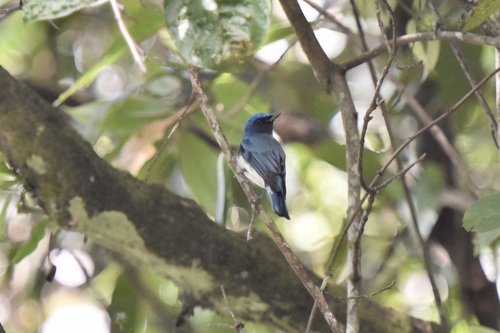
Blue-and-white Flycatcher (Cyanoptila cyanomelana) Blue-and-white Flycatcher
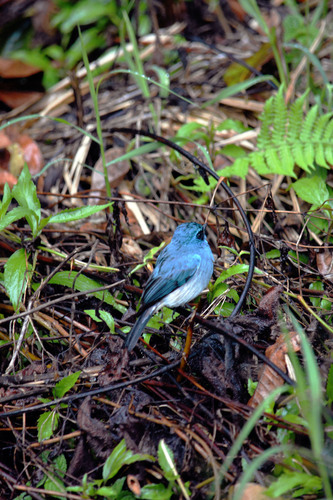
Indigo Flycatcher (Eumyias indigo) Indigo Flycatcher

Media

Loading…

In short

The Blue-and-white Flycatcher and the Indigo Flycatcher are both small, colorful Old World flycatchers, but they can be distinguished by their plumage and habitat preferences. The Blue-and-white Flycatcher typically displays a striking contrast between its blue upperparts and white underparts, while the Indigo Flycatcher is more uniformly blue. Habitat differences also aid identification, with the Blue-and-white Flycatcher favoring deciduous and mixed forests, and the Indigo Flycatcher often found in montane forests.

Identification tips

Size

Both species are similar in size, typical of small flycatchers, making size an unreliable distinguishing feature.

Plumage

The Blue-and-white Flycatcher has a distinctive blue head, back, and wings with a contrasting white belly and underparts. In contrast, the Indigo Flycatcher is more uniformly blue, lacking the stark white underparts. Juveniles and females of both species may show less vivid coloration, which can complicate identification.

Behaviour

Both species exhibit typical flycatcher behavior, such as sallying from perches to catch insects, making behavior alone a poor differentiator.

Habitat

The Blue-and-white Flycatcher is often found in deciduous and mixed forests, particularly during migration. The Indigo Flycatcher prefers montane forests, often at higher elevations, which can help distinguish them based on location.

Voice

Vocalizations are not the most reliable distinguishing feature, as both species have typical flycatcher calls, though the Blue-and-white Flycatcher's song is known to be more melodious.

Submit a better description

Use the same sections as the comparison. Your text is published immediately.

The Blue-and-white Flycatcher and the Indigo Flycatcher are both small, colorful Old World flycatchers, but they can be distinguished by their plumage and habitat preferences. The Blue-and-white Flycatcher typically displays a striking contrast between its blue upperparts and white underparts, while the Indigo Flycatcher is more uniformly blue. Habitat differences also aid identification, with the Blue-and-white Flycatcher favoring deciduous and mixed forests, and the Indigo Flycatcher often found in montane forests.

  • Look for the contrast between blue upperparts and white underparts in the Blue-and-white Flycatcher.
  • Note the uniform blue coloration of the Indigo Flycatcher.
  • Consider the habitat: deciduous/mixed forests for Blue-and-white, montane forests for Indigo.
  • Be cautious with juveniles and females, as they may show less distinct coloration.

Both species are similar in size, typical of small flycatchers, making size an unreliable distinguishing feature.

The Blue-and-white Flycatcher has a distinctive blue head, back, and wings with a contrasting white belly and underparts. In contrast, the Indigo Flycatcher is more uniformly blue, lacking the stark white underparts. Juveniles and females of both species may show less vivid coloration, which can complicate identification.

Both species exhibit typical flycatcher behavior, such as sallying from perches to catch insects, making behavior alone a poor differentiator.

The Blue-and-white Flycatcher is often found in deciduous and mixed forests, particularly during migration. The Indigo Flycatcher prefers montane forests, often at higher elevations, which can help distinguish them based on location.

Vocalizations are not the most reliable distinguishing feature, as both species have typical flycatcher calls, though the Blue-and-white Flycatcher's song is known to be more melodious.

Discard your changes?

You have unsaved edits. If you leave now, those changes will be lost.

Blue-and-white Flycatcher · Indigo Flycatcher · My Tricky Birds