Birdr

Blue-and-white Flycatcher vs Zappey's Flycatcher

Cyanoptila cyanomelana versus Cyanoptila cumatilis

Play a quiz with Blue-and-white Flycatcher and Zappey's Flycatcher
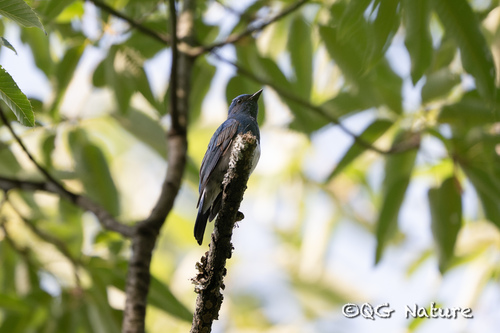
Blue-and-white Flycatcher (Cyanoptila cyanomelana) Blue-and-white Flycatcher
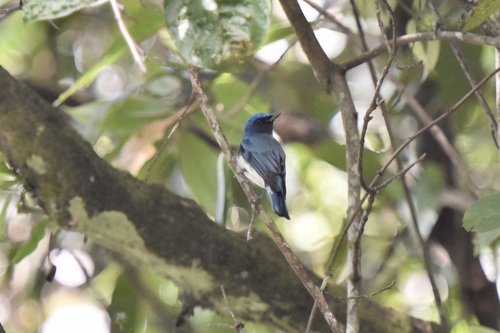
Zappey's Flycatcher (Cyanoptila cumatilis) Zappey's Flycatcher

Media

Loading…

In short

The Blue-and-white Flycatcher and Zappey's Flycatcher are closely related and can be challenging to differentiate. The most reliable field mark is the male's plumage: Blue-and-white Flycatcher males have a deeper blue tone, while Zappey's Flycatcher males exhibit a brighter, more azure blue. Both species have similar structure and behavior, so focus on plumage and vocalizations for identification.

Identification tips

  1. Focus on male plumage: deeper blue for Blue-and-white, brighter azure for Zappey's. 2. Listen for song differences if possible. 3. Note that females and juveniles are difficult to distinguish based on plumage alone. 4. Observe in appropriate habitats during migration and breeding seasons.

Size

Both species are similar in size, typical of Old World flycatchers.

Plumage

Male Blue-and-white Flycatchers have a deeper, more cobalt blue on the upperparts compared to the brighter, azure blue of Zappey's Flycatcher males. Females and juveniles of both species are more challenging to distinguish, as they share similar brownish tones.

Behaviour

Both species exhibit typical flycatcher behavior, actively foraging from perches and making short sallies to catch insects.

Habitat

Both species inhabit similar forested environments, often in mixed or deciduous woodlands during migration and breeding seasons.

Voice

Vocalizations are similar, but subtle differences exist. Blue-and-white Flycatchers have a slightly more varied song, while Zappey's Flycatcher may have simpler, more repetitive calls.

Submit a better description

Use the same sections as the comparison. Your text is published immediately.

The Blue-and-white Flycatcher and Zappey's Flycatcher are closely related and can be challenging to differentiate. The most reliable field mark is the male's plumage: Blue-and-white Flycatcher males have a deeper blue tone, while Zappey's Flycatcher males exhibit a brighter, more azure blue. Both species have similar structure and behavior, so focus on plumage and vocalizations for identification.

  1. Focus on male plumage: deeper blue for Blue-and-white, brighter azure for Zappey's. 2. Listen for song differences if possible. 3. Note that females and juveniles are difficult to distinguish based on plumage alone. 4. Observe in appropriate habitats during migration and breeding seasons.

Both species are similar in size, typical of Old World flycatchers.

Male Blue-and-white Flycatchers have a deeper, more cobalt blue on the upperparts compared to the brighter, azure blue of Zappey's Flycatcher males. Females and juveniles of both species are more challenging to distinguish, as they share similar brownish tones.

Both species exhibit typical flycatcher behavior, actively foraging from perches and making short sallies to catch insects.

Both species inhabit similar forested environments, often in mixed or deciduous woodlands during migration and breeding seasons.

Vocalizations are similar, but subtle differences exist. Blue-and-white Flycatchers have a slightly more varied song, while Zappey's Flycatcher may have simpler, more repetitive calls.

Discard your changes?

You have unsaved edits. If you leave now, those changes will be lost.

Blue-and-white Flycatcher · Zappey's Flycatcher · My Tricky Birds