Birdr

Blue-and-yellow Macaw vs Western Yellow Wagtail

Ara ararauna versus Motacilla flava

Play a quiz with Blue-and-yellow Macaw and Western Yellow Wagtail
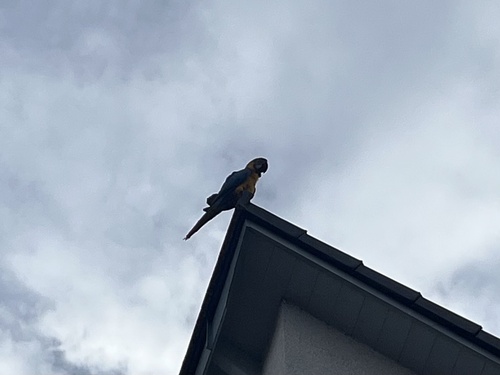
Blue-and-yellow Macaw (Ara ararauna) Blue-and-yellow Macaw
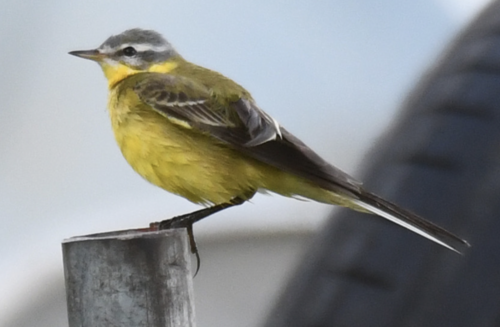
Western Yellow Wagtail (Motacilla flava) Western Yellow Wagtail

Media

Loading…

In short

The Blue-and-yellow Macaw and the Western Yellow Wagtail are easily distinguishable by size and habitat. The macaw is a large, colorful parrot found in tropical forests, while the wagtail is a small, slender bird often seen in open fields and wetlands.

Identification tips

Size

The Blue-and-yellow Macaw is significantly larger, measuring about 86 cm in length, compared to the Western Yellow Wagtail, which is around 16-18 cm long.

Plumage

The macaw has a striking blue and yellow plumage with a green forehead, while the wagtail is predominantly yellow with olive-green upperparts and lacks the vibrant blue of the macaw.

Behaviour

Blue-and-yellow Macaws are often seen in pairs or small groups, flying with slow, powerful wingbeats. Western Yellow Wagtails are typically observed alone or in small flocks, often wagging their tails as they forage on the ground.

Habitat

Blue-and-yellow Macaws inhabit tropical forests and woodlands, particularly near water. Western Yellow Wagtails prefer open habitats like fields, grasslands, and wetlands.

Voice

The macaw produces loud, raucous calls, while the wagtail has a softer, more melodic song and calls.

Submit a better description

Use the same sections as the comparison. Your text is published immediately.

The Blue-and-yellow Macaw and the Western Yellow Wagtail are easily distinguishable by size and habitat. The macaw is a large, colorful parrot found in tropical forests, while the wagtail is a small, slender bird often seen in open fields and wetlands.

  • Size and structure: The macaw is much larger with a robust build, while the wagtail is small and slender.
  • Plumage: Look for the macaw's bright blue and yellow colors versus the wagtail's more subdued yellow and olive tones.
  • Habitat: Consider the environment; macaws are in forests, wagtails in open fields.
  • Behavior: Note the macaw's powerful flight and the wagtail's characteristic tail-wagging.

The Blue-and-yellow Macaw is significantly larger, measuring about 86 cm in length, compared to the Western Yellow Wagtail, which is around 16-18 cm long.

The macaw has a striking blue and yellow plumage with a green forehead, while the wagtail is predominantly yellow with olive-green upperparts and lacks the vibrant blue of the macaw.

Blue-and-yellow Macaws are often seen in pairs or small groups, flying with slow, powerful wingbeats. Western Yellow Wagtails are typically observed alone or in small flocks, often wagging their tails as they forage on the ground.

Blue-and-yellow Macaws inhabit tropical forests and woodlands, particularly near water. Western Yellow Wagtails prefer open habitats like fields, grasslands, and wetlands.

The macaw produces loud, raucous calls, while the wagtail has a softer, more melodic song and calls.

Discard your changes?

You have unsaved edits. If you leave now, those changes will be lost.

Blue-and-yellow Macaw · Western Yellow Wagtail · My Tricky Birds