Birdr

Blue-and-yellow Tanager vs Palm Tanager

Rauenia bonariensis versus Thraupis palmarum

Play a quiz with Blue-and-yellow Tanager and Palm Tanager
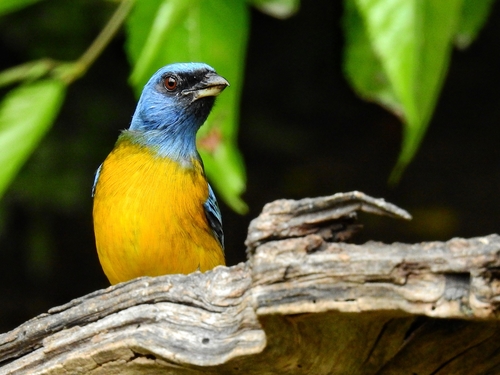
Blue-and-yellow Tanager (Rauenia bonariensis) Blue-and-yellow Tanager
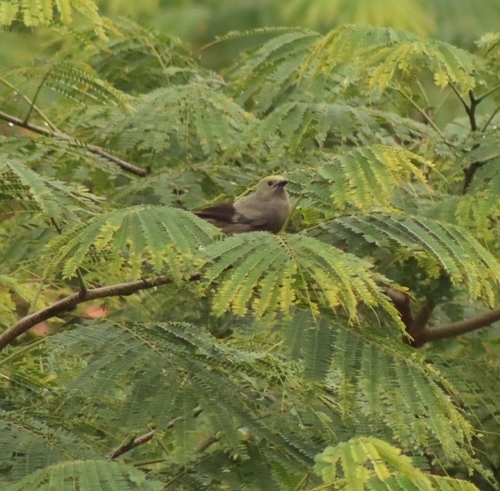
Palm Tanager (Thraupis palmarum) Palm Tanager

Media

Loading…

In short

The Blue-and-yellow Tanager is best identified by its striking blue head and wings, contrasting with its yellow underparts, while the Palm Tanager is more uniformly olive-green. Both species are tanagers, but their color patterns and habitats provide reliable distinctions.

Identification tips

Size

Both species are similar in size, typical of medium-sized tanagers.

Plumage

The Blue-and-yellow Tanager features a blue head and wings with yellow underparts, whereas the Palm Tanager is more uniformly olive-green without strong color contrasts.

Behaviour

Palm Tanagers often cling to the undersides of leaves and forage in pairs or small groups, sometimes joining mixed-species flocks. Blue-and-yellow Tanagers are less often noted for such behavior.

Habitat

Blue-and-yellow Tanagers are found in a variety of habitats from scrubby edges to forests, while Palm Tanagers are often associated with palm trees and can be found in more open areas.

Voice

Blue-and-yellow Tanagers are frequently detected by their song, a series of variable chips or 'whiink' calls. Palm Tanagers are less noted for distinctive vocalizations.

Submit a better description

Use the same sections as the comparison. Your text is published immediately.

The Blue-and-yellow Tanager is best identified by its striking blue head and wings, contrasting with its yellow underparts, while the Palm Tanager is more uniformly olive-green. Both species are tanagers, but their color patterns and habitats provide reliable distinctions.

  • Look for the blue head and wings of the Blue-and-yellow Tanager.
  • Note the uniform olive-green plumage of the Palm Tanager.
  • Consider habitat: Blue-and-yellow Tanagers are more forest-associated, while Palm Tanagers are often near palms.
  • Listen for the Blue-and-yellow Tanager's distinctive calls.

Both species are similar in size, typical of medium-sized tanagers.

The Blue-and-yellow Tanager features a blue head and wings with yellow underparts, whereas the Palm Tanager is more uniformly olive-green without strong color contrasts.

Palm Tanagers often cling to the undersides of leaves and forage in pairs or small groups, sometimes joining mixed-species flocks. Blue-and-yellow Tanagers are less often noted for such behavior.

Blue-and-yellow Tanagers are found in a variety of habitats from scrubby edges to forests, while Palm Tanagers are often associated with palm trees and can be found in more open areas.

Blue-and-yellow Tanagers are frequently detected by their song, a series of variable chips or 'whiink' calls. Palm Tanagers are less noted for distinctive vocalizations.

Discard your changes?

You have unsaved edits. If you leave now, those changes will be lost.

Blue-and-yellow Tanager · Palm Tanager · My Tricky Birds