Birdr

Blue-bearded Bee-eater vs Blue-throated Bee-eater

Nyctyornis athertoni versus Merops viridis

Play a quiz with Blue-bearded Bee-eater and Blue-throated Bee-eater
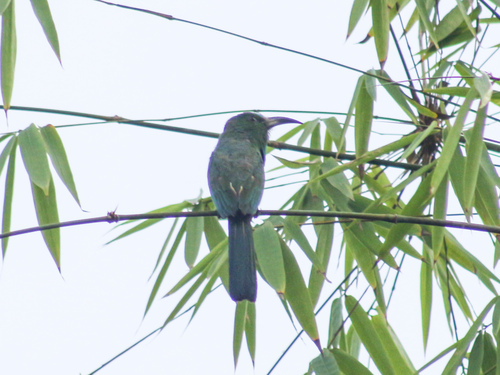
Blue-bearded Bee-eater (Nyctyornis athertoni) Blue-bearded Bee-eater
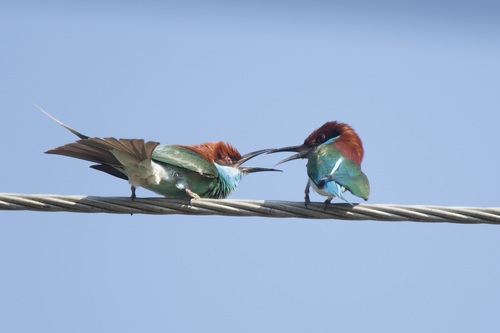
Blue-throated Bee-eater (Merops viridis) Blue-throated Bee-eater

Media

Loading…

In short

The Blue-bearded Bee-eater and Blue-throated Bee-eater can be distinguished by their size and throat coloration. The Blue-bearded Bee-eater is larger with a distinctive blue 'beard' on its throat, while the Blue-throated Bee-eater is smaller and has a blue throat without the 'beard'.

Identification tips

  1. Size: Look for the larger size of the Blue-bearded Bee-eater. 2. Throat coloration: Check for the distinctive blue 'beard' on the Blue-bearded Bee-eater. 3. Habitat: Consider the habitat; forested areas suggest Blue-bearded, while open woodlands suggest Blue-throated. 4. Behavior: Observe typical bee-eater behaviors but rely more on size and throat coloration for identification.

Size

The Blue-bearded Bee-eater is noticeably larger than the Blue-throated Bee-eater.

Plumage

The Blue-bearded Bee-eater has a prominent blue 'beard' on its throat, whereas the Blue-throated Bee-eater has a blue throat but lacks the 'beard'. Both species have green upperparts, but the Blue-bearded Bee-eater's blue is more concentrated around the throat.

Behaviour

Both species exhibit similar bee-eater behaviors, such as sallying from perches to catch insects in flight.

Habitat

The Blue-bearded Bee-eater is often found in forested areas, while the Blue-throated Bee-eater is more commonly seen in open woodlands and near water bodies.

Voice

Vocalizations are not the most reliable for distinguishing these species, as both have similar calls typical of bee-eaters.

Submit a better description

Use the same sections as the comparison. Your text is published immediately.

The Blue-bearded Bee-eater and Blue-throated Bee-eater can be distinguished by their size and throat coloration. The Blue-bearded Bee-eater is larger with a distinctive blue 'beard' on its throat, while the Blue-throated Bee-eater is smaller and has a blue throat without the 'beard'.

  1. Size: Look for the larger size of the Blue-bearded Bee-eater. 2. Throat coloration: Check for the distinctive blue 'beard' on the Blue-bearded Bee-eater. 3. Habitat: Consider the habitat; forested areas suggest Blue-bearded, while open woodlands suggest Blue-throated. 4. Behavior: Observe typical bee-eater behaviors but rely more on size and throat coloration for identification.

The Blue-bearded Bee-eater is noticeably larger than the Blue-throated Bee-eater.

The Blue-bearded Bee-eater has a prominent blue 'beard' on its throat, whereas the Blue-throated Bee-eater has a blue throat but lacks the 'beard'. Both species have green upperparts, but the Blue-bearded Bee-eater's blue is more concentrated around the throat.

Both species exhibit similar bee-eater behaviors, such as sallying from perches to catch insects in flight.

The Blue-bearded Bee-eater is often found in forested areas, while the Blue-throated Bee-eater is more commonly seen in open woodlands and near water bodies.

Vocalizations are not the most reliable for distinguishing these species, as both have similar calls typical of bee-eaters.

Discard your changes?

You have unsaved edits. If you leave now, those changes will be lost.

Blue-bearded Bee-eater · Blue-throated Bee-eater · My Tricky Birds