Birdr

Blue-breasted Quail vs Barred Buttonquail

Synoicus chinensis versus Turnix suscitator

Play a quiz with Blue-breasted Quail and Barred Buttonquail
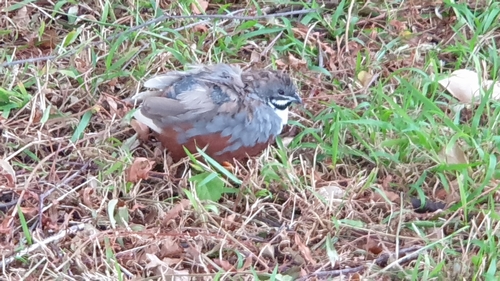
Blue-breasted Quail (Synoicus chinensis) Blue-breasted Quail
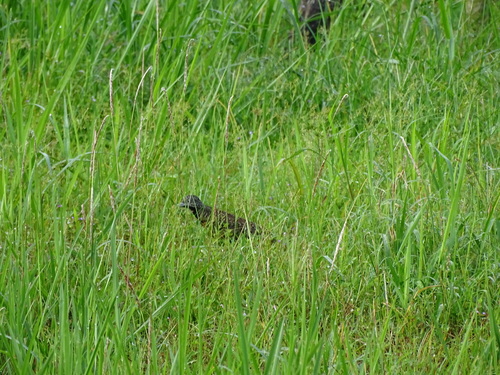
Barred Buttonquail (Turnix suscitator) Barred Buttonquail

Media

Loading…

In short

The Blue-breasted Quail and Barred Buttonquail can be distinguished by their size and structural differences. The Blue-breasted Quail is smaller and more compact, while the Barred Buttonquail is larger with a distinctive barring pattern on its underparts. Both species inhabit similar grassland and scrub habitats, but their vocalizations and behaviors can also aid in identification.

Identification tips

  1. Size and Structure: Look for the smaller, more compact Blue-breasted Quail versus the larger Barred Buttonquail. 2. Plumage: Note the blue breast of the quail and the barred underparts of the buttonquail. 3. Behavior: Observe if the bird runs or flies when disturbed; Barred Buttonquails often run. 4. Vocalizations: Listen for the soft whistle of the quail compared to the drumming of the buttonquail.

Size

The Blue-breasted Quail is smaller and more compact than the larger Barred Buttonquail.

Plumage

The Blue-breasted Quail has a blue breast and a more uniform plumage, while the Barred Buttonquail features a distinctive barring pattern on its underparts.

Behaviour

Both species are ground-dwelling and secretive, but the Barred Buttonquail is more likely to be seen running rather than flying when disturbed.

Habitat

Both species inhabit grasslands and scrub areas, often in similar regions, making habitat alone a less reliable differentiator.

Voice

The Blue-breasted Quail's call is typically a soft, repeated whistle, whereas the Barred Buttonquail has a more mechanical, drumming sound.

Submit a better description

Use the same sections as the comparison. Your text is published immediately.

The Blue-breasted Quail and Barred Buttonquail can be distinguished by their size and structural differences. The Blue-breasted Quail is smaller and more compact, while the Barred Buttonquail is larger with a distinctive barring pattern on its underparts. Both species inhabit similar grassland and scrub habitats, but their vocalizations and behaviors can also aid in identification.

  1. Size and Structure: Look for the smaller, more compact Blue-breasted Quail versus the larger Barred Buttonquail. 2. Plumage: Note the blue breast of the quail and the barred underparts of the buttonquail. 3. Behavior: Observe if the bird runs or flies when disturbed; Barred Buttonquails often run. 4. Vocalizations: Listen for the soft whistle of the quail compared to the drumming of the buttonquail.

The Blue-breasted Quail is smaller and more compact than the larger Barred Buttonquail.

The Blue-breasted Quail has a blue breast and a more uniform plumage, while the Barred Buttonquail features a distinctive barring pattern on its underparts.

Both species are ground-dwelling and secretive, but the Barred Buttonquail is more likely to be seen running rather than flying when disturbed.

Both species inhabit grasslands and scrub areas, often in similar regions, making habitat alone a less reliable differentiator.

The Blue-breasted Quail's call is typically a soft, repeated whistle, whereas the Barred Buttonquail has a more mechanical, drumming sound.

Discard your changes?

You have unsaved edits. If you leave now, those changes will be lost.

Blue-breasted Quail · Barred Buttonquail · My Tricky Birds