Birdr

Blue-capped Rock Thrush vs Short-toed Rock Thrush

Monticola cinclorhyncha versus Monticola brevipes

Play a quiz with Blue-capped Rock Thrush and Short-toed Rock Thrush
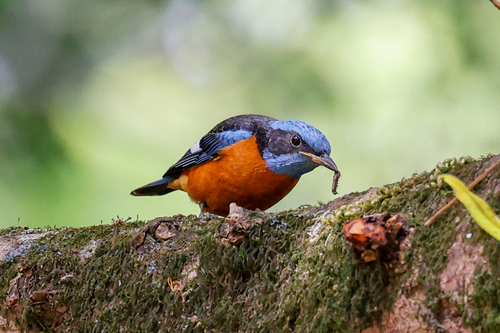
Blue-capped Rock Thrush (Monticola cinclorhyncha) Blue-capped Rock Thrush
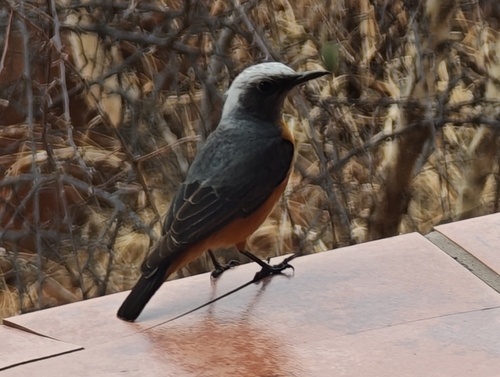
Short-toed Rock Thrush (Monticola brevipes) Short-toed Rock Thrush

Media

Loading…

In short

The Blue-capped Rock Thrush and the Short-toed Rock Thrush can be distinguished by their head coloration and habitat preferences. The Blue-capped Rock Thrush has a distinctive blue cap, while the Short-toed Rock Thrush features a white crown. Both species are part of the Old World Flycatchers family.

Identification tips

  1. Look for the blue cap on the Blue-capped Rock Thrush versus the white crown on the Short-toed Rock Thrush. 2. Consider the habitat: forested areas suggest Blue-capped, while open rocky areas suggest Short-toed. 3. Note the overall coloration: Blue-capped is more vibrant with orange underparts, while Short-toed is more subdued.

Size

Both species are similar in size, typical of rock thrushes, with no significant differences in structure.

Plumage

The Blue-capped Rock Thrush has a striking blue cap and orange underparts, while the Short-toed Rock Thrush is characterized by a white crown and more subdued coloration. Both have blue and orange tones, but the head markings are key.

Behaviour

Both species exhibit typical rock thrush behavior, often seen perched on rocks or low branches, but specific behavioral differences are not well-documented.

Habitat

The Blue-capped Rock Thrush is found in forested areas, often at higher elevations, whereas the Short-toed Rock Thrush prefers open rocky habitats and arid regions.

Voice

Vocalizations are not well-documented for both species, but they are known to have typical thrush-like songs. Specific differences in calls or songs are unclear.

Submit a better description

Use the same sections as the comparison. Your text is published immediately.

The Blue-capped Rock Thrush and the Short-toed Rock Thrush can be distinguished by their head coloration and habitat preferences. The Blue-capped Rock Thrush has a distinctive blue cap, while the Short-toed Rock Thrush features a white crown. Both species are part of the Old World Flycatchers family.

  1. Look for the blue cap on the Blue-capped Rock Thrush versus the white crown on the Short-toed Rock Thrush. 2. Consider the habitat: forested areas suggest Blue-capped, while open rocky areas suggest Short-toed. 3. Note the overall coloration: Blue-capped is more vibrant with orange underparts, while Short-toed is more subdued.

Both species are similar in size, typical of rock thrushes, with no significant differences in structure.

The Blue-capped Rock Thrush has a striking blue cap and orange underparts, while the Short-toed Rock Thrush is characterized by a white crown and more subdued coloration. Both have blue and orange tones, but the head markings are key.

Both species exhibit typical rock thrush behavior, often seen perched on rocks or low branches, but specific behavioral differences are not well-documented.

The Blue-capped Rock Thrush is found in forested areas, often at higher elevations, whereas the Short-toed Rock Thrush prefers open rocky habitats and arid regions.

Vocalizations are not well-documented for both species, but they are known to have typical thrush-like songs. Specific differences in calls or songs are unclear.

Discard your changes?

You have unsaved edits. If you leave now, those changes will be lost.

Blue-capped Rock Thrush · Short-toed Rock Thrush · My Tricky Birds