Birdr

Blue Crane vs Jabiru

Grus paradiseus versus Jabiru mycteria

Play a quiz with Blue Crane and Jabiru
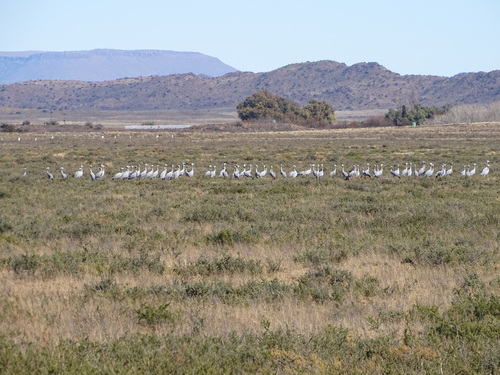
Blue Crane (Grus paradiseus) Blue Crane
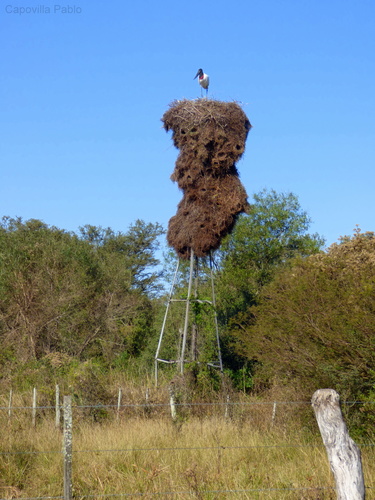
Jabiru (Jabiru mycteria) Jabiru

Media

Loading…

In short

The Blue Crane and Jabiru are easily distinguished by their size, plumage, and habitat preferences. The Blue Crane is a slender, elegant bird with a uniform grey-blue plumage, while the Jabiru is a large stork with a striking black and white plumage and a massive black bill. They occupy different habitats, with the Blue Crane found in grasslands and the Jabiru in wetlands.

Identification tips

  1. Size and Structure: Note the size difference; the Jabiru is significantly larger. 2. Plumage: Look for the Blue Crane's uniform grey-blue color versus the Jabiru's black and white plumage with a red neck band. 3. Habitat: Consider the habitat; Blue Cranes are in grasslands, Jabirus in wetlands. 4. Behavior: Observe feeding behavior; Jabirus are active in water, while Blue Cranes are more terrestrial.

Size

The Blue Crane is smaller and more slender compared to the Jabiru, which is one of the largest storks in the Americas.

Plumage

The Blue Crane has a uniform grey-blue plumage with a lighter face and neck, whereas the Jabiru has a distinctive black and white plumage with a black head and neck, and a large red band at the base of the neck.

Behaviour

Blue Cranes are often seen in pairs or small groups, walking gracefully in open grasslands. Jabirus are more often found in wetlands, feeding actively in shallow water, sometimes in groups.

Habitat

Blue Cranes prefer open grasslands and are endemic to southern Africa. Jabirus are found in swamps and marshes from Mexico to northern Argentina.

Voice

The Blue Crane is known for its loud, trumpeting calls, while the Jabiru is generally silent.

Submit a better description

Use the same sections as the comparison. Your text is published immediately.

The Blue Crane and Jabiru are easily distinguished by their size, plumage, and habitat preferences. The Blue Crane is a slender, elegant bird with a uniform grey-blue plumage, while the Jabiru is a large stork with a striking black and white plumage and a massive black bill. They occupy different habitats, with the Blue Crane found in grasslands and the Jabiru in wetlands.

  1. Size and Structure: Note the size difference; the Jabiru is significantly larger. 2. Plumage: Look for the Blue Crane's uniform grey-blue color versus the Jabiru's black and white plumage with a red neck band. 3. Habitat: Consider the habitat; Blue Cranes are in grasslands, Jabirus in wetlands. 4. Behavior: Observe feeding behavior; Jabirus are active in water, while Blue Cranes are more terrestrial.

The Blue Crane is smaller and more slender compared to the Jabiru, which is one of the largest storks in the Americas.

The Blue Crane has a uniform grey-blue plumage with a lighter face and neck, whereas the Jabiru has a distinctive black and white plumage with a black head and neck, and a large red band at the base of the neck.

Blue Cranes are often seen in pairs or small groups, walking gracefully in open grasslands. Jabirus are more often found in wetlands, feeding actively in shallow water, sometimes in groups.

Blue Cranes prefer open grasslands and are endemic to southern Africa. Jabirus are found in swamps and marshes from Mexico to northern Argentina.

The Blue Crane is known for its loud, trumpeting calls, while the Jabiru is generally silent.

Discard your changes?

You have unsaved edits. If you leave now, those changes will be lost.

Blue Crane · Jabiru · My Tricky Birds