Blue-grey Gnatcatcher vs Rock Wren
Polioptila caerulea versus Salpinctes obsoletus
Play a quiz with Blue-grey Gnatcatcher and Rock Wren
Blue-grey Gnatcatcher
Rock Wren
In short
The Blue-grey Gnatcatcher and Rock Wren can be distinguished by their habitat preferences and behavior. The gnatcatcher is more likely found in wooded areas, while the Rock Wren prefers rocky, arid environments. Their vocalizations also differ significantly.
Identification tips
- Habitat: Look for the Blue-grey Gnatcatcher in wooded areas and the Rock Wren in rocky, arid regions. 2. Plumage: Note the Blue-grey Gnatcatcher's white eye-ring and blue-grey color versus the Rock Wren's brownish-grey streaked plumage. 3. Behavior: Observe the gnatcatcher's active foraging compared to the Rock Wren's ground-probing behavior. 4. Vocalization: Listen for the gnatcatcher's high-pitched calls and the Rock Wren's melodious whistles.
Size
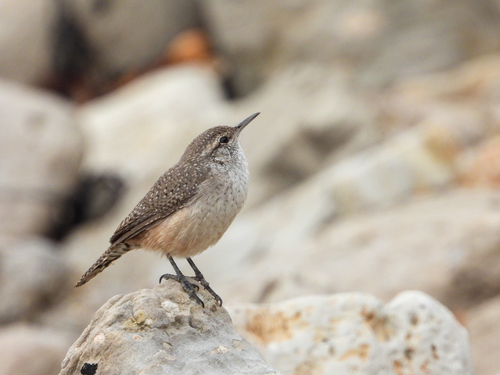
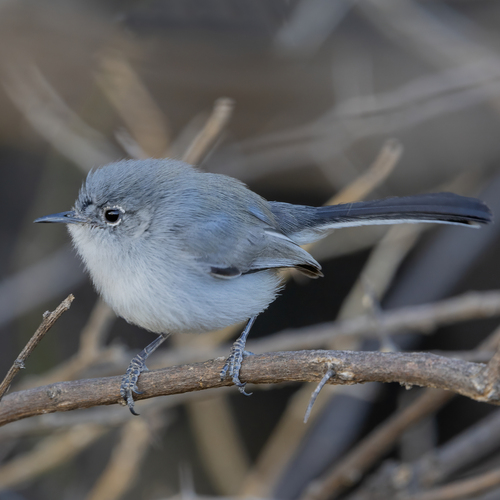
Both species are small, but the Blue-grey Gnatcatcher is more slender with a longer tail, while the Rock Wren is stockier.
Plumage
The Blue-grey Gnatcatcher has a blue-grey upper body with a white underside and a distinctive white eye-ring. The Rock Wren is more uniformly brownish-grey with fine streaks and lacks the prominent eye-ring.
Behaviour
The Blue-grey Gnatcatcher is an active feeder, often seen hovering or sallying for insects. In contrast, the Rock Wren is more ground-oriented, often seen hopping among rocks and using its bill to probe crevices.
Habitat
The Blue-grey Gnatcatcher prefers moist, wooded habitats with broad-leaved trees, often at habitat edges. The Rock Wren inhabits rocky, arid environments, often in open, sparsely vegetated areas.
Voice
The Blue-grey Gnatcatcher's calls are high-pitched and nasal, while the Rock Wren's song is a series of melodious whistles and trills.