Birdr

Blue Grosbeak vs Indigo Bunting

Passerina caerulea versus Passerina cyanea

Play a quiz with Blue Grosbeak and Indigo Bunting
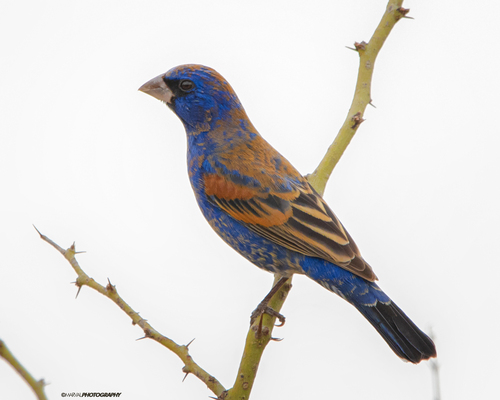
Blue Grosbeak (Passerina caerulea) Blue Grosbeak
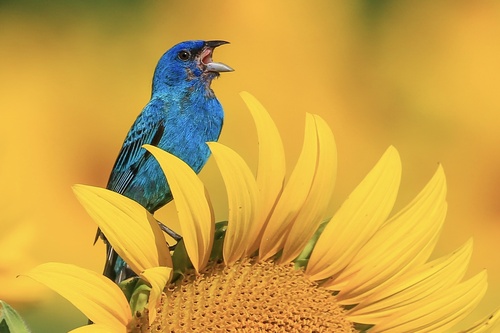
Indigo Bunting (Passerina cyanea) Indigo Bunting

Media

Loading…

In short

The Blue Grosbeak and Indigo Bunting are both striking blue birds, but the Blue Grosbeak is larger with a more robust bill and distinct chestnut wing bars. Indigo Buntings are smaller, lack wing bars, and have a more uniform blue plumage in adult males. Both species are often found in similar habitats, but their size and plumage differences are key for identification.

Identification tips

Size

The Blue Grosbeak is noticeably larger than the Indigo Bunting, with a more robust build and a heavier bill.

Plumage

Adult male Blue Grosbeaks have a deep blue plumage with prominent chestnut wing bars, while adult male Indigo Buntings are uniformly blue without wing bars. Female and immature Indigo Buntings are brown with buff wing bars, whereas female Blue Grosbeaks are brown with less distinct wing bars.

Behaviour

Both species are often seen perched conspicuously while singing, but Blue Grosbeaks are more likely to be found in shrubby areas along roadsides.

Habitat

Both species inhabit open woodlands and edges, but Blue Grosbeaks are more commonly associated with shrubby areas and forest edges, while Indigo Buntings are often found in more open fields and clearings.

Voice

The songs of both species are complex and musical, but specific differences in song structure are not well-documented in the provided sources.

Submit a better description

Use the same sections as the comparison. Your text is published immediately.

The Blue Grosbeak and Indigo Bunting are both striking blue birds, but the Blue Grosbeak is larger with a more robust bill and distinct chestnut wing bars. Indigo Buntings are smaller, lack wing bars, and have a more uniform blue plumage in adult males. Both species are often found in similar habitats, but their size and plumage differences are key for identification.

  • Size and Bill: Blue Grosbeak is larger with a heavier bill.
  • Wing Bars: Blue Grosbeak males have chestnut wing bars; Indigo Bunting males lack wing bars.
  • Plumage: Indigo Bunting males are uniformly blue; Blue Grosbeak males have a richer blue with chestnut wing bars.
  • Females and Immatures: Both species' females are brown, but Indigo Buntings have buff wing bars, while Blue Grosbeaks' wing bars are less distinct.
  • Habitat: Look for Blue Grosbeaks in shrubby areas; Indigo Buntings are more common in open fields.

The Blue Grosbeak is noticeably larger than the Indigo Bunting, with a more robust build and a heavier bill.

Adult male Blue Grosbeaks have a deep blue plumage with prominent chestnut wing bars, while adult male Indigo Buntings are uniformly blue without wing bars. Female and immature Indigo Buntings are brown with buff wing bars, whereas female Blue Grosbeaks are brown with less distinct wing bars.

Both species are often seen perched conspicuously while singing, but Blue Grosbeaks are more likely to be found in shrubby areas along roadsides.

Both species inhabit open woodlands and edges, but Blue Grosbeaks are more commonly associated with shrubby areas and forest edges, while Indigo Buntings are often found in more open fields and clearings.

The songs of both species are complex and musical, but specific differences in song structure are not well-documented in the provided sources.

Discard your changes?

You have unsaved edits. If you leave now, those changes will be lost.

Blue Grosbeak · Indigo Bunting · My Tricky Birds