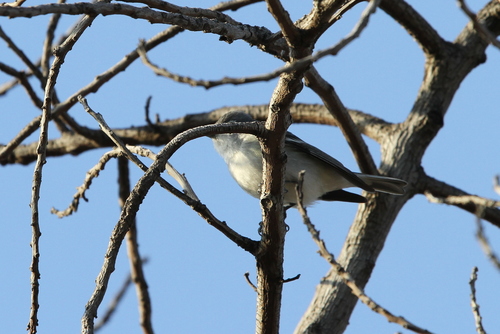
Blue-headed Vireo vs Plumbeous Vireo
Vireo solitarius versus Vireo plumbeus
Play a quiz with Blue-headed Vireo and Plumbeous Vireo
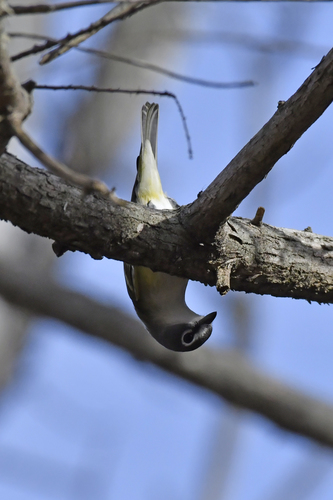
Blue-headed Vireo
Plumbeous Vireo
In short
The Plumbeous Vireo (Vireo plumbeus) and Blue-headed Vireo (Vireo solitarius) present key differences in habitat preferences, plumage characteristics, and behavior. The Plumbeous Vireo is primarily found in warm, dry montane forests and has a more subdued coloration, while the Blue-headed Vireo prefers coniferous and deciduous forests, exhibiting a more vibrant blue-gray head and distinct white eye rings.
Identification tips
- Birds of the World Similar-Species Diagnostics:
-
The Plumbeous Vireo is described as having a more subdued coloration and is often confused with the Blue-headed Vireo; however, the latter has a distinct blue-gray head and a prominent white eye ring that sets it apart. Additionally, the habitat preference of the Blue-headed Vireo for coniferous forests is noted, while the Plumbeous Vireo is more associated with warm, dry montane forests.
-
AI Field Diagnostics:
- When looking for the Plumbeous Vireo, focus on the olive-gray coloration and the less distinct eye ring. It often hangs out in higher branches of dry forested areas.
- In contrast, the Blue-headed Vireo can be identified by its vibrant blue-gray head and bold white eye rings. Look for it in mid-height foraging in mixed woods, particularly in coniferous areas.
- If you hear their calls, remember that the Blue-headed Vireo's song is more varied and melodic, while the Plumbeous Vireo's is softer and less distinct.
- Take note of behavioral differences: the Plumbeous Vireo tends to forage more slowly and methodically compared to the quicker, more agile Blue-headed Vireo.
By focusing on these specific traits in size, plumage, behavior, habitat, and vocalization, birdwatchers can effectively distinguish between these two similar vireo species in the field.
Size
Both species are similar in size, typically measuring around 5.5 to 6.5 inches (14 to 16.5 cm) in length. Their wingspan is also comparable, generally around 9 to 10 inches (23 to 25 cm). However, subtle differences in body proportions may be noted in the field, with the Blue-headed Vireo sometimes appearing slightly bulkier due to its broader head and more pronounced coloration.
Plumage
- Plumbeous Vireo: The upperparts are a dull olive-gray, with a lighter gray underbelly. Its wings are dark with two distinct white wing bars, and it features a subtle, less prominent eye ring.
- Blue-headed Vireo: The most striking feature is its bright blue-gray head, which contrasts sharply with its white eye rings and yellow flanks. The back is olive-green, and the underparts are white to pale yellow with a light wash of yellow on the sides.
Behaviour
- Plumbeous Vireo: Typically forages at higher elevations in trees, often in pairs or small groups. It has a slower, methodical foraging style, favoring twigs and leaves.
- Blue-headed Vireo: Known for its more active foraging behavior, often moving quickly among branches and adeptly snatching insects in flight. It tends to forage at mid-height and is more solitary compared to the Plumbeous Vireo.
Habitat
- Plumbeous Vireo: Prefers warm, dry montane forests, often found in areas of pine, oak, and juniper. It also nests in deciduous woodlands along riverbanks, particularly in the Great Basin region.
- Blue-headed Vireo: Occupies a broader range of habitats, including coniferous forests, mixed woodlands, and mature deciduous forests. It is commonly found at elevations above 400 m in the eastern U.S. and Canada.
Voice
- Plumbeous Vireo: Has a softer, less distinctive song characterized by a series of melodic phrases, often described as having a more subdued quality.
- Blue-headed Vireo: Produces a more varied and complex song, with a series of clear, whistled notes that are often more pronounced and melodic compared to the Plumbeous Vireo.