Birdr

Blue Rock Thrush vs European Stonechat

Monticola solitarius versus Saxicola rubicola

Play a quiz with Blue Rock Thrush and European Stonechat
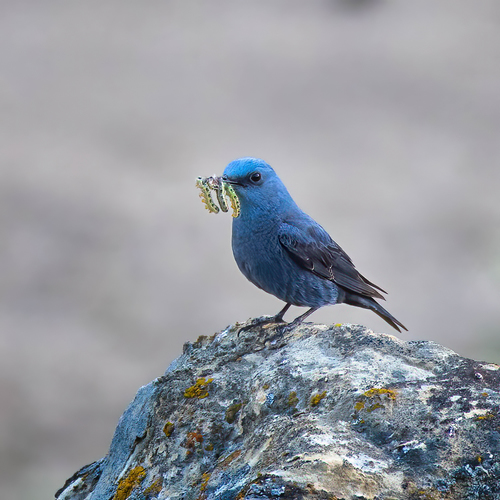
Blue Rock Thrush (Monticola solitarius) Blue Rock Thrush
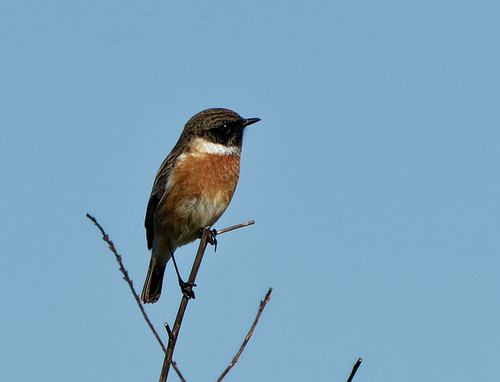
European Stonechat (Saxicola rubicola) European Stonechat

Media

Loading…

In short

The Blue Rock Thrush is a medium-sized bird with a more elongated body and longer bill compared to the European Stonechat, which is more compact with a shorter bill. The Blue Rock Thrush typically has a uniform blue plumage in males, while the European Stonechat displays a striking contrast with its black head, white collar, and orange breast. These differences are most evident in adult males.

Identification tips

Size

Blue Rock Thrush is larger and more elongated, with a longer bill than the smaller, more compact European Stonechat.

Plumage

Male Blue Rock Thrushes are mostly blue, while male European Stonechats have a black head, white collar, and orange breast. Female and immature Blue Rock Thrushes are more subdued in color, often brownish, which can be confusing with female stonechats that are also brownish but have a more streaked appearance.

Behaviour

Blue Rock Thrushes often perch on rocks or cliffs and are more solitary, whereas European Stonechats are more likely to be seen perched on low vegetation or fences in open areas.

Habitat

Blue Rock Thrushes prefer rocky areas, cliffs, and mountainous regions, while European Stonechats are found in open fields, heathlands, and scrubby areas.

Voice

The song of the Blue Rock Thrush is a melodious and varied series of whistles, while the European Stonechat has a more mechanical, clicking call that resembles two stones being tapped together.

Submit a better description

Use the same sections as the comparison. Your text is published immediately.

The Blue Rock Thrush is a medium-sized bird with a more elongated body and longer bill compared to the European Stonechat, which is more compact with a shorter bill. The Blue Rock Thrush typically has a uniform blue plumage in males, while the European Stonechat displays a striking contrast with its black head, white collar, and orange breast. These differences are most evident in adult males.

  • Look for the longer bill and elongated body of the Blue Rock Thrush.
  • Note the uniform blue coloration in male Blue Rock Thrushes versus the black head and orange breast of male European Stonechats.
  • Observe the habitat: rocky and mountainous for Blue Rock Thrush, open fields for European Stonechat.
  • Listen for the melodious whistles of the Blue Rock Thrush compared to the clicking calls of the European Stonechat.

Blue Rock Thrush is larger and more elongated, with a longer bill than the smaller, more compact European Stonechat.

Male Blue Rock Thrushes are mostly blue, while male European Stonechats have a black head, white collar, and orange breast. Female and immature Blue Rock Thrushes are more subdued in color, often brownish, which can be confusing with female stonechats that are also brownish but have a more streaked appearance.

Blue Rock Thrushes often perch on rocks or cliffs and are more solitary, whereas European Stonechats are more likely to be seen perched on low vegetation or fences in open areas.

Blue Rock Thrushes prefer rocky areas, cliffs, and mountainous regions, while European Stonechats are found in open fields, heathlands, and scrubby areas.

The song of the Blue Rock Thrush is a melodious and varied series of whistles, while the European Stonechat has a more mechanical, clicking call that resembles two stones being tapped together.

Discard your changes?

You have unsaved edits. If you leave now, those changes will be lost.

Blue Rock Thrush · European Stonechat · My Tricky Birds