Birdr

Blue Seedeater vs Blue-black Grosbeak

Amaurospiza concolor versus Cyanoloxia cyanoides

Play a quiz with Blue Seedeater and Blue-black Grosbeak
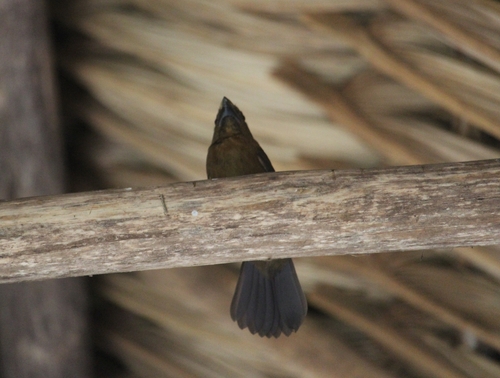
Blue Seedeater (Amaurospiza concolor) Blue Seedeater
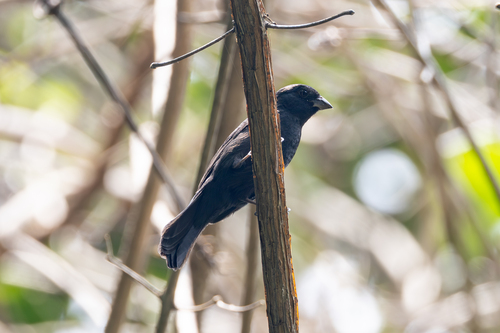
Blue-black Grosbeak (Cyanoloxia cyanoides) Blue-black Grosbeak

Media

Loading…

In short

To distinguish the Blue Seedeater from the Blue-black Grosbeak, focus on the bill shape and size. The Blue Seedeater has a smaller, more delicate bill compared to the larger, more robust bill of the Blue-black Grosbeak. Plumage differences are subtle, with the Blue Seedeater generally appearing lighter blue than the darker, almost black-blue of the Blue-black Grosbeak.

Identification tips

  1. Bill size and shape: Look for the smaller, more delicate bill of the Blue Seedeater versus the larger, robust bill of the Blue-black Grosbeak. 2. Plumage tone: Note the lighter blue of the Blue Seedeater against the darker blue-black of the Grosbeak. 3. Size and structure: The Blue Seedeater is smaller and more compact. 4. Song and call: Listen for the richer, more varied song of the Blue-black Grosbeak.

Size

The Blue Seedeater is generally smaller and more compact than the larger Blue-black Grosbeak.

Plumage

The Blue Seedeater exhibits a lighter blue plumage, while the Blue-black Grosbeak has a darker, almost black-blue coloration. Both species lack significant markings, making color tone a secondary field mark.

Behaviour

Both species are often seen foraging in dense vegetation, but the Blue-black Grosbeak may be more conspicuous due to its larger size and more robust movements.

Habitat

Both species inhabit similar forested environments, but the Blue-black Grosbeak may be found in a wider range of forest types, including more open areas.

Voice

The Blue-black Grosbeak has a more varied and richer song compared to the simpler and less varied song of the Blue Seedeater. Calls are generally similar but can differ in tone and complexity.

Submit a better description

Use the same sections as the comparison. Your text is published immediately.

To distinguish the Blue Seedeater from the Blue-black Grosbeak, focus on the bill shape and size. The Blue Seedeater has a smaller, more delicate bill compared to the larger, more robust bill of the Blue-black Grosbeak. Plumage differences are subtle, with the Blue Seedeater generally appearing lighter blue than the darker, almost black-blue of the Blue-black Grosbeak.

  1. Bill size and shape: Look for the smaller, more delicate bill of the Blue Seedeater versus the larger, robust bill of the Blue-black Grosbeak. 2. Plumage tone: Note the lighter blue of the Blue Seedeater against the darker blue-black of the Grosbeak. 3. Size and structure: The Blue Seedeater is smaller and more compact. 4. Song and call: Listen for the richer, more varied song of the Blue-black Grosbeak.

The Blue Seedeater is generally smaller and more compact than the larger Blue-black Grosbeak.

The Blue Seedeater exhibits a lighter blue plumage, while the Blue-black Grosbeak has a darker, almost black-blue coloration. Both species lack significant markings, making color tone a secondary field mark.

Both species are often seen foraging in dense vegetation, but the Blue-black Grosbeak may be more conspicuous due to its larger size and more robust movements.

Both species inhabit similar forested environments, but the Blue-black Grosbeak may be found in a wider range of forest types, including more open areas.

The Blue-black Grosbeak has a more varied and richer song compared to the simpler and less varied song of the Blue Seedeater. Calls are generally similar but can differ in tone and complexity.

Discard your changes?

You have unsaved edits. If you leave now, those changes will be lost.

Blue Seedeater · Blue-black Grosbeak · My Tricky Birds