Birdr

Blue-throated Bee-eater vs Blue-tailed Bee-eater

Merops viridis versus Merops philippinus

Play a quiz with Blue-throated Bee-eater and Blue-tailed Bee-eater
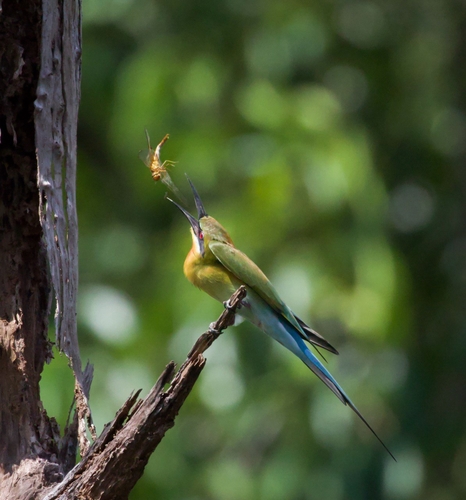
Blue-throated Bee-eater (Merops viridis) Blue-throated Bee-eater
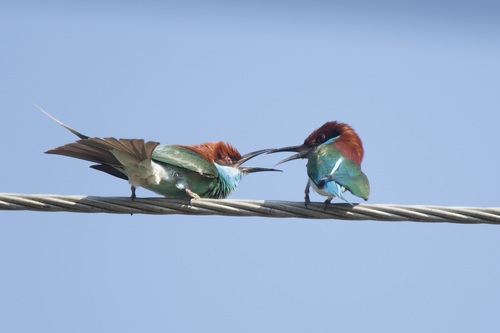
Blue-tailed Bee-eater (Merops philippinus) Blue-tailed Bee-eater

Media

Loading…

In short

The Blue-throated Bee-eater and Blue-tailed Bee-eater can be distinguished by the throat and tail colors: the Blue-throated has a distinctive blue throat, while the Blue-tailed has a rufous throat and a blue tail. Both species have similar slender bodies and long bills, but their throat and tail colors are the most reliable field marks.

Identification tips

  1. Look for the throat color: blue in Blue-throated, rufous in Blue-tailed. 2. Check the tail color: blue in Blue-tailed, green in Blue-throated. 3. Observe the habitat: Blue-tailed is more coastal, Blue-throated prefers forest edges. 4. Note any vocalizations, though they are not the most reliable distinguishing feature.

Size

Both species are similar in size, with slender bodies and long, pointed bills typical of bee-eaters.

Plumage

The Blue-throated Bee-eater has a blue throat and a chestnut crown, while the Blue-tailed Bee-eater has a rufous throat and a more uniform greenish-blue body with a blue tail. Both have a green back and wings, but the throat and tail colors are key distinguishing features.

Behaviour

Both species exhibit similar behavior, often seen sallying from perches to catch insects in flight.

Habitat

Both species inhabit open areas, often near water, but the Blue-tailed Bee-eater is more likely to be found in coastal regions and mangroves, while the Blue-throated Bee-eater prefers forest edges and clearings.

Voice

Their calls are similar, consisting of high-pitched, rolling notes, but specific differences in calls are not well-documented.

Submit a better description

Use the same sections as the comparison. Your text is published immediately.

The Blue-throated Bee-eater and Blue-tailed Bee-eater can be distinguished by the throat and tail colors: the Blue-throated has a distinctive blue throat, while the Blue-tailed has a rufous throat and a blue tail. Both species have similar slender bodies and long bills, but their throat and tail colors are the most reliable field marks.

  1. Look for the throat color: blue in Blue-throated, rufous in Blue-tailed. 2. Check the tail color: blue in Blue-tailed, green in Blue-throated. 3. Observe the habitat: Blue-tailed is more coastal, Blue-throated prefers forest edges. 4. Note any vocalizations, though they are not the most reliable distinguishing feature.

Both species are similar in size, with slender bodies and long, pointed bills typical of bee-eaters.

The Blue-throated Bee-eater has a blue throat and a chestnut crown, while the Blue-tailed Bee-eater has a rufous throat and a more uniform greenish-blue body with a blue tail. Both have a green back and wings, but the throat and tail colors are key distinguishing features.

Both species exhibit similar behavior, often seen sallying from perches to catch insects in flight.

Both species inhabit open areas, often near water, but the Blue-tailed Bee-eater is more likely to be found in coastal regions and mangroves, while the Blue-throated Bee-eater prefers forest edges and clearings.

Their calls are similar, consisting of high-pitched, rolling notes, but specific differences in calls are not well-documented.

Discard your changes?

You have unsaved edits. If you leave now, those changes will be lost.

Blue-throated Bee-eater · Blue-tailed Bee-eater · My Tricky Birds