Birdr

Blue-winged Teal vs Northern Shoveler

Spatula discors versus Spatula clypeata

Play a quiz with Blue-winged Teal and Northern Shoveler
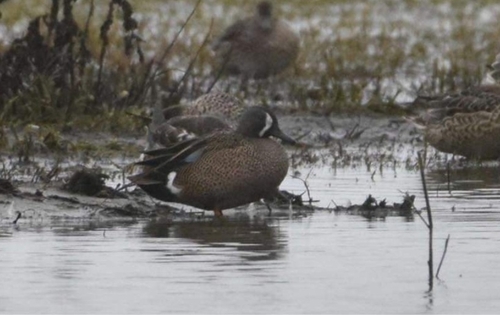
Blue-winged Teal (Spatula discors) Blue-winged Teal
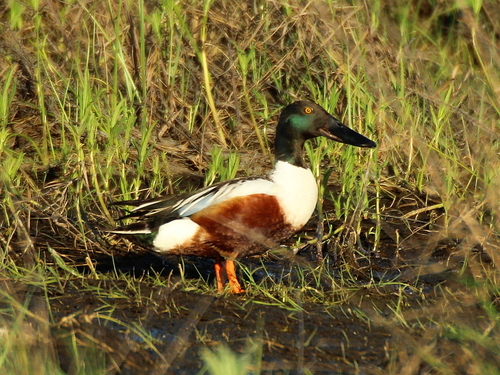
Northern Shoveler (Spatula clypeata) Northern Shoveler

Media

Loading…

In short

The Blue-winged Teal and Northern Shoveler are both dabbling ducks with overlapping ranges, but they can be distinguished by their bill shape and plumage patterns. The Northern Shoveler has a distinctive large, spatula-shaped bill, while the Blue-winged Teal has a more typical duck bill. In flight, look for the Blue-winged Teal's blue wing patch, which is less prominent in the Northern Shoveler.

Identification tips

1. Bill Shape: Look for the Northern Shoveler's large, spatula-shaped bill compared to the Blue-winged Teal's smaller, typical duck bill. 2. Male Plumage: Note the Blue-winged Teal's white facial crescent and blue wing patch versus the Northern Shoveler's green head and white chest. 3. Feeding Behavior: Observe feeding style; Northern Shovelers often skim the water surface. 4. Habitat Preference: Consider habitat; Northern Shovelers prefer saline wetlands, while Blue-winged Teals favor freshwater areas.

Size

Both species are similar in size, but the Northern Shoveler tends to appear bulkier due to its larger bill.

Plumage

Male Blue-winged Teals have a bold white facial crescent and blue wing patches, while male Northern Shovelers have a green head, white chest, and rusty sides. Females of both species are mottled brown, but the Northern Shoveler's larger bill is a key differentiator.

Behaviour

Both species are dabblers, but Northern Shovelers often feed by skimming the water surface with their large bills, a behavior less common in Blue-winged Teals.

Habitat

Both species inhabit wetlands, but Northern Shovelers are more likely to be found in saline wetlands and coastal marshes, while Blue-winged Teals prefer freshwater wetlands and prairie potholes.

Voice

Vocalizations are not a primary distinguishing feature, but Northern Shovelers may be slightly more vocal with a distinctive clucking sound.

Submit a better description

Use the same sections as the comparison. Your text is published immediately.

The Blue-winged Teal and Northern Shoveler are both dabbling ducks with overlapping ranges, but they can be distinguished by their bill shape and plumage patterns. The Northern Shoveler has a distinctive large, spatula-shaped bill, while the Blue-winged Teal has a more typical duck bill. In flight, look for the Blue-winged Teal's blue wing patch, which is less prominent in the Northern Shoveler.

1. Bill Shape: Look for the Northern Shoveler's large, spatula-shaped bill compared to the Blue-winged Teal's smaller, typical duck bill. 2. Male Plumage: Note the Blue-winged Teal's white facial crescent and blue wing patch versus the Northern Shoveler's green head and white chest. 3. Feeding Behavior: Observe feeding style; Northern Shovelers often skim the water surface. 4. Habitat Preference: Consider habitat; Northern Shovelers prefer saline wetlands, while Blue-winged Teals favor freshwater areas.

Both species are similar in size, but the Northern Shoveler tends to appear bulkier due to its larger bill.

Male Blue-winged Teals have a bold white facial crescent and blue wing patches, while male Northern Shovelers have a green head, white chest, and rusty sides. Females of both species are mottled brown, but the Northern Shoveler's larger bill is a key differentiator.

Both species are dabblers, but Northern Shovelers often feed by skimming the water surface with their large bills, a behavior less common in Blue-winged Teals.

Both species inhabit wetlands, but Northern Shovelers are more likely to be found in saline wetlands and coastal marshes, while Blue-winged Teals prefer freshwater wetlands and prairie potholes.

Vocalizations are not a primary distinguishing feature, but Northern Shovelers may be slightly more vocal with a distinctive clucking sound.

Discard your changes?

You have unsaved edits. If you leave now, those changes will be lost.

Blue-winged Teal · Northern Shoveler · My Tricky Birds