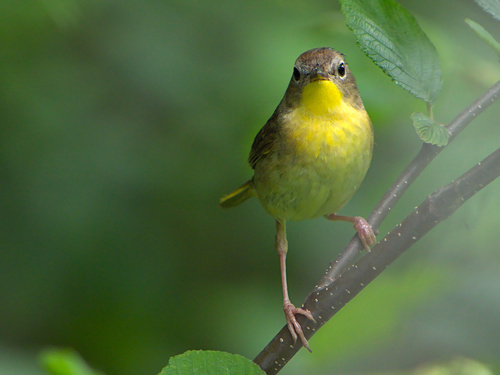
Blue-winged Warbler vs Common Yellowthroat
Vermivora cyanoptera versus Geothlypis trichas
Play a quiz with Blue-winged Warbler and Common Yellowthroat
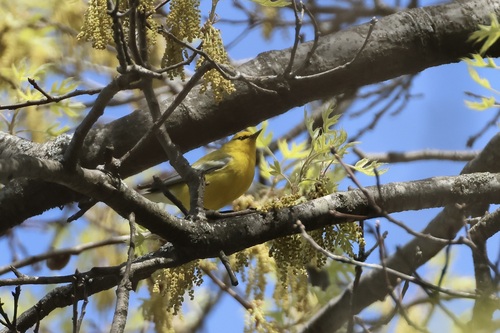
Blue-winged Warbler
Common Yellowthroat
In short
The Blue-winged Warbler and Common Yellowthroat are both small, insectivorous warblers, but they can be distinguished by their plumage and habitat preferences. The Blue-winged Warbler has a distinctive blue-gray wing and yellow body, while the Common Yellowthroat is known for its olive back and striking black mask on males.
Identification tips
- Look for the blue-gray wings and yellow body of the Blue-winged Warbler. 2. Identify the black mask on the male Common Yellowthroat. 3. Observe habitat: Blue-winged Warblers are in shrubby areas, while Common Yellowthroats prefer wetlands. 4. Listen for the song: "bee-buzz" for Blue-winged Warbler, "witchity-witchity" for Common Yellowthroat.
Size
Both species are similar in size, small and agile, typical of New World warblers.
Plumage
The Blue-winged Warbler features a bright yellow body with blue-gray wings and two white wing bars. In contrast, the Common Yellowthroat male has an olive back, yellow throat, and a prominent black mask across the eyes, while females lack the mask and have a more subdued color palette.
Behaviour
Both species are active foragers, often seen flitting through shrubs and low vegetation. The Blue-winged Warbler tends to stay in shrubby areas, while the Common Yellowthroat is more often found in dense, wetland vegetation.
Habitat
Blue-winged Warblers prefer shrubby fields and forest edges, while Common Yellowthroats are more commonly found in marshes and wetland areas with dense vegetation.
Voice
The Blue-winged Warbler has a distinctive buzzy song, often described as "bee-buzz," while the Common Yellowthroat's song is a rolling "witchity-witchity-witchity."