
Birdr

Bluethroat vs Common Redstart

Luscinia svecica versus Phoenicurus phoenicurus

Play a quiz with Bluethroat and Common Redstart
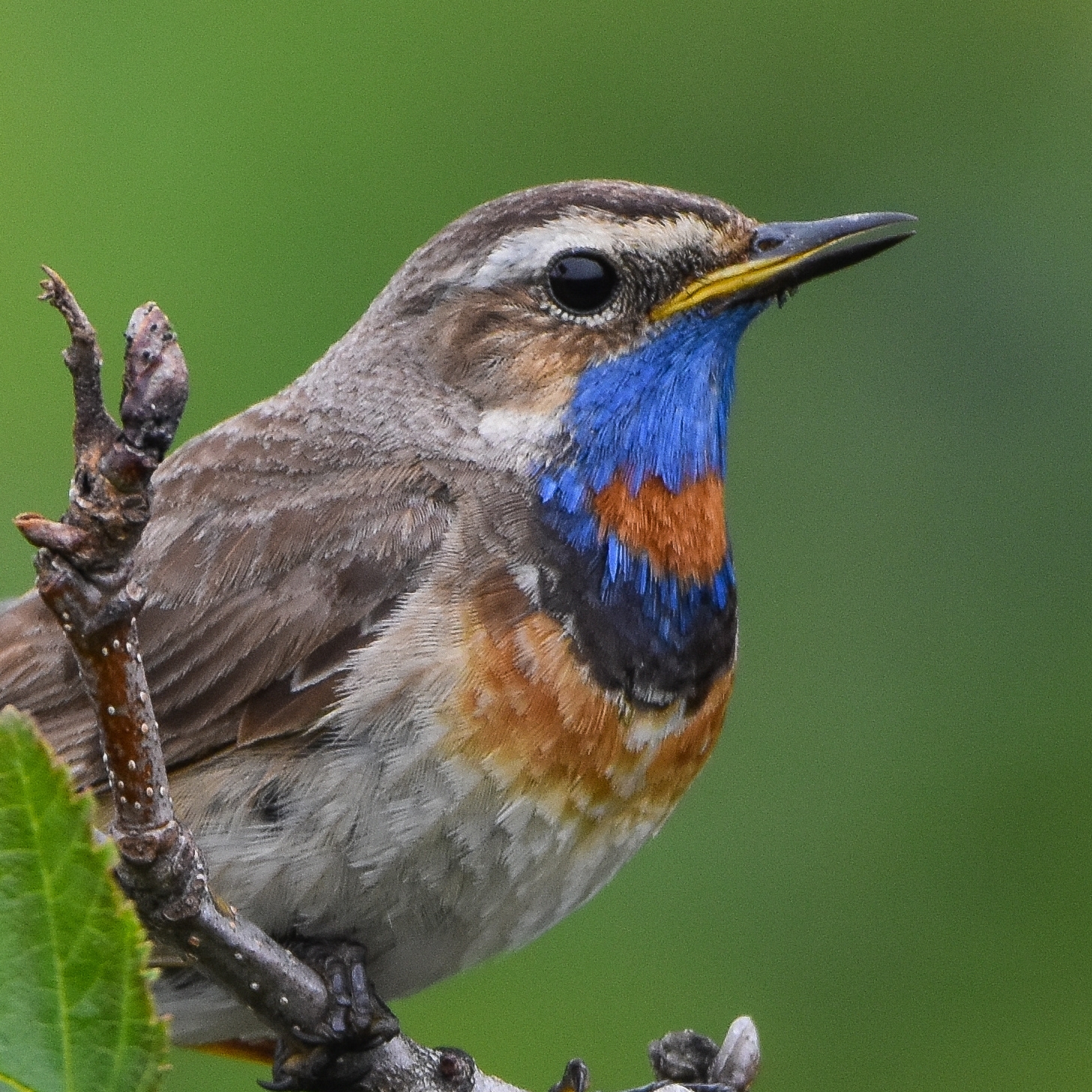
Bluethroat (Luscinia svecica) Bluethroat
Common Redstart (Phoenicurus phoenicurus) Common Redstart

Media

Loading…

In short

The Bluethroat and Common Redstart can be distinguished by their distinct plumage and habitat preferences. The Bluethroat often has a striking blue throat with a central spot, while the Common Redstart features a bright orange-red tail and more uniform coloration. Both species are similar in size, but their behavior and preferred environments can aid in identification.

Identification tips

  1. Look for the blue throat with a central spot on the Bluethroat; the Common Redstart has a bright orange-red tail. 2. Observe habitat: Bluethroats are in marshy areas, Redstarts in open woodlands. 3. Listen for the song: Bluethroat's song is more varied, while the Redstart has a sweet, repetitive song.

Size

Both species are similar in size, falling within the small passerine range.

Plumage

The Bluethroat typically displays a vibrant blue throat with a central spot (red or white, depending on the subspecies), and a white or buffy eyebrow stripe. In contrast, the Common Redstart is characterized by its orange-red tail, grey back, and black face in males, with females being more subdued in coloration.

Behaviour

Bluethroats are often seen skulking in dense vegetation, while Common Redstarts are more likely to be observed sallying from perches to catch insects.

Habitat

Bluethroats prefer wet, marshy areas with dense cover, especially during breeding. Common Redstarts favor open woodlands and forest edges, often with a preference for deciduous trees.

Voice

The Bluethroat's song is a varied and melodious mix of whistles and mimicry, while the Common Redstart's song is a series of short, sweet phrases with a distinctive 'tic-tic' call.

Submit a better description

Use the same sections as the comparison. Your text is published immediately.

The Bluethroat and Common Redstart can be distinguished by their distinct plumage and habitat preferences. The Bluethroat often has a striking blue throat with a central spot, while the Common Redstart features a bright orange-red tail and more uniform coloration. Both species are similar in size, but their behavior and preferred environments can aid in identification.

  1. Look for the blue throat with a central spot on the Bluethroat; the Common Redstart has a bright orange-red tail. 2. Observe habitat: Bluethroats are in marshy areas, Redstarts in open woodlands. 3. Listen for the song: Bluethroat's song is more varied, while the Redstart has a sweet, repetitive song.

Both species are similar in size, falling within the small passerine range.

The Bluethroat typically displays a vibrant blue throat with a central spot (red or white, depending on the subspecies), and a white or buffy eyebrow stripe. In contrast, the Common Redstart is characterized by its orange-red tail, grey back, and black face in males, with females being more subdued in coloration.

Bluethroats are often seen skulking in dense vegetation, while Common Redstarts are more likely to be observed sallying from perches to catch insects.

Bluethroats prefer wet, marshy areas with dense cover, especially during breeding. Common Redstarts favor open woodlands and forest edges, often with a preference for deciduous trees.

The Bluethroat's song is a varied and melodious mix of whistles and mimicry, while the Common Redstart's song is a series of short, sweet phrases with a distinctive 'tic-tic' call.

Discard your changes?

You have unsaved edits. If you leave now, those changes will be lost.

Bluethroat · Common Redstart · My Tricky Birds