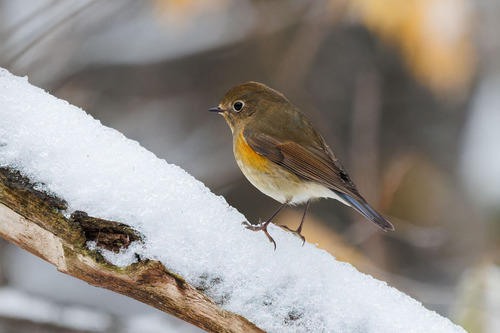
Bluethroat vs Red-flanked Bluetail
Luscinia svecica versus Tarsiger cyanurus
Play a quiz with Bluethroat and Red-flanked Bluetail
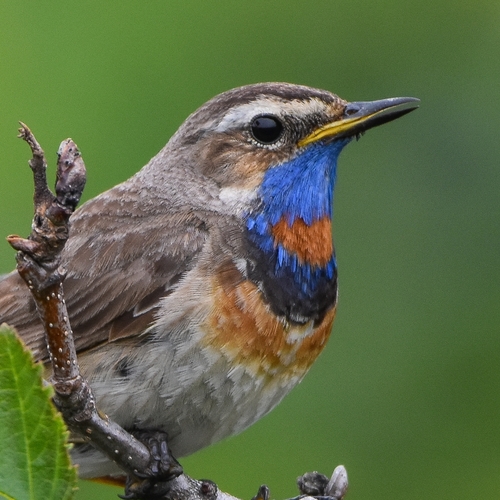
Bluethroat
Red-flanked Bluetail
In short
To distinguish a Bluethroat from a Red-flanked Bluetail, focus on the presence of a distinct throat patch in the Bluethroat, which is absent in the Bluetail. Both species are small, but the Bluethroat often shows more vibrant and varied coloration, particularly in males.
Identification tips
- Throat Patch: Look for the Bluethroat's blue throat with a red or white spot (males). 2. Habitat: Consider the habitat; Bluethroats in wetlands, Bluetails in forests. 3. Flank Color: Note the Bluetail's orange flanks. 4. Song: Listen for the Bluethroat's more complex song compared to the Bluetail's simpler whistles.
Size
Both species are similar in size, small and compact, typical of Old World flycatchers.
Plumage
The Bluethroat has a striking blue throat with a central red or white spot in males, while the Red-flanked Bluetail lacks this feature, showing a more uniform blue on the upperparts and orange flanks. Females and juveniles of both species are duller, but the Bluetail's lack of a throat patch remains a key difference.
Behaviour
Both species are often seen low in vegetation or on the ground, but the Bluethroat may be more likely to be seen in open, marshy areas.
Habitat
Bluethroats are typically found in marshy or wetland areas, while Red-flanked Bluetails prefer forested habitats, often in coniferous or mixed woodlands.
Voice
Bluethroats have a varied and melodious song, while Red-flanked Bluetails produce a more subdued, whistling song. Calls are less distinctive but may help if heard well.