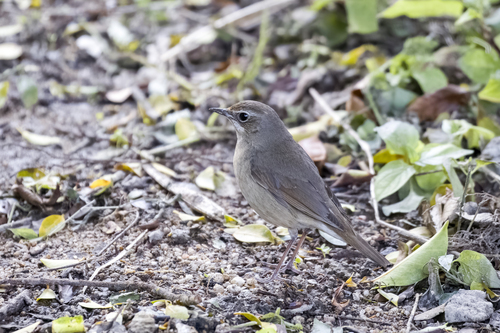
Bluethroat vs Siberian Rubythroat
Luscinia svecica versus Calliope calliope
Play a quiz with Bluethroat and Siberian Rubythroat
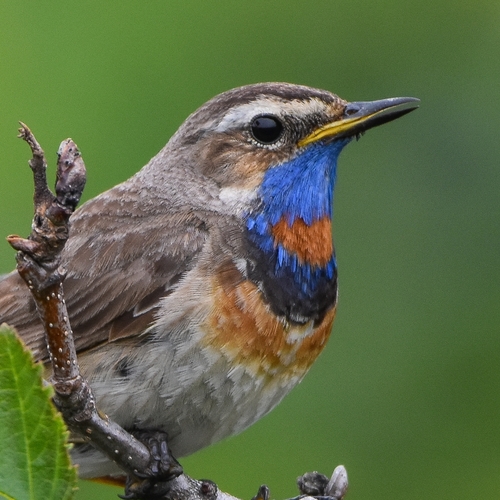
Bluethroat
Siberian Rubythroat
In short
The Bluethroat and Siberian Rubythroat are both small, ground-dwelling birds with striking throat patches, but they can be distinguished by their throat color and tail patterns. The Bluethroat typically has a blue throat with a central spot, while the Siberian Rubythroat features a vivid red throat. Both species are part of the Old World Flycatchers family.
Identification tips
- Throat color: Bluethroat has a blue throat with a central spot (red or white); Siberian Rubythroat has a bright red throat. 2. Supercilium: Bluethroat's is less pronounced than the Siberian Rubythroat's bold white supercilium. 3. Tail pattern: Look for the tail flicking behavior; Bluethroat often shows rufous in the tail. 4. Habitat: Consider the habitat; Bluethroats are more likely in marshy areas, Siberian Rubythroats in dense forest undergrowth.
Size
Both species are similar in size, small and compact, typical of ground-dwelling passerines.
Plumage
The Bluethroat has a blue throat with a central spot that can be red or white depending on the subspecies, and a white or buff eyebrow stripe. The Siberian Rubythroat has a bright red throat bordered by a white line and a more pronounced white supercilium. Both have brown upperparts, but the Bluethroat often shows a more varied pattern with some rufous tones.
Behaviour
Both species are secretive and often found skulking in dense vegetation. They are ground feeders, often flicking their tails.
Habitat
The Bluethroat is often found in moist habitats like marshes and reed beds, while the Siberian Rubythroat prefers dense undergrowth in forests and thickets.
Voice
The Bluethroat has a varied and melodious song, often including mimicry, while the Siberian Rubythroat's song is a series of clear, whistled notes. Calls of both species can be sharp and metallic.