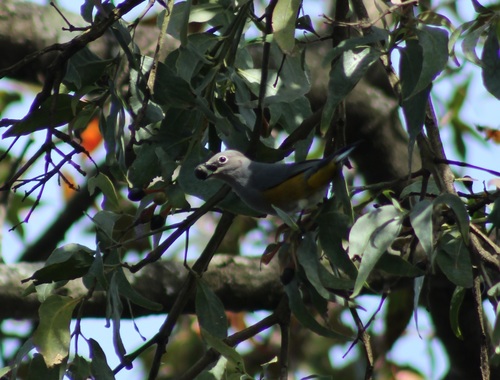
Bohemian Waxwing vs Grey Silky-flycatcher
Bombycilla garrulus versus Ptiliogonys cinereus
Play a quiz with Bohemian Waxwing and Grey Silky-flycatcher
Bohemian Waxwing
Grey Silky-flycatcher
In short
The Bohemian Waxwing and Grey Silky-flycatcher are both medium-sized birds with crested heads, but they differ significantly in plumage and habitat preferences. Bohemian Waxwings have a more colorful appearance with distinctive red and yellow markings, while Grey Silky-flycatchers are predominantly grey with a less vibrant look.
Identification tips
1. Plumage: Look for the colorful red and yellow wing and tail markings on Bohemian Waxwings. 2. Habitat: Consider the habitat; Bohemian Waxwings are more likely in northern regions, while Grey Silky-flycatchers are found in Central America. 3. Behavior: Note flocking behavior; Bohemian Waxwings are often in large groups, while Grey Silky-flycatchers are more solitary. 4. Vocalization: Listen for the high-pitched trill of the Bohemian Waxwing compared to the soft whistles of the Grey Silky-flycatcher.
Size
Both species are similar in size, but the Bohemian Waxwing may appear slightly bulkier due to its more rounded body.
Plumage
Bohemian Waxwings have a striking plumage with a grey body, black mask, and bright red and yellow waxy tips on the wings and tail. In contrast, Grey Silky-flycatchers are uniformly grey with a subtle crest and lack the colorful wing and tail markings.
Behaviour
Bohemian Waxwings are often seen in large flocks, especially in winter, feeding on berries. Grey Silky-flycatchers are more solitary or found in small groups, often seen sallying for insects.
Habitat
Bohemian Waxwings are found in northern boreal forests and migrate to more temperate regions in winter. Grey Silky-flycatchers inhabit montane forests and open woodlands in Central America.
Voice
Bohemian Waxwings have a high-pitched, trilled call, often given in flight. Grey Silky-flycatchers produce a series of soft, whistled notes.