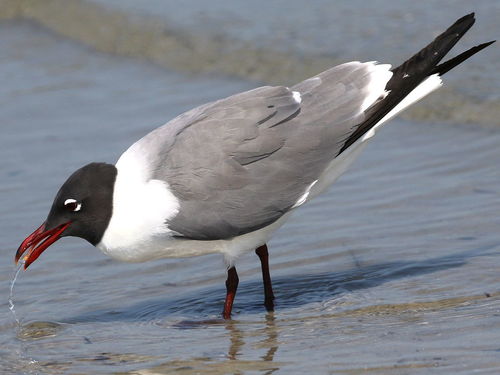
Bonaparte's Gull vs Laughing Gull
Chroicocephalus philadelphia versus Leucophaeus atricilla
Play a quiz with Bonaparte's Gull and Laughing Gull
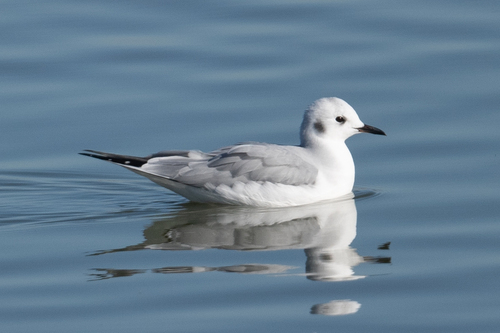
Bonaparte's Gull
Laughing Gull
In short
Bonaparte's Gull and Laughing Gull can be distinguished by size and habitat preferences. Bonaparte's Gull is smaller and often found inland or in coastal areas during migration, while Laughing Gull is larger and predominantly coastal. Both have distinctive head patterns, but Bonaparte's Gull has a more delicate, tern-like appearance.
Identification tips
- Size: Bonaparte's Gull is noticeably smaller than Laughing Gull. 2. Head Pattern: Both have black heads in breeding plumage, but Bonaparte's has a white eye-ring, while Laughing has white eye-crescents. 3. Habitat: Look for Bonaparte's Gull inland and in coastal areas during migration; Laughing Gull is more coastal. 4. Behavior: Bonaparte's Gull has a tern-like flight and nests in trees, unlike Laughing Gull.
Size
Bonaparte's Gull is one of the smallest gulls in North America, whereas Laughing Gull is medium-sized and larger in comparison.
Plumage
Bonaparte's Gull in breeding plumage has a black head with a white eye-ring, while Laughing Gull also has a black head but with narrow white eye-crescents. Bonaparte's Gull has a more delicate, dove-like appearance, whereas Laughing Gull has a dark gray mantle and vibrant black head.
Behaviour
Bonaparte's Gull exhibits a light, buoyant, tern-like flight and often nests in trees. Laughing Gull is known for its lilting, laughing call and is often seen around human activity, such as picnics and fishing boats.
Habitat
Bonaparte's Gull frequents inland lakes, rivers, and coastal bays, especially during migration. Laughing Gull is primarily found on sandy or rocky shores and salt-marsh islands along the Atlantic and Gulf coasts.
Voice
Laughing Gull is noted for its distinctive laughing call, while Bonaparte's Gull has lilting calls, especially during the breeding season.