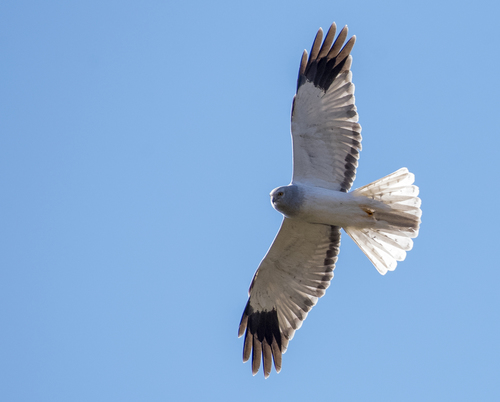
Bonelli's Eagle vs Hen Harrier
Aquila fasciata versus Circus cyaneus
Play a quiz with Bonelli's Eagle and Hen Harrier
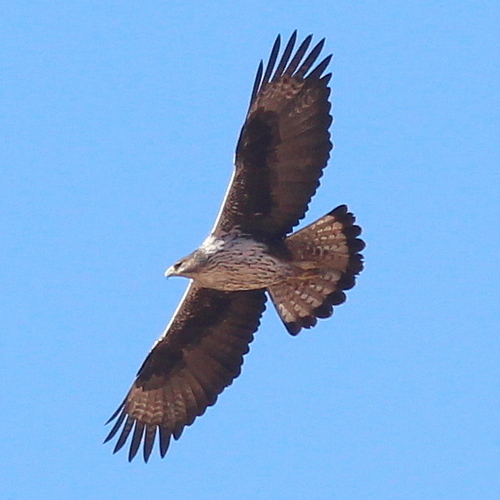
Bonelli's Eagle
Hen Harrier
In short
The Hen Harrier (Circus cyaneus) is a medium-sized raptor known for its distinctive low hunting flight and long wings, while Bonelli's Eagle (Aquila fasciata fasciata) is a larger, robust eagle recognized for its powerful build and substantial size. Key distinctions include plumage patterns, vocalizations, habitat preferences, and overall behavior, which can help birdwatchers differentiate between these two species in the field.
Identification tips
- Birds of the World Similar-Species Diagnostics:
- The Hen Harrier is "distinctive in flight due to its long wings and tail, which are held in a shallow V," and it exhibits a "characteristic gliding flight low over the ground" (Birds of the World). The adult male is described as "gray above with a white tail and black wing tips," while the female "has a brown plumage with streaks" (Birds of the World).
-
Bonelli's Eagle can be identified by "its large size, broad wings, and long tail," and it exhibits "distinctive pale underparts and dark streaking" (Birds of the World).
-
AI Field Diagnostics:
- Look for size first: the Hen Harrier will appear noticeably smaller than the Bonelli's Eagle. If you see a raptor gliding low and quartering over fields, it is likely a Hen Harrier. If it is soaring higher with broad wings and a robust body, it's probably a Bonelli's.
- Pay attention to plumage: if the bird has a gray color and a white tail (male Hen Harrier) or brown streaked plumage (female Hen Harrier), it will differ from the dark brown and streaked underparts of the Bonelli's Eagle.
- Observe the behavior: Hen Harriers often hunt by gliding low to the ground, while Bonelli's Eagles are more likely to be seen perched or soaring high before diving down on prey.
- Habitat also provides clues: if you’re in a wetland or heathland area, you’re more likely to find Hen Harriers, while Bonelli's Eagles will be in dryer, rocky habitats.
By focusing on these elements, birdwatchers can effectively distinguish between the Hen Harrier and Bonelli's Eagle in their respective habitats.
Size
- Hen Harrier: Typically measures about 40-51 cm in length, with a wingspan ranging from 87-110 cm. The female is generally larger than the male.
- Bonelli's Eagle: Significantly larger, measuring approximately 65-75 cm in length, with a wingspan of 165-190 cm. It has a robust body and broader wings compared to the Hen Harrier.
Plumage
- Hen Harrier: Males exhibit a striking gray plumage with a white rump and black wing tips, while females are brown with streaking, resembling a large sparrowhawk. The adult male has a distinctive facial disk that is less pronounced in females.
- Bonelli's Eagle: Characterized by dark brown upperparts, pale underparts with dark streaks, and notably long, pointed wings. The juvenile is more mottled with a lighter coloration. The Bonelli's Eagle also has a distinctive banded tail that can aid in identification.
Behaviour
- Hen Harrier: Known for its unique hunting style, the Hen Harrier glides low over fields and marshes, searching for small mammals and birds. It often employs a distinctive "quartering" flight pattern.
- Bonelli's Eagle: A powerful hunter, Bonelli's Eagle often hunts from a perch, swooping down on prey such as rabbits and birds. It exhibits soaring behavior and can be seen gliding at considerable heights.
Habitat
- Hen Harrier: Prefers open habitats such as moors, heathlands, and marshes, where it can hunt effectively. It is more likely found in wetter areas.
- Bonelli's Eagle: Typically inhabits mountainous and hilly regions with open areas for hunting. It prefers dry, rocky terrains and can be found in forests adjacent to these areas.
Voice
- Hen Harrier: The vocalizations include a series of soft, plaintive calls, often described as 'pee pee' or 'kree kree' sounds, particularly during courtship.
- Bonelli's Eagle: Vocalizations are more powerful and include a series of sharp, short whistles or barks that sound like "ki-ki-ki," especially during breeding season.