Birdr

Booted Eagle vs Imperial Eagle

Hieraaetus pennatus versus Aquila heliaca

Play a quiz with Booted Eagle and Imperial Eagle
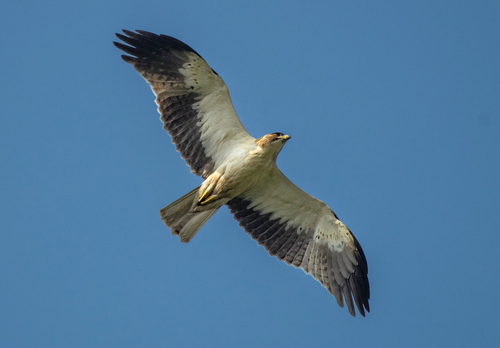
Booted Eagle (Hieraaetus pennatus) Booted Eagle
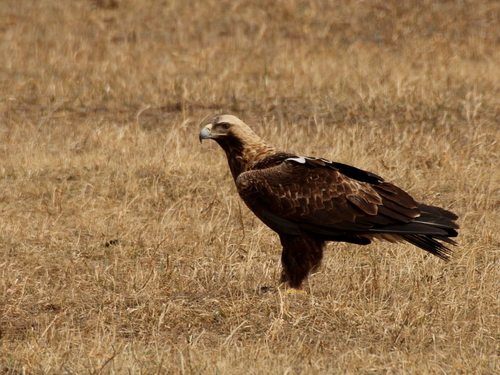
Imperial Eagle (Aquila heliaca) Imperial Eagle

Media

Loading…

In short

The Imperial Eagle (Aquila heliaca) and the Booted Eagle (Hieraaetus pennatus) are two distinct raptor species that can be distinguished by size, plumage characteristics, and habitat preferences. The Imperial Eagle is significantly larger with a more robust body and has a distinctive dark brown plumage with lighter head and shoulders, while the Booted Eagle is smaller, has a more slender build, and features a characteristic booted appearance on its legs.

Identification tips

  1. Birds of the World Similar-Species Diagnostics:
  2. Imperial Eagle: "The Imperial Eagle is larger than the Booted Eagle and has a much bulkier body." It exhibits "dark brown plumage with paler head and shoulders." (Source: Birds of the World)
  3. Booted Eagle: "The Booted Eagle is smaller and has a more slender build, with distinctive feathered legs and often lighter underparts." (Source: Birds of the World)

  4. AI Field Diagnostics:

  5. Look for size first: the Imperial Eagle's larger size and robust shape set it apart from the smaller Booted Eagle.
  6. Pay attention to plumage: the Imperial Eagle's dark brown with pale head contrasts with the Booted Eagle's lighter underparts and feathered legs. The presence of the "boots" on the Booted Eagle is a key identifier.
  7. Observe behavior in flight: the Imperial Eagle's soaring flight style is slower and more powerful, while the Booted Eagle is more agile, often flapping more frequently.
  8. Habitat can also provide clues: if you are in open grasslands or steppes, the Imperial Eagle is more likely encountered, whereas the Booted Eagle may be found in wooded or shrubby areas.
  9. Listen for vocalizations: the barking calls of the Imperial Eagle are distinct from the softer whistles of the Booted Eagle, which can help in identification when the birds are not visible.

With these points in mind, birdwatchers can confidently distinguish between the Imperial Eagle and the Booted Eagle in the field.

Size

The Imperial Eagle is notably larger, measuring about 66-75 cm in length with a wingspan of 180-210 cm. In contrast, the Booted Eagle is smaller, with a length of 43-54 cm and a wingspan of 110-136 cm. The robust physique of the Imperial Eagle gives it a more powerful appearance compared to the slender, agile frame of the Booted Eagle.

Plumage

The Imperial Eagle's plumage is predominantly dark brown, with a paler head and neck, featuring lighter feathers on the shoulders and thighs. This creates a striking contrast, especially during flight. The Booted Eagle, on the other hand, exhibits a more varied plumage, often showing a brownish coloration with paler underparts and characteristic "boots" (feathered legs) that extend down to the toes. The Booted Eagle also has a more pronounced white patch on the base of its tail, aiding in identification.

Behaviour

Behaviorally, the Imperial Eagle is known for its powerful, soaring flight and often hunts larger prey. It is typically found in open areas where it can scan for food from above. The Booted Eagle displays a more agile flight pattern, often flapping more frequently and soaring less, reflecting its need to maneuver in varied environments. It primarily hunts smaller birds and small mammals.

Habitat

The Imperial Eagle prefers open and semi-open landscapes, including grasslands, steppes, and forest margins, often nesting in tall trees or cliffs. In contrast, the Booted Eagle is more adaptable, found in a variety of habitats including open woodlands, shrublands, and even urban areas, where it can find suitable nesting sites.

Voice

Imperial Eagles typically produce a series of harsh, barking calls, particularly during courtship or territorial displays. The Booted Eagle, however, has a softer, more melodious call, often described as a series of whistles or chirps, which can be heard during flight or while perched.

Submit a better description

Use the same sections as the comparison. Your text is published immediately.

The Imperial Eagle (Aquila heliaca) and the Booted Eagle (Hieraaetus pennatus) are two distinct raptor species that can be distinguished by size, plumage characteristics, and habitat preferences. The Imperial Eagle is significantly larger with a more robust body and has a distinctive dark brown plumage with lighter head and shoulders, while the Booted Eagle is smaller, has a more slender build, and features a characteristic booted appearance on its legs.

  1. Birds of the World Similar-Species Diagnostics:
  2. Imperial Eagle: "The Imperial Eagle is larger than the Booted Eagle and has a much bulkier body." It exhibits "dark brown plumage with paler head and shoulders." (Source: Birds of the World)
  3. Booted Eagle: "The Booted Eagle is smaller and has a more slender build, with distinctive feathered legs and often lighter underparts." (Source: Birds of the World)

  4. AI Field Diagnostics:

  5. Look for size first: the Imperial Eagle's larger size and robust shape set it apart from the smaller Booted Eagle.
  6. Pay attention to plumage: the Imperial Eagle's dark brown with pale head contrasts with the Booted Eagle's lighter underparts and feathered legs. The presence of the "boots" on the Booted Eagle is a key identifier.
  7. Observe behavior in flight: the Imperial Eagle's soaring flight style is slower and more powerful, while the Booted Eagle is more agile, often flapping more frequently.
  8. Habitat can also provide clues: if you are in open grasslands or steppes, the Imperial Eagle is more likely encountered, whereas the Booted Eagle may be found in wooded or shrubby areas.
  9. Listen for vocalizations: the barking calls of the Imperial Eagle are distinct from the softer whistles of the Booted Eagle, which can help in identification when the birds are not visible.

With these points in mind, birdwatchers can confidently distinguish between the Imperial Eagle and the Booted Eagle in the field.

The Imperial Eagle is notably larger, measuring about 66-75 cm in length with a wingspan of 180-210 cm. In contrast, the Booted Eagle is smaller, with a length of 43-54 cm and a wingspan of 110-136 cm. The robust physique of the Imperial Eagle gives it a more powerful appearance compared to the slender, agile frame of the Booted Eagle.

The Imperial Eagle's plumage is predominantly dark brown, with a paler head and neck, featuring lighter feathers on the shoulders and thighs. This creates a striking contrast, especially during flight. The Booted Eagle, on the other hand, exhibits a more varied plumage, often showing a brownish coloration with paler underparts and characteristic "boots" (feathered legs) that extend down to the toes. The Booted Eagle also has a more pronounced white patch on the base of its tail, aiding in identification.

Behaviorally, the Imperial Eagle is known for its powerful, soaring flight and often hunts larger prey. It is typically found in open areas where it can scan for food from above. The Booted Eagle displays a more agile flight pattern, often flapping more frequently and soaring less, reflecting its need to maneuver in varied environments. It primarily hunts smaller birds and small mammals.

The Imperial Eagle prefers open and semi-open landscapes, including grasslands, steppes, and forest margins, often nesting in tall trees or cliffs. In contrast, the Booted Eagle is more adaptable, found in a variety of habitats including open woodlands, shrublands, and even urban areas, where it can find suitable nesting sites.

Imperial Eagles typically produce a series of harsh, barking calls, particularly during courtship or territorial displays. The Booted Eagle, however, has a softer, more melodious call, often described as a series of whistles or chirps, which can be heard during flight or while perched.

Discard your changes?

You have unsaved edits. If you leave now, those changes will be lost.

Booted Eagle · Imperial Eagle · My Tricky Birds