
Booted Warbler vs Sykes's Warbler
Iduna caligata versus Iduna rama
Play a quiz with Booted Warbler and Sykes's Warbler
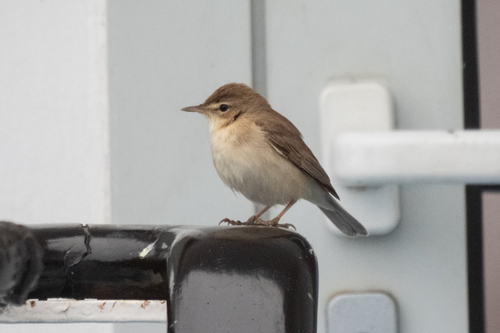 Booted Warbler
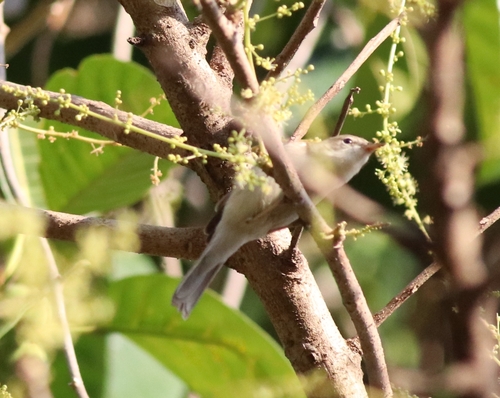 Sykes's Warbler
In short
The most reliable field mark between Booted Warbler and Sykes's Warbler is overall structure and subtle plumage tone: Sykes's is distinctly larger, longer-winged, and greyer, while Booted is smaller, pot-bellied, and browner. Both species are tricky to separate, especially in autumn or among immatures, but Sykes's shows a stronger, more pointed bill and a slightly longer, squarer tail. Booted Warbler appears more compact with a shorter, blunter bill and a plain, pale brown look. Focus on structure and overall color tone, but be honest—many birds will be ambiguous without close, prolonged views.
Identification tips
- Size and Structure: Sykes's Warbler is larger and longer-winged than Booted; look for a more elongated, less compact shape, especially when perched or in flight. This is most reliable in direct comparison or with experience.
- Bill Shape: Sykes's has a noticeably stronger, more pointed bill, while Booted's bill is shorter and has a dark tip. Use this mark when the bill is clearly visible.
- Tail Shape: Booted Warbler's tail is square-tipped and appears shorter, while Sykes's tail is longer and may show pale edges on the outer feathers, especially in fresh plumage or good light.
- Supercilium: Both have a pale supercilium, but Booted's is clearer and more prominent, while Sykes's is shorter and less distinct. This is subtle and can vary with light and feather wear.
- Plumage Tone: Booted is plain greyish-brown above and paler below, with a generally browner tone. Sykes's is paler, greyer, and has buff flanks, giving a colder overall impression. This is most useful in good light and on fresh birds.
- Jizz: Booted often looks pot-bellied, short-winged, and compact, while Sykes's is more upright, elongated, and longer-winged. Watch for this in both perched and active birds.
- Tail Edges: Sykes's may show pale edges to the outer tail feathers, especially in fresh plumage or when fanned. Booted lacks this feature.
- Flight: No distinctive flight or upperwing pattern is described for either species at any age, so do not rely on wing panels or contrasting edges.
- Habitat/Range: If in Western Europe, Booted is the more likely vagrant; Sykes's is much rarer. In Central Asia, both may occur, so do not use range alone.
- Confusion Risk: Both species are notoriously difficult to separate, especially in autumn or among immatures. Expect some birds to remain unidentified without close, prolonged views.
- Voice: No distinctive vocal differences are described in the provided notes—do not rely on calls or song for separation here.
- Comparison to Other Warblers: Sykes's is more similar to Eastern Olivaceous Warbler in overall tone and structure; Booted is more compact and browner. Use this as a cross-check if familiar with those species.
- Bill Color: Booted's bill has a dark tip, which may be visible at close range; Sykes's bill is uniformly pale and strong.
- Flank Color: Sykes's shows buff flanks, which can be a subtle but helpful mark in good light; Booted's flanks are paler and less contrasting.
- Supercilium Shape: Booted's supercilium is longer and more defined, while Sykes's is shorter and fades behind the eye. Use this in combination with other marks, not alone.
Size
Sykes's Warbler is noticeably larger than Booted Warbler, with a longer body and wings. Booted Warbler is similar in size to a Common Chiffchaff, appearing short-winged and compact. Sykes's, while still a small warbler, stands out among Iduna warblers for its relatively larger size and longer proportions. Both are small, but Sykes's is the bulkier of the two.
Plumage
- Juvenile/First-year/Immature: No distinctive upperwing or flight marks are described for either species at any age. Both show plain greyish-brown upperparts and paler underparts, but Sykes's is paler and greyer, while Booted is browner overall. Sykes's has buff flanks and pale edges to the outer tail feathers, which may be visible in good light or in flight. Both show a pale supercilium, but Sykes's is shorter and less distinct. Booted's supercilium is clearer and more prominent.
- Adult: Booted Warbler remains plain, with a short, dark-tipped bill and a square-tipped tail. Sykes's adult is greyer, with a strong, pointed bill and a longer tail with pale edges. Both can look nondescript, but Sykes's is more reminiscent of an Eastern Olivaceous Warbler in tone and structure.
Behaviour
Both species behave similarly, moving through low vegetation and shrubs. Booted Warbler may appear more pot-bellied and compact in its movements, while Sykes's often looks longer and more upright. Flight jizz is subtle: Booted is short-winged and quick, Sykes's slightly more languid and elongated. Neither species is particularly bold or distinctive in behavior, so structure and jizz are best judged in direct comparison.
Habitat
Both species breed in open, shrubby habitats but with some range differences: Booted Warbler breeds in Eastern Europe and Western Asia, while Sykes's is found from northeast Arabia to Central Asia. In Western Europe, Booted is a regular vagrant, while Sykes's is rarer. Both winter in South Asia. Habitat alone is rarely diagnostic, but Booted may be more expected as a vagrant in Europe.