Birdr

Brambling vs Common Rosefinch

Fringilla montifringilla versus Carpodacus erythrinus

Play a quiz with Brambling and Common Rosefinch
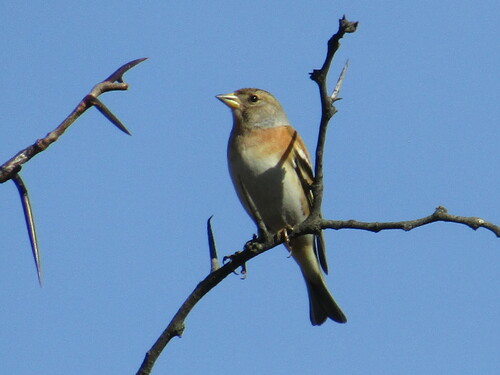
Brambling (Fringilla montifringilla) Brambling
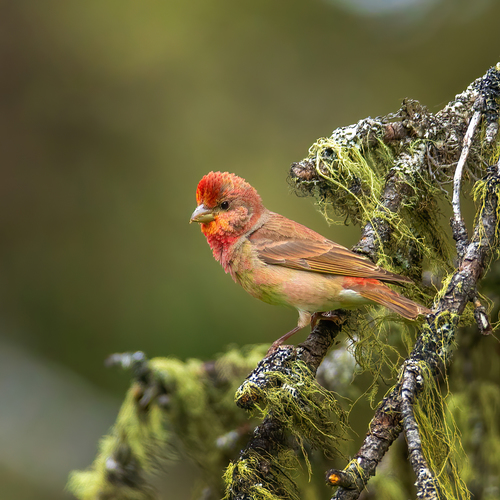
Common Rosefinch (Carpodacus erythrinus) Common Rosefinch

Media

Loading…

In short

Bramblings and Common Rosefinches can be distinguished by their plumage and structure. Bramblings have a distinctive orange breast and shoulders, while male Common Rosefinches are notable for their bright red plumage. Both species are finches, but their coloration and habitats differ significantly.

Identification tips

  1. Look for orange tones: Bramblings have orange on the breast and shoulders, especially in males. 2. Check for red coloration: Male Common Rosefinches are bright red, a key difference. 3. Listen for calls: Bramblings have a nasal call, while Common Rosefinches sing a melodic song. 4. Observe habitat: Bramblings are more likely in open woodlands, while Common Rosefinches prefer shrubby areas.

Size

Both species are similar in size, typical of small finches.

Plumage

Bramblings have a striking orange breast and shoulders, with a white belly and black head in breeding males. Common Rosefinches, especially males, are bright red with a more uniform coloration. Females of both species are more subdued, but female Bramblings still show some orange tones.

Behaviour

Both species are often seen in flocks, especially outside the breeding season. Bramblings may be more ground-feeding, while Common Rosefinches are often seen in bushes or trees.

Habitat

Bramblings are typically found in woodlands and open areas with trees, often migrating in large flocks. Common Rosefinches prefer shrubby areas, gardens, and open woodlands.

Voice

Bramblings have a distinctive nasal 'dweeb' call, while Common Rosefinches have a more melodic and varied song, often described as a series of warbled notes.

Submit a better description

Use the same sections as the comparison. Your text is published immediately.

Bramblings and Common Rosefinches can be distinguished by their plumage and structure. Bramblings have a distinctive orange breast and shoulders, while male Common Rosefinches are notable for their bright red plumage. Both species are finches, but their coloration and habitats differ significantly.

  1. Look for orange tones: Bramblings have orange on the breast and shoulders, especially in males. 2. Check for red coloration: Male Common Rosefinches are bright red, a key difference. 3. Listen for calls: Bramblings have a nasal call, while Common Rosefinches sing a melodic song. 4. Observe habitat: Bramblings are more likely in open woodlands, while Common Rosefinches prefer shrubby areas.

Both species are similar in size, typical of small finches.

Bramblings have a striking orange breast and shoulders, with a white belly and black head in breeding males. Common Rosefinches, especially males, are bright red with a more uniform coloration. Females of both species are more subdued, but female Bramblings still show some orange tones.

Both species are often seen in flocks, especially outside the breeding season. Bramblings may be more ground-feeding, while Common Rosefinches are often seen in bushes or trees.

Bramblings are typically found in woodlands and open areas with trees, often migrating in large flocks. Common Rosefinches prefer shrubby areas, gardens, and open woodlands.

Bramblings have a distinctive nasal 'dweeb' call, while Common Rosefinches have a more melodic and varied song, often described as a series of warbled notes.

Discard your changes?

You have unsaved edits. If you leave now, those changes will be lost.

Brambling · Common Rosefinch · My Tricky Birds