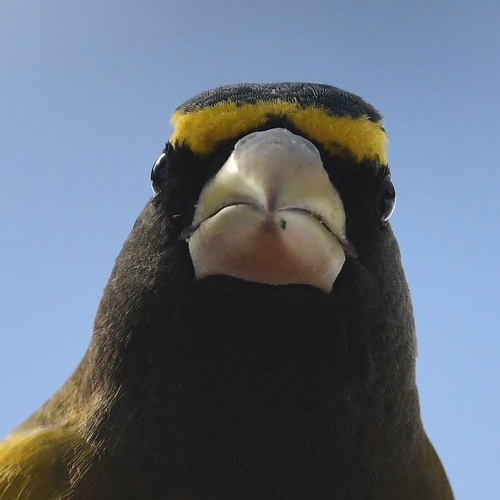
Brambling vs Evening Grosbeak
Fringilla montifringilla versus Hesperiphona vespertina
Play a quiz with Brambling and Evening Grosbeak
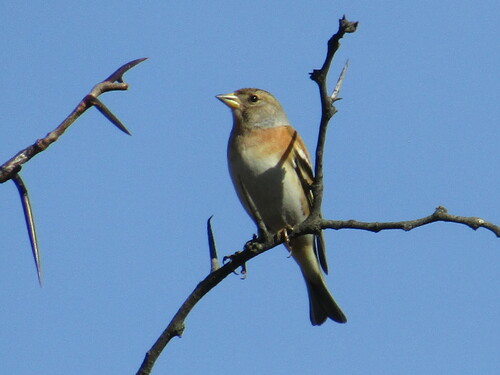
Brambling
Evening Grosbeak
In short
Brambling and Evening Grosbeak are both finches, but they differ significantly in appearance and behavior. The Brambling is smaller with a more delicate structure, while the Evening Grosbeak is robust with a thick bill. Coloration and habitat preferences also help distinguish these species.
Identification tips
- Size and Structure: Note the Brambling's smaller size and more delicate build compared to the robust Evening Grosbeak. 2. Plumage: Look for the Brambling's orange and black pattern versus the Evening Grosbeak's yellow and black. 3. Habitat: Consider the habitat; Bramblings are more likely in open areas, while Evening Grosbeaks prefer forests. 4. Vocalization: Listen for the Brambling's nasal call compared to the Evening Grosbeak's whistled notes.
Size
The Brambling is smaller and more slender, whereas the Evening Grosbeak is larger and more robust.
Plumage
Brambling males have a distinctive orange breast and shoulders with a white belly and black head in breeding plumage. Females are more subdued with brownish tones. Evening Grosbeaks have a striking yellow and black pattern, with males featuring a bright yellow body and black wings, while females are more muted with grayish tones.
Behaviour
Bramblings are often seen in large flocks during migration and winter, feeding on the ground. Evening Grosbeaks are also social but are more likely to be seen at feeders or in trees, often feeding on seeds and buds.
Habitat
Bramblings are typically found in open woodlands and fields, especially during migration and winter. Evening Grosbeaks prefer coniferous forests but can also be found in mixed woodlands and suburban areas.
Voice
Bramblings have a distinctive, nasal 'zweee' call, while Evening Grosbeaks have a clear, whistled 'cleer' or 'chirp'.